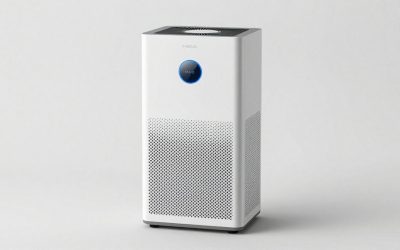
Our Top Picks
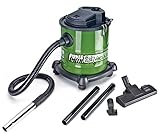
 Waykar 34 Pints 2025 Most Efficient Energy StarDrain Hose10.87 x 8.39 x 19.3 inches22.05 PoundsCheck on Amazon
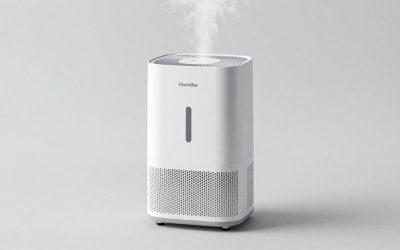
 KNKA 2500 Ft² Max 34 Pints Dehumidifier forMAX 34 Pints13.23 x 10.31 x 20.87 Inches17.6 PoundsCheck on Amazon
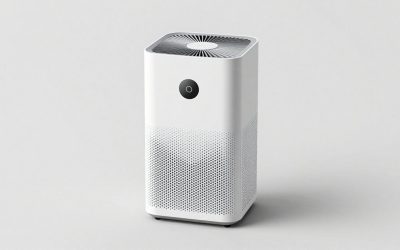
 AEOCKY 5500 Sq.Ft Energy Star Most Efficient 202580 Pints - 5500 Sq.Ft14.45 x 8.66 x 24.09 inchesCheck on Amazon
The best dehumidifier for a mobile home is a 34-pint-class, Energy Star-listed unit with a drain hose for the main living space, and on the strength of the listings the Waykar 34 pint is the one to start with because it offers both automatic and manual drainage and a 2,000 square foot rating that comfortably covers a 14 by 70 single-wide. If you only need to dry one bedroom or a closet, a 95-ounce tank model from the budget group costs far less and takes up almost no floor space.
Manufactured homes are not scaled-down houses. The air volume is small, the walls are thin, the floor often sits over a vented crawl space, and one long shower can push the humidity up everywhere because there are no extra rooms to absorb it. That is why this guide begins with floor-plan sizing, window condensation and underfloor moisture before it gets to the products.
Sizing by floor plan, not by guesswork

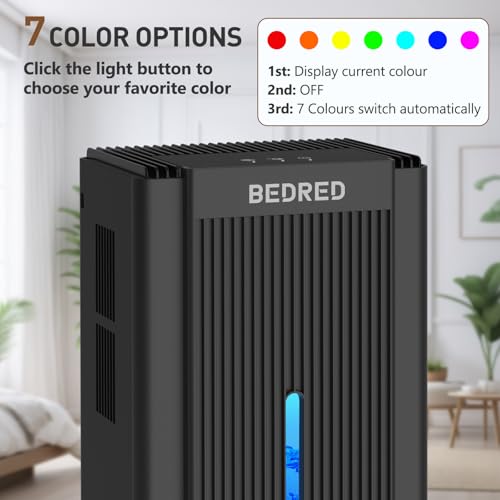
BEDRED Dehumidifier, 95Oz Dehumidifier for Home 1000 Sq.Ft | Quiet, Auto Shutoff, Sleep Mode, 7 Color Ambient Light for Bedroom, Bathroom, Basement (Black)




As an Amazon Associate we earn from qualifying purchases. Product prices and availability are accurate as of the date/time indicated.

Dehumidifiers for Home, 1000 Sq Ft Dehumidifier with 95oz Tank Auto Shutoff | Quiet for Bedroom, Bathroom and Basement with Sleep Mode 7-Color LED Light, Grey


As an Amazon Associate we earn from qualifying purchases. Product prices and availability are accurate as of the date/time indicated.

ToLife Dehumidifier, 1000 Sq Ft 95 oz Tank with Sleep Mode, Auto Shutoff | Portable for Home, Bedroom, Bathroom and Basement with 7-Color LED Light, Grey


As an Amazon Associate we earn from qualifying purchases. Product prices and availability are accurate as of the date/time indicated.
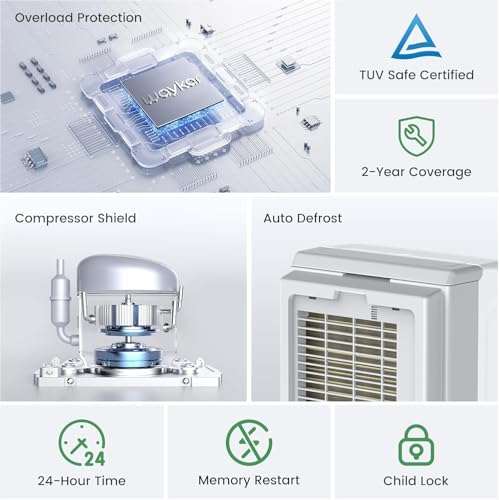
Waykar 34 Pints 2025 Most Efficient Energy Star Dehumidifier for Home & Basement, Ideal for Spaces up to 2,000 Sq. Ft. with Auto or Manual Drainage, 0.62-Gallon Water Tank



As an Amazon Associate we earn from qualifying purchases. Product prices and availability are accurate as of the date/time indicated.
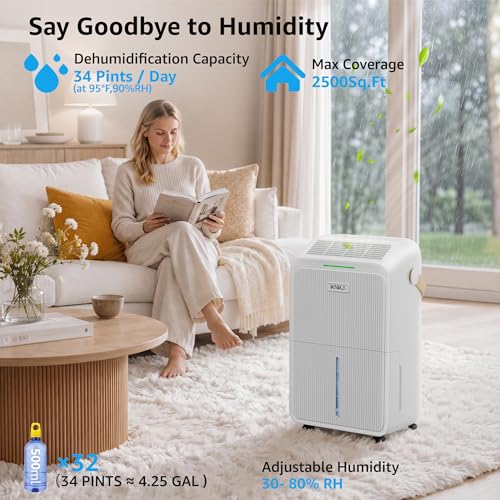
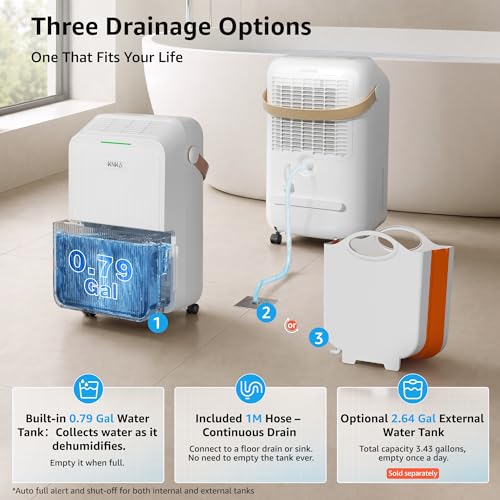
KNKA 2500 Ft² Max 34 Pints Dehumidifier for Basement with Drain Hose, White | Dehumidifiers for Home, Bedroom, Bathroom, Large Room, Three Modes, Intelligent Humidity Control, Dry Clothes, 24HR Timer



As an Amazon Associate we earn from qualifying purchases. Product prices and availability are accurate as of the date/time indicated.
AEOCKY 5500 Sq.Ft Energy Star Most Efficient 2025 Dehumidifier Max 80Pint/D | Dehumidifier with Drain Hose for Basement, Home, Bedroom, Bathroom, Intelligent Humidistat


As an Amazon Associate we earn from qualifying purchases. Product prices and availability are accurate as of the date/time indicated.
TABYIK 35 OZ Dehumidifier for Bedroom RV, Quiet with Auto Shut Off, White | 280 Sq.Ft Small Dehumidifiers for Home Bathroom Closet, 7 Color Light, 28dB Ultra Quiet, 35OZ Water Tank


As an Amazon Associate we earn from qualifying purchases. Product prices and availability are accurate as of the date/time indicated.

KNKA Energy Star 5500 Sq.Ft Dehumidifier for Basement, Max 80 Pint/Day | Dehumidifier with Drain Hose, Dehumidifiers for Home, Bedroom, Bathroom, Large Room, Smart Humidity Control, Sleep Mode


As an Amazon Associate we earn from qualifying purchases. Product prices and availability are accurate as of the date/time indicated.
Take a standard 14 by 70 single-wide: 980 square feet, with a 7.5-foot ceiling that gives roughly 7,350 cubic feet of air. A 28 by 56 double-wide measures 1,568 square feet, about 11,760 cubic feet. Those volumes are small enough that one decent unit can cycle the entire air mass many times a day, which is why a mobile home often responds faster to dehumidifying than a drafty two-story house of the same square footage.
Pint ratings are where the confusion starts. The figure on a listing is the maximum water the machine can remove in 24 hours, and it is typically quoted under warm, humid conditions. Titles that quote a maximum, such as the 80 pints a day on the AEOCKY and KNKA listings, describe the best case at warm, humid conditions, which is far above what a cool, 60-degree winter home will see. As a rough rule, plan on actual daily removal being well under the headline figure in cool weather. The table below uses general rule-of-thumb ranges and is an estimate, not a measurement of any unit here.
| Home type | Approx. floor area | Humidity situation | Pint class to consider |
|---|---|---|---|
| Single-wide, one damp bedroom | 100 to 150 sq ft room | Localized, closet or window sweat | 35 to 95 oz tank unit |
| Single-wide, whole home | about 980 sq ft | Moderately damp, 55 to 65% RH | 30 to 35 pint with hose |
| Double-wide, whole home | about 1,570 sq ft | Moderately damp | 34 to 50 pint with hose |
| Any size, wet underfloor or past water damage | 1,000 to 1,600 sq ft | Persistently above 65% RH | 50 to 80 pint, after fixing the source |
If you are shopping in the 50 to 80 pint range, our comparison of the best 50 pint dehumidifiers goes deeper into that class than this roundup can.
Why manufactured homes stay damp
Four things combine in a manufactured home, and a dehumidifier handles only one of them.
First, the ground. Soil under the home releases water vapor continuously, and if the area has no ground vapor barrier, that moisture rises through floor penetrations, the belly wrap and the plumbing cutouts. Second, the skirting. Skirting is meant to keep out animals and wind, but if the vents are blocked by mulch, snow or a stack of firewood, the underfloor space cannot dry. Third, interior sources: a family of four can easily put several pints of water into the air daily through breathing, showers, cooking and laundry. Fourth, the envelope: thin walls and single-pane or aluminum-framed windows mean cold surfaces, and cold surfaces mean condensation.
A dehumidifier cannot fix a roof leak, a failed water-heater pan or a drain line that has pulled loose under the floor. If you see staining on the ceiling or soft spots in the flooring, call a professional first. Treat the machine as a maintenance tool for the leftover load after the source is addressed.
Reading your windows like a humidity gauge
Condensation on glass is a free indicator, and the numbers explain it. Warm indoor air holds water vapor; when it touches a surface colder than its dew point, the vapor turns to liquid. The dew points in the table are standard psychrometric approximations for a 70-degree room, and the glass temperatures are illustrative estimates for a single-pane window on a cold day.
| Indoor air | Dew point | Will a 45-degree glass surface sweat? |
|---|---|---|
| 70 F, 30% RH | about 37 F | No |
| 70 F, 40% RH | about 45 F | Borderline, light fog at corners |
| 70 F, 50% RH | about 51 F | Yes, visible droplets |
| 70 F, 60% RH | about 55 F | Yes, running water on the sill |
So if your windows are dripping at 70 degrees, the room is probably sitting at 50 percent or more, and bringing it to 35 to 40 percent usually dries the glass. Be careful not to chase a dry number blindly. Going below 30 percent in winter dries throats and cracks wood trim, and a thermostat set at 68 rather than 72 degrees will lower the surface temperatures and bring the condensation back.
What a dehumidifier cannot do about the crawl space
The question most manufactured home owners ask is whether to put the machine under the house. In general, no. Household dehumidifiers are designed for finished rooms, with a stable surface, a nearby outlet and room temperatures in the 60s or 70s. An underfloor area has none of those. The crawl-space solution is a ground vapor barrier, vents that are open and clear, gutters or grading that move rainwater away, and repaired belly wrap. None of the product titles in this roundup claim crawl-space rating, so use them in the living area.
A benefit of drying the inside air is indirect: lower indoor humidity reduces moisture pushed through the floor, and keeps carpets, closets and furniture backs dry. Pair that with a hygrometer in the hallway and one near the bathroom to see where moisture is coming from.
Tank units for bedrooms, closets and bathrooms
All four of these are small and inexpensive, and none gives a pint-per-day rating in its title, so judge them as spot dryers for one room.
BEDRED 95 oz: the end-bedroom unit for a long single-wide
Single-wides put the primary bedroom at one end of a 70-foot box, far from the living area, and that end often becomes the dampest because the door stays shut and the air barely moves. A BEDRED 95-ounce tank (close to 6 pints) listed for 1,000 square feet can sit in that bedroom, run on sleep mode overnight and handle a room of 120 to 180 square feet without much effort.
The title mentions auto shut-off, sleep mode, a seven-color ambient light and a black finish. Most useful for a mobile home is the combination of auto shut-off and a large tank; you can leave on a Friday for a weekend away and the machine will stop itself when the tank fills rather than leaking over the carpet.
The title does not give a daily pint rating or decibel level, so ask the question to yourself: is it quiet enough for sleep? Only the listing reviews can hint at that. Also confirm the cord length, because outlets in manufactured homes are sometimes few and far from the wall where you want the unit.
If the bedroom is cold, place it away from the exterior wall and the window; the machine will work best in air that is not too chilly, and cool air carries less water to remove anyway. The manual should state the minimum operating temperature.
One more detail specific to long floor plans: because the bedroom is so far from the thermostat, it may run 4 or 5 degrees cooler than the living room. Cooler air means higher relative humidity for the same amount of water, so a bedroom that reads 55 percent at 64 degrees would read closer to 39 percent if heated to 70 degrees with no water added. Sometimes a small heater and a dehumidifier together do more than either alone, though do not run a space heater unattended.
Pros
- Large tank of about 6 pints, good for overnight or weekend runs
- Auto shut-off protects floors when the tank is full
- Budget tier for a 1,000 square foot claim
Cons
- No pint-per-day figure in the title
- Not enough for a whole single-wide with a damp underfloor
- The ambient light is wasted in a sleeping room
Who it is for: owners of a single-wide whose back bedroom feels clammy and whose windows drip in winter.
NineSky 95 oz: for the bathroom hallway
Mobile home bathrooms are small, and a hot shower in a 5 by 8 room can push the nearby hallway past 70 percent relative humidity within 15 minutes. NineSky’s 95-ounce tank unit, listed with a 1,000 square foot claim, is a reasonable tool for pulling that humidity back down after a shower, either by sitting in the bathroom doorway or just outside it.
The spec line, with its auto shut-off, sleep mode and seven-color light, echoes the BEDRED and ToLife listings. That tells you the brand name is not the differentiator. What sets one listing apart from another is delivery speed, the return policy, the cord length and any manual or warranty information included in the listing.
A good routine is to run it for an hour after the last shower of the evening, not all day. A rough estimate is that a 10-minute shower puts half a pint to a pint of water into the air, so a family of four may add 2 to 3 pints on a busy morning. Combined with a bathroom exhaust fan that vents outdoors, not into the skirting, this keeps mirrors clear and paint from blistering. If your fan vents into the underfloor, fix that first, since it is dumping a pint or more of water into the crawl space with every shower.
Place the unit on a hard floor, not the soft bath mat, and keep the cord out of the splash zone near the tub.
Because it shares a spec line with two other listings, there is also a good argument for buying whichever is in stock and returnable, then judging it by how quickly your hallway mirror clears. If it does not clear within 30 to 40 minutes, the room probably needs a larger unit or a better exhaust fan, not a second small one.
Pros
- Large tank for a bathroom run after showers
- Budget price and a 1,000 square foot claim
- Auto shut-off listed
Cons
- Near-identical spec line to other listings
- No decibel or pint rating in the title
- Must be kept away from the tub splash zone
Who it is for: households with one bathroom and a hallway that fogs up after a shower.
ToLife 95 oz: the one to move between rooms
ToLife’s listing is described as portable for home, bedroom, bathroom and basement, with a 95 oz tank and a 1,000 square foot rating. Portability matters most in a mobile home because the problem moves: in January it is the bedroom window, in March it is the laundry nook, in July it is the closet that smells.
The unit is the same size class as the others, so carry it with the tank empty, pull the plug before lifting and drain the tank each time you move it. A cart or a small wheeled platform is worth buying if the hallway floor has a seam or a threshold.
The title does not state its weight or a built-in handle; the listing photos will show that. Also check the operating temperature range. A small unit stored in an unheated shed is likely to be cold before you use it, and cold components need to warm before the unit runs normally.
If you buy only one small unit for a manufactured home, this one earns its keep through flexibility, with the caveat that you will not get the continuous drain that makes the larger units hands-free for a month.
A practical trick is to keep a log for two weeks: note the room, the humidity reading when you start, and how full the tank is the next morning. A 5.9 pint tank that is half full tells you the room is moderately damp; a tank that is full and shut off by 3 a.m. tells you the room needs a larger machine or a fix to the source.
Pros
- Described as portable; easy to rotate through damp spots
- About 6 pints of tank for overnight runs
- Budget tier
Cons
- No continuous-drain option in the title
- Tank must be emptied every day or two in humid weather
- Weight and handle details are not in the title
Who it is for: people who need to chase moisture through several rooms across the seasons.
TABYIK 35 oz: for the utility closet and the RV on the side
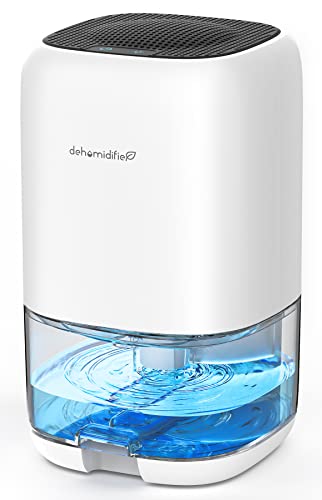
TABYIK is the smallest unit in this roundup: a 35-ounce tank (about 2.2 pints), a 280 square foot rating, a 28 dB quiet claim and auto shut-off. The title lists bedroom, RV, bathroom and closet use, so it fits the small, closed spaces common in a manufactured home: a hallway linen closet, a wardrobe, the water-heater closet door, or a guest room that sits idle.
It is not a whole-home tool. The 280 square foot figure is a ceiling for an empty, closed room, and the unit will do best in rooms of roughly 100 square feet or less. In a room that size, the 28 dB claim makes it plausible to sleep next to; the title does not say whether that figure is at the lowest fan setting, so confirm with the listing.
A mobile home owner with an RV in the driveway can use the same unit in the camper during storage, although draining it afterward matters. Never leave it running unattended in a closed vehicle without checking the manual first.
The one limitation to plan for is the tank. At 2.2 pints it can fill during a humid night, and then it shuts off, leaving the room damp until the morning. Set expectations accordingly, and pair it with a window sealing fix if the room is cold. Weatherstripping and a window insulation film can cut the cold-surface problem, and in a mobile home they often cost less than the dehumidifier itself.
Pros
- Smallest footprint and lowest price tier
- 28 dB quiet claim suits a bedroom or hallway closet
- Works for both house and RV storage
Cons
- Small tank fills quickly in humid weather
- Limited to rooms of about 100 square feet in practice
- No pint-per-day rating stated
Who it is for: owners with a damp closet, guest room or camper, and no need for whole-home drying.
The 34-pint class for the main living area
This is the sweet spot for most single-wides. A 34-pint unit has enough capacity to pull the home down from 65 percent to the mid 40s, and a hose means the tank never limits you.
Waykar 34 pint: our top pick for a single-wide
The Waykar listing gives the most informative title of the group: 34 pints, Energy Star, spaces up to 2,000 square feet, automatic or manual drainage and a 0.62-gallon water tank. Doing the arithmetic, 0.62 gallons is about 5 pints, so at its maximum rate of 34 pints a day (1.4 pints an hour) the tank would fill in around 3.5 hours. That number is the reason to use the drain hose in a hallway.
Auto drain means you attach a hose to the outlet and let gravity carry the water to a tub, a laundry drain or a floor drain. In a single-wide, the shower stall is often within 20 feet of the central hallway, so a hose routed along the baseboard to the tub is practical. Keep the hose sloped downward the whole way and secure it so no one trips.
The Energy Star mention matters for a running cost. We cannot give a wattage, because the title does not, but a certified unit is meant to remove more water per kilowatt-hour than a non-certified one of the same size. For homes that run a dehumidifier eight hours a day in summer, that efficiency adds up.
Put it in the central hallway or the open living room, 6 to 12 inches from any wall, with interior doors open so air circulates. Our guide to placing a dehumidifier in a two-story house explains the central-location logic, which applies in a long single-wide as well.
Pros
- Energy Star and a 34 pint rating in the title
- Auto or manual drainage with a 0.62-gallon tank
- 2,000 square foot claim leaves headroom for a single-wide
Cons
- Mid-range cost versus the small tank units
- Needs floor space in a narrow hallway
- Noise level and wattage are not in the title
Who it is for: single-wide owners who want one unit to handle the whole home.
KNKA 34 pint: a roomier claim and a timer
KNKA’s 34-pint listing claims 2,500 square feet and adds a drain hose, three modes, intelligent humidity control, a dry-clothes mode and a 24-hour timer. The pint rating matches the Waykar, while the square foot claim is higher and the price is lower, though both sit in the mid-range tier.
Where it helps a mobile home is the clothes mode. Many manufactured home laundry setups are a closet with a stacked dryer that vents outside, and on a rainy week the drying rack goes into a spare room. A dedicated dry-clothes setting can speed up that process. The 24-hour timer lets you schedule the run during off-peak hours or while you are at work, and you can set it to finish before you come home.
The title does not say Energy Star, and it does not give the tank size. For a continuous hose setup the tank size is secondary, but if you plan to use it without a hose, verify the capacity in the listing. Likewise the weight; moving a 34-pint machine between rooms is not trivial. If you plan to use the humidity control in auto mode, set a target of 45 percent and leave it for a week before adjusting, since the first few days include drying the furniture and carpet, not just the air.
If your home has a pump-style drain need, such as hosing up to a sink that is above the unit, look at our look at a dehumidifier with a pump, because gravity drainage can only go downhill.
Pros
- Larger 2,500 square foot claim for the same 34 pint rating
- 24-hour timer and dry-clothes mode
- Lower price than the Waykar
Cons
- No Energy Star mention in the title
- Tank size not given
- Bulky for a narrow hallway
Who it is for: shoppers who want the 34 pint class for less and plan to use scheduled runs or dry laundry indoors.
The 80-pint class for double-wides and wet underfloors
Eighty pints a day is a lot of machine for a home whose air volume is under 12,000 cubic feet. It makes sense only in specific cases.
AEOCKY 80 pint: for double-wides with a serious damp history
The AEOCKY title reads: 5,500 square feet, Energy Star, a maximum of 80 pints a day, a drain hose and an intelligent humidistat. At the highest price tier in this roundup, it is the most capable unit on paper, and the least necessary for most mobile homes.
Consider it if you have a double-wide that has had water damage, if the home sits in a very humid climate, or if you are drying out after a flood. Eighty pints a day is 3.3 pints an hour at the rating condition, which could clear a damp 1,500 square feet quickly, then cycle down once the humidistat is satisfied.
The risk is short-cycling. A machine with a large capacity in a small space reaches the target quickly and shuts off, then restarts when humidity creeps back, which can be hard on the compressor and wasteful. Setting the target to 45 percent rather than the lowest option reduces this.
A well-chosen humidistat target of 45 percent keeps the average run time down to a few hours a day. The title does not state the tank size or noise level. Also check the physical dimensions and the hose length on the listing, because the cabinet is likely large and mobile home hallways are narrow. If it does not fit through your door, it does not matter how good the specs are. For a home with a narrow hallway and a skirted underfloor, the sensible sequence is to fix the skirting and ground cover first, then see whether a 34-pint class unit already holds the home near 45 percent before stepping up to this size.
Pros
- 80 pint maximum and Energy Star in the title
- Drain hose and a humidistat for hands-off operation
- Strong choice after water damage, once the source is fixed
Cons
- Highest price tier in the group
- Oversized for most single-wides, with short-cycling risk
- Dimensions and weight not in the title
Who it is for: double-wide owners in humid regions or those drying out after a leak.
KNKA 80 pint: the same class for less money
KNKA’s 80-pint model claims Energy Star, 5,500 square feet, a drain hose, smart humidity control and sleep mode. It matches the AEOCKY on the main specifications but sits in the mid-range price tier, so the first question is what the extra cost buys. The titles offer no clear answer. Compare the listing photos, manual and warranty information.
The sleep mode in the title is interesting in a mobile home, where the unit often lives near a bedroom door. It likely reduces noise or fan speed at night, though the title does not specify the decibel level. A big compressor unit is rarely silent, so a hallway with a closed bedroom door is a better location than a bedroom corner.
Think about the energy. Using an illustrative assumption of 500 watts while running, 8 hours a day at 16 cents per kilowatt-hour, the cost would be about 4 kWh per day, 120 kWh per month and around 19 dollars. This is only an assumption; the title does not include wattage, so replace it with the number on the label.
It makes sense where you need the capacity of the AEOCKY and care about the lower price. The two listings are close enough on paper that a shopper should check shipping time, the return window and the length of the drain hose before deciding. In a typical single-wide, the 34 pint units above are enough, and an oversized machine in a small space will cycle on and off more than a right-sized one.
Pros
- 80 pint maximum, Energy Star and a 5,500 square foot claim
- Sleep mode and smart humidity control listed
- Mid-range tier versus the AEOCKY
Cons
- Too large for most manufactured homes
- Wattage, tank size and noise not in the title
- Heavy to move through narrow doors
Who it is for: larger homes or flood recovery where capacity matters and the budget is mid-range.
Choosing by situation
| If your situation is… | Choose | Why |
|---|---|---|
| One bedroom sweating, rest of home fine | BEDRED, NineSky or ToLife 95 oz | Large tank, low cost, no hose needed |
| Closet or camper only | TABYIK 35 oz | Smallest, quietest claim |
| Whole single-wide, 55 to 65% RH | Waykar 34 pint | Energy Star, auto drain, right size |
| Whole home plus laundry drying | KNKA 34 pint | Timer and dry-clothes mode, lower price |
| Double-wide, past water damage | AEOCKY or KNKA 80 pint | Capacity to dry down fast |
Drainage and placement in tight floor plans
The hose is the biggest quality-of-life upgrade in a mobile home. A gravity drain needs a destination lower than the unit’s outlet. Options include the tub, a laundry drain, a utility sink or an outside door where you can run the hose onto the ground away from the skirting. Never let the hose empty near the foundation or under the home, because that adds the water you are trying to remove.
Place the unit in the hallway outside the bedrooms, leave doors open and avoid corners. Keep the intake 6 to 12 inches from walls and curtains, and keep the machine off carpet if possible, since a hard surface lets you see leaks. If your furnace is in a closet, do not box the unit into that space; furnace air handlers need clearance.
In the winter, check the operating temperature in the manual. A mobile home with the thermostat at 62 degrees may be too cool for some compressor models, and defrost functions vary. Heating the space slightly may paradoxically improve moisture removal.
How we picked these
The Editorial team compared published specifications, manufacturer documentation and buyer reviews for each listing. Nobody on the team used or measured these units, so none of the performance figures here are observed results. Coverage, tank size, pint rating and Energy Star are quoted from each title; everything else, including cost, tank fill time and noise comparisons, is labeled as an estimate or an assumption.
We grouped the picks by how a manufactured home actually uses a dehumidifier: single rooms, whole homes and heavy-duty drying. We looked at whether the listing gives a pint rating, whether a drain hose is included, whether the tank is large, and whether the coverage claim fits a typical 980 to 1,570 square foot floor plan. We also flagged near-identical listings and did not treat brand names as proof of quality or warranty. Where the title is silent on wattage, noise or warranty, you are pointed to the listing or the manufacturer.
Price tier is relative to the group: Budget is the cheapest band, Mid-range sits in between and Premium is the highest.
Mistakes mobile home owners make
- Treating the dehumidifier as the fix for a leak. If there is standing water or staining, repair first.
- Buying the biggest unit. An 80-pint machine in a 700 square foot home short-cycles. Match capacity to the space.
- Draining near the foundation. It feeds the crawl-space problem.
- Venting the bath fan into the skirting. It adds pints to the underfloor with every shower.
- Setting the target too low. Aim for 40 to 50 percent, not 25. Over-drying cracks wood and wastes power.
- Ignoring the thermostat. A cool home makes window condensation worse regardless of the machine.
Verdict
For most single-wides, the Waykar 34 pint is the best all-round choice: Energy Star, a hose, and a coverage claim with headroom. The KNKA 34 pint is the value alternative if you want a timer and a clothes mode for less money. For one room or a closet, the budget BEDRED, NineSky or ToLife 95 oz tank units cost the least and need no hose, and the TABYIK 35 oz is the compact option. For wet double-wides, step up to the AEOCKY or the KNKA 80 pint. Fix the moisture source first, aim for 40 to 50 percent humidity, and confirm all wattage and warranty details on the listing.
Frequently asked questions
What size dehumidifier do I need for a mobile home?
A single-wide of roughly 900 to 1,100 square feet usually does well with a unit in the 30 to 35 pint class, while a double-wide near 1,500 square feet or a home with a damp underfloor may justify a 50 pint or larger model. Listings state their own coverage, so read pint rating and square footage together. If the home is only damp in one bedroom or closet, a small 35 to 95 ounce tank unit may be all you need.
Why is my mobile home so humid?
Manufactured homes have a smaller air volume, thinner walls and often a crawl space under the floor, so moisture from showers, cooking and ground vapor builds up faster than in a larger house. Missing ground cover under the home, blocked skirting vents, a clogged dryer vent or a leaking drain pipe are common culprits. Fix the source first, then use a dehumidifier to control what remains.
Can I put a dehumidifier in the crawl space under a mobile home?
Do not put a household unit under the home unless its manual explicitly rates it for crawl-space use. Temperatures, dust, tight clearances and electrical safety are all concerns. Start with a ground vapor barrier, working skirting vents, correct drainage and sealed belly wrap repairs. Dry the living area with an indoor dehumidifier, and talk to a qualified contractor if the underfloor stays wet.
Why do my mobile home windows sweat in winter?
Window condensation appears when indoor air hits a glass or frame surface colder than its dew point. At 70 degrees and 50 percent humidity, the dew point is about 51 degrees, so a cold single-pane or aluminum-framed window easily drops below it. Lowering indoor humidity to 35 to 40 percent usually removes most visible sweat. Running a dehumidifier helps, but better window insulation and bathroom fan use matter too.
Should I use a dehumidifier with a drain hose or a tank?
A hose is the better choice in a main living area because a 34 to 80 pint unit can fill a tank in a few hours during humid weather. Run the hose to a tub, sink or floor drain that sits lower than the unit’s outlet. A tank unit is fine for a bedroom, closet or bathroom that you can empty daily, and it avoids hose routing in tight hallways.