Key takeaways
- Temperature options: Hot, cold and room-temperature taps are common on mid-range units. Basic ones offer just hot and cold.
- Child safety: Look for a lock or two-step action on the hot tap, as listed by the maker.
- Self-cleaning: Some Brio and Avalon models describe sanitizing cycles. Treat these as a convenience, not a replacement for periodic manual cleaning per the manual.
- Noise: Compressor-based cooling and pumps produce sound. Reviewers note differences between brands, with Primo cited as quieter.
- Energy use: Look at the maker’s listed wattage and any energy-saving or sleep mode. A cooler with a switch to turn off the hot tank can save power in a household that rarely drinks hot water.
- Size and weight: Floor models are typically around 40 inches tall. Measure your doorway, kitchen corner and the clearance needed behind the unit for ventilation.
- Finish: Stainless steel hides fingerprints less than white or black plastic, but is easier to wipe clean and looks better in open kitchens.
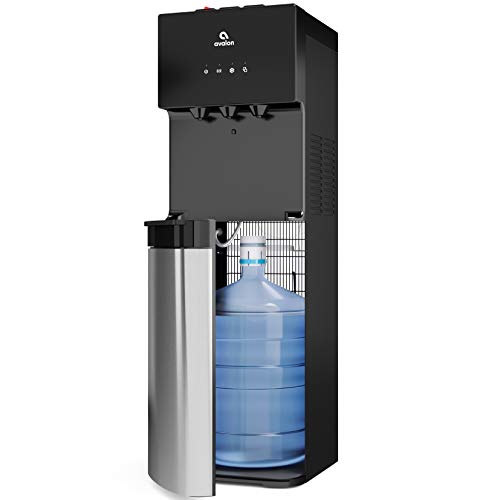
For most households the best water cooler is a bottom-load model such as the Avalon A4, Brio 520 series or Primo bottom-loader, because you slide a 5-gallon bottle in at floor level instead of lifting it overhead. Countertop and bottleless models suit small kitchens or buyers who want filtered tap water, while top-load coolers are the lowest-cost way to get hot and cold water on demand. Pick by space, how often you want to change bottles, and how much you care about noise and cleaning.
Our top picks



As an Amazon Associate we earn from qualifying purchases at no extra cost to you.
At a Glance: Water Cooler Types and Popular Models
| Model or type | Style | Best for | Key points from makers and reviewers | Limits |
|---|---|---|---|---|
| Avalon A4 (bottom-load) | Floor-standing, bottom-load | Families and offices wanting easy bottle swaps | Named the top or best-value bottom-loader across several 2026 roundups; hot and cold dispensing | Some owners want colder water or more temperature control |
| Brio 520 series | Floor-standing, bottom-load | Buyers wanting extra features | Kitchenbathpicks ranks it best overall; Cuttles notes a third spout and an LED empty-bottle alert; self-cleaning option listed by the maker | Higher tier than basic units |
| Primo bottom-loader | Floor-standing, bottom-load | Quiet rooms | Talk of the House reports it stood out for low noise; stainless versions suit open kitchens | Fewer standout extras |
| Avalon A12 | Countertop, bottleless | Small kitchens with tap-fed filtration | Maker lists self-cleaning and point-of-use filtering | Needs a plumbed water source and filter changes |
| Brio countertop top-load | Countertop, bottle on top | Compact spaces | Listed by reviewers for small spaces | Requires lifting the bottle up |
| New Wave Enviro porcelain crock | Countertop, gravity-fed | Budget buyers, no electricity needed for room-temperature water | Talk of the House names it a budget countertop pick | No built-in heating or cooling, ceramic care needed |
Several of the “best of” pages that rank water coolers read like affiliate listicles, and they do not agree with one another. Treat the Avalon, Brio and Primo names above as the models that appear most often, not as a lab-verified ranking.
Choosing the Right Type
Bottom-load coolers
These hide a 5-gallon bottle in a cabinet at the base and use a pump to push water up. They are the most popular for homes because you avoid lifting a roughly 40-pound bottle overhead. Many models include a night-light, a child-safety lock on the hot tap, and an LED to show the bottle is nearly empty. The trade-off is a pump, which adds a small amount of noise and another part to clean.
Top-load coolers
Top-load coolers are the classic design. They have fewer moving parts and a lower purchase tier, and they work without a pump. The downside is lifting the bottle. They suit people who change bottles infrequently or who can easily lift a full jug.
Countertop dispensers
Countertop units take less space and often hold a smaller bottle or a single reservoir. Some are gravity-fed ceramic crocks, which give room-temperature water only. Others use electrical cooling and heating in a compact body. If you want both hot and cold water in a small kitchen, confirm the width and height against your cabinet clearance before buying.
Bottleless point-of-use units
These connect to a water line and filter tap water, removing the need to store or carry bottles. The Avalon A12 is an example listed by reviewers. They require a plumbed connection and filter replacement on the maker’s schedule. For rental homes, check the lease before drilling or modifying plumbing, and consider whether a plumber should do the connection.
Key Features to Compare
- Temperature options: Hot, cold and room-temperature taps are common on mid-range units. Basic ones offer just hot and cold.
- Child safety: Look for a lock or two-step action on the hot tap, as listed by the maker.
- Self-cleaning: Some Brio and Avalon models describe sanitizing cycles. Treat these as a convenience, not a replacement for periodic manual cleaning per the manual.
- Noise: Compressor-based cooling and pumps produce sound. Reviewers note differences between brands, with Primo cited as quieter.
- Energy use: Look at the maker’s listed wattage and any energy-saving or sleep mode. A cooler with a switch to turn off the hot tank can save power in a household that rarely drinks hot water.
- Size and weight: Floor models are typically around 40 inches tall. Measure your doorway, kitchen corner and the clearance needed behind the unit for ventilation.
- Finish: Stainless steel hides fingerprints less than white or black plastic, but is easier to wipe clean and looks better in open kitchens.
Fit and Compatibility Notes
Most home coolers take standard 3- and 5-gallon bottles, but caps and neck sizes differ. Many 5-gallon bottles use a 48mm cap, though some designs use a crown top or a no-spill cap. Confirm in the cooler manual which bottle styles are accepted. Bottom-load units generally need a bottle with a particular cap or a tap-style adapter; using the wrong one can leak or slow the pump. Leave the gap behind the cooler that the maker states, often a few inches, for heat to escape.
Care, Cleaning and Safety
Unplug the cooler before cleaning. Sanitize the reservoir and spouts on the schedule given in the manual, typically every few months, using the cleaning solution the maker allows. Wipe the drip tray often because standing water can encourage mold. Keep the unit out of direct sun and away from heaters. Do not use a damaged cord or plug, and plug it directly into a grounded wall outlet, not an extension cord, unless the manual states otherwise. If a unit trips a breaker, leaks near the electrical parts, or smells burnt, stop using it and call the maker or a qualified electrician. Hot taps can scald, so keep them locked around children.
Pick X If… Decision Table
| Pick this | If you… |
|---|---|
| Avalon A4 | Want the most commonly recommended all-round bottom-loader |
| Brio 520 series | Want extras such as self-cleaning and three temperature options |
| Primo bottom-loader | Place the cooler in a living or open kitchen area and want it quiet |
| Avalon A12 or other bottleless unit | Have a water line and dislike storing bottles |
| Countertop top-load | Are short on floor space |
| Ceramic crock dispenser | Want a simple, low-tier option without electronics |
Budget Tiers
- Budget tier: Countertop crocks and basic top-load coolers. Fewer features, no frills.
- Mid-range tier: Most bottom-loaders including the Avalon and entry Brio and Primo models.
- Premium tier: Stainless bottom-loaders with self-cleaning, plus plumbed bottleless units.
Alternatives
- Filter pitcher or faucet filter: A lower-commitment way to improve tap water taste with no electrical parts.
- Refrigerator dispenser: If your fridge already offers filtered water, a separate cooler may be unnecessary.
- Countertop reverse-osmosis system: Needs a power source and a drain on some designs; follow the maker’s installation steps.
Running Costs and Space Planning
Coolers use power mostly for keeping water cold and hot between uses. Makers list wattage, and some models offer an eco mode or a switch for the hot tank, which is worth using in households that drink mostly cold water. Place the cooler where you can reach the bottle, drain tray and power cord without moving furniture, and keep a towel handy for the swap. Plan for where spare bottles will sit, since a household of four may use a bottle every week or so depending on habits.
If you rent, ask whether the landlord allows plumbed bottleless systems, and consider a freestanding bottle model that leaves no trace when you move out.
Frequently Asked Questions
Are bottom-load water coolers worth it?
For most households, yes, since you avoid lifting a heavy bottle. The pump adds a small amount of noise and a part that needs cleaning. If you rarely change bottles, a top-load unit may be sufficient.
How often should I clean a water cooler?
Many makers advise a full sanitizing every few months or whenever you change bottle brands, and a wipe-down of the drip tray weekly. Follow the exact interval and cleaning agent listed in your manual. Self-cleaning cycles, where offered, supplement but do not replace manual maintenance.
How much electricity does a water cooler use?
It depends on the model and whether the hot tank is left on. Makers list wattage and some provide energy-saving modes or switches to disable heating. If the cooler sits idle most of the day, turning off the hot tank can reduce use.
Can I put any 5-gallon bottle on any cooler?
Not always. Bottle caps and necks vary, and bottom-load coolers often need a specific cap or adapter. Read the manual for accepted bottle types before buying a bottle.
Are bottleless water coolers safer than bottled water?
Both can be safe when maintained. A bottleless unit relies on filter changes and regular cleaning, while bottled water relies on a reputable supplier and clean bottles. Follow the maker’s care schedule either way, and have your tap water tested if you have concerns about quality.
Where should I put a water cooler?
Choose a level spot away from direct sun and heat sources, with the clearance behind it that the maker specifies. Keep it near a grounded outlet. Avoid damp areas where drips may reach the electrical connection.