Key takeaways
- Find accent colors that work with a gray sofa, how warm and cool grays change the pairing, and how to test a palette with pillows, throws and rugs.
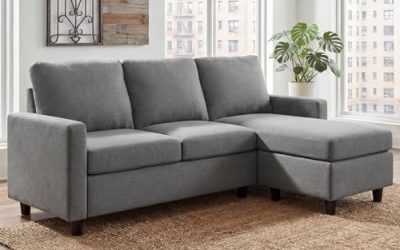
A gray sofa is easy to buy and surprisingly hard to finish. On its own it can read calm and tailored, but leave the rest of the room undecided and it drifts toward flat, cold or unfinished. The accent colors you place around it decide which way it goes: the same mid-gray three-seater can feel warm and welcoming, crisp and modern, or bold and dramatic depending on what sits next to it. Choosing those colors is the real decision, and it starts with the sofa itself, because not all grays behave the same way.
This guide walks through how to read your sofa’s undertone, how the light in your room shifts every pairing, and how much contrast the space can handle. It then matches palettes to common situations, from a small low-light room to a black-and-white scheme, and finishes with the mistakes that make gray rooms feel dull. Use it to build a shortlist of two or three accent colors, then test them with textiles before committing to paint.
As an Amazon Associate we earn from qualifying purchases
How to Choose
Read the Sofa’s Undertone First
Gray is rarely neutral in practice. Most gray upholstery leans warm, with beige, taupe or brown mixed in, or cool, with blue, green or violet underneath. That lean decides which accents look harmonious and which look like a mistake. Hold a sheet of plain white paper against the sofa in daylight: a warm gray will look slightly creamy or mushroom beside it, while a cool gray turns bluish or steely. Warm grays pair naturally with warm accents such as terracotta, ochre, camel and olive, because they share the same temperature. Cool grays sit better with navy, teal, plum and crisp white. Crossing the temperatures can work, but it has to be deliberate and repeated in more than one place, or the single warm cushion on a cool gray sofa just looks lost. If your sofa is a true mid-gray with no obvious lean, treat it as flexible and let the room’s light, covered next, make the call.
Judge the Room’s Light Before the Color
Light changes gray more than it changes almost any other color. A north-facing room receives cool, bluish daylight that pushes a gray sofa further toward blue and can make warm accents look muddy by late afternoon. South-facing light is warmer and more forgiving, flattering both families but sometimes washing pale accents out at midday. East and west rooms swing between the two across the day. Artificial light matters just as much in the evening, when most living rooms are actually used: warm bulbs pull a cool gray toward neutral, while cool white bulbs can make a warm gray look dingy. Before choosing, look at your sofa at three times of day and again under your evening lamps, and only trust accent colors that hold up in the light you live with most. A pairing that only works at noon will disappoint you every night.
Decide How Much Contrast the Room Needs
Contrast is what stops a gray sofa from dissolving into its surroundings. If the walls are pale gray or white and the floor is light, the sofa already sits in a low-contrast scheme, and accents need to supply the depth: navy, forest green, burgundy or charcoal textiles will anchor the seating area and give the eye somewhere to land. If the walls are dark or the room already has strong pattern, gentler accents such as blush, sage or powder blue keep the balance without shouting. A useful rule is to work in three levels: the sofa as the mid tone, one darker accent for weight, and one lighter accent for lift. Rooms that feel flat usually have everything clustered at the same level. Rooms that feel chaotic usually have contrast in too many unrelated colors. Pick your level first, then choose colors that deliver it.
Match the Accent to the Mood You Want
The same gray sofa can support very different rooms, so decide the feeling before the hue. For calm and restful, stay close to the sofa’s own family: layered blues, soft greens and muted neutrals keep the palette quiet and let texture do the work. For warmth and welcome, bring in the earthy end of the spectrum, rust, mustard, warm wood tones and cream, which counteract gray’s cool reputation. For energy and confidence, use saturated accents in small doses: emerald, cobalt or a sharp chartreuse against gray reads deliberate and modern. For a tailored, hotel-like feel, restrict yourself to black, white and one metallic or leather tone. None of these is more correct than the others, but mixing signals, half calm and half bold, is what makes a scheme feel accidental. Commit to one mood, repeat its colors at least three times around the room, and the sofa will look chosen rather than defaulted. Test the mood before committing to it fully: drape a throw in the lead color over the sofa for a few days and check the room morning and night, because a mood that works in only one light will not last.
Which One Fits Your Situation
A Small Room With Low Natural Light
Choose accents that add warmth and light rather than depth. Warm white and cream cushions lift the sofa without a hard edge, and a pale ochre or soft apricot throw brings the warmth that gray and dim light both lack. Keep saturated color small and high, a single rust cushion, a brass-toned lamp, artwork with warm tones, so the room feels glowing rather than crowded. Avoid navy and charcoal here; in weak light they merge with the sofa and shrink the space. A mirror or pale artwork hung opposite the window also helps, bouncing what daylight there is back onto the seating instead of letting it die at the glass.
A Family Room That Needs Warmth
Lean into the earthy palette and repeat it generously. Terracotta, camel and warm olive work across cushions, a washable throw and a patterned rug, and they hide the visual wear of daily family use better than pale fabrics do. Add warm wood in side tables or picture frames to carry the temperature around the room, and choose cream rather than bright white for anything large. If your gray is cool-toned, warm the scheme gradually with textiles first before considering paint, and keep at least one warm tone touching the sofa itself.
A Modern Black-and-White Scheme
Treat gray as the bridge between the two extremes. Use black in structured places, a floor lamp, picture frames, a side chair, and white in the rug and curtains to keep the scheme crisp. Then add exactly one accent color, because black and white plus gray is already a complete palette: emerald, cobalt or a clear red in two or three places gives the room its personality. Skip warm neutrals entirely here; beige or cream will read as an error against the clean contrast rather than as softness.
A Bright Room That Feels Too Cool
If the space gets plenty of daylight yet still feels chilly, the sofa’s cool undertone is probably being amplified by blue light and pale walls. Counter it with warm saturated accents placed low and wide, where the eye rests: a rust or paprika rug, mustard cushions, and a warm-toned throw across the sofa’s arm. Swap cool white bulbs for warm ones in the evening lamps, and bring in natural textures such as rattan, leather or unfinished wood, which read warm even in neutral colors.
Common Mistakes
- Matching gray to gray until the room goes flat: cushions, rug and curtains in the same gray as the sofa erase all depth, and the seating area becomes one undifferentiated block.
- Ignoring the undertone: adding warm beige or cream accents to a blue-gray sofa, or icy white to a warm greige one, makes both colors look slightly wrong without an obvious reason.
- Testing color only under shop lighting: store lighting is brighter and cooler than home light, so swatches and cushion covers should always be judged at home, in daylight and under your evening lamps.
- Using one accent item only: a single colored cushion reads as an accident. Repeat each accent color at least three times, at different heights, so it looks like a scheme.
- Painting the walls before testing textiles: walls are the most expensive thing to change. Build the palette with pillows, throws and a rug first, live with it, and paint last if at all.
Frequently Asked Questions
What is the safest accent color for any gray sofa?
Navy is the most forgiving starting point. It has enough depth to anchor a pale gray, enough coolness to sit comfortably beside a blue-gray, and it warms up acceptably next to a greige sofa when paired with cream or warm wood. If navy feels too expected, deep teal delivers the same anchoring effect with a little more character. Start with cushions and a throw in the color, check it in your room’s evening light, and expand from there only if it still looks right.
How can I tell whether my gray sofa is warm or cool?
Use the white paper test in natural daylight: place a plain white sheet against the upholstery and look at what the gray does beside it. If it appears creamy, mushroom or slightly brown, it is warm. If it turns bluish, steely or faintly violet, it is cool. Check again under your evening lamps, because artificial light can shift the reading. Once you know the temperature, choose accents from the same family for an easy scheme, or cross temperatures deliberately and repeat the accent so it looks intentional.
How many accent colors should I use with a gray sofa?
Two is the reliable number for most rooms: one main accent that carries the scheme and one supporting color that softens or sharpens it. A third is fine when it is a neutral, such as cream, black or a wood tone, rather than another hue. More than three true colors around one sofa usually fragments the scheme, especially in a small room. Whatever you choose, repeat each color at least three times, in textiles, art or objects, so the eye reads a pattern instead of a pile of unrelated items.
Should the rug match the accent colors or the sofa?
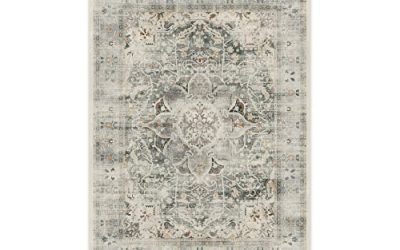
Neither exactly. A rug that matches the sofa precisely extends the gray block and flattens the floor, while a rug in a solid accent color can look heavy. The middle ground works best: a patterned rug that contains the sofa’s gray plus one or both of your accent colors ties the scheme together and hides everyday wear. Keep the rug lighter or darker than the sofa rather than the same value, and let cushions repeat its strongest accent color so the palette connects from floor to seat.
More from Amazon
Programs that pair well with the guide above. Offers and eligibility are set by Amazon and may change.
Collect the home and kitchen items you want in one registry that guests can shop from.
Create a wedding registrySet up recurring deliveries of everyday items on eligible products. Terms and savings are set by Amazon.
Explore Subscribe & SaveFree shipping on eligible items, Prime Video and more. Eligible new members can start with a free trial.
Start a Prime free trialAudiobooks and podcasts to listen to on the go. Eligible new members can start with a free trial.
Try Audible freeAs an Amazon Associate we earn from qualifying purchases.