Key takeaways
- Compare four great backpacking quilts for cold nights on the trail, from a 30-degree down top quilt to a light synthetic option for warm weather.
A backpacking quilt asks you to give up the zipper, the hood, and the insulation under your body, and in return it gives you less weight, more room to move, and a sleep system that packs down small. The real decision is not which quilt is warmest in the abstract, but which one matches the coldest night you will actually sleep through, the pad you already carry, and the weight you are willing to add to your pack. Side sleepers gain the most.


This guide is for thru-hikers counting grams, weekend backpackers who want one quilt for three seasons, hammock campers who need a top quilt that also works on the ground, and summer campers who want a light layer for mild nights. The four quilts below were chosen from their names and specs on the Amazon product page, covering down and synthetic fills, ratings from 41 degrees down to 18 degrees, and weights from just over a pound to about two pounds.
Quick Picks
As an Amazon Associate we earn from qualifying purchases
| Product | Best for | Key spec from title |
|---|---|---|
| KAMMOK Firebelly 30°F | Cold nights and hammock camping | 750-fill down trail quilt, 30-degree rating |
| Outdoor Vitals Down TopQuilt 30°F | A light down quilt for three seasons | 800-plus fill power down, 30-degree rating |
| WIND HARD Twilight II | The lightest down quilt here | 800-fill down, 18-degree limit rating |
| OneTigris Featherlite | Warm-weather trips on a budget | 35-ounce synthetic quilt, 41-degree rating |
How to Choose
Match the temperature rating to your coldest night
A quilt rating tells you the coldest night the maker designed it for, not the night you will sleep comfortably in it. A 30-degree quilt suits nights that stay above freezing, while a quilt rated to 18 degrees covers shoulder-season trips where frost forms on the tent. Plan around the coldest night of your trip, not the average, and remember that a quilt has no insulation underneath you, so your sleeping pad carries that half of the job. If your pad is thin, pick a warmer quilt than the forecast suggests, or add a liner for the coldest nights.
Count every ounce and every inch of packed size
A quilt earns its place in a backpack by weighing less and packing smaller than a sleeping bag of the same warmth. The quilts in this guide run from about 18 ounces to about 35 ounces, and that spread matters when every item in your pack gets weighed. Check the packed size too, because a quilt that stuffs down to the size of a water bottle leaves room for food and layers, while a bulky one eats the space a second day of food would take. Compare weight and packed size together, since the lightest quilt is not always the smallest when compressed.
Pick down or synthetic for your weather
Down gives you the best warmth for the weight and packs the smallest, which is why three of the four quilts here use it. Synthetic fill keeps working when it gets damp, dries faster, and costs less, which suits humid trails, summer rain, and trips where a wet quilt is a real risk. If you hike in dry mountains and guard your gear from rain, down is the clear pick. If you camp in wet forests, cross streams, or sleep under a tarp with no floor, synthetic fill forgives the damp nights that flatten down and steal its warmth.
Check the footbox, straps, and draft control
A quilt only works if it stays in place while you sleep, and three details decide that. A closed footbox keeps your feet warm without a zipper, while a footbox that opens flat lets you vent on warm nights. Pad straps hold the quilt to your sleeping pad so cold air cannot sneak in at the edges when you roll over. A draft collar or a drawcord at the neck seals the top, which matters most for side sleepers who turn through the night. If a quilt lacks straps, plan to buy them separately or accept drafts on every turn.
The 4 Best Options
KAMMOK Firebelly 30°F
The KAMMOK Firebelly 30 is the quilt for backpackers who want one piece of gear that covers ground sleeping, hammock camping, and sitting around camp. Its 750-fill water-repellent duck down holds warmth at 30 degrees, and the hidden zipper turns the quilt into a poncho, so it doubles as an insulation layer when the sun drops. The wide cut gives restless sleepers room to turn, and the YKK snaps and zippers are the kind of hardware that keeps working after seasons of use.
Specs
- 750-fill water-repellent duck down
- Rated to 30 degrees Fahrenheit
- Opens to 88 by 54 inches
- Water-resistant shell
- YKK snaps and zippers
- Hidden zipper converts the quilt to a poncho
- Stuff sack included
- Weighs 28.2 ounces, packs to 14.2 by 7.1 inches
Best for: Backpackers and hammock campers who want one quilt for sleeping and camp wear.
Watch out for: The wide cut suits restless sleepers, but smaller hikers may find extra fabric to manage.
ASIN: B07HQRF5DQ
Outdoor Vitals Down TopQuilt 30°F
The Outdoor Vitals Down TopQuilt is the lightest true down quilt in this group for its warmth, built around 800-plus fill power down that is treated to resist moisture. It suits three-season backpackers who want a quilt that disappears into the pack and still handles a cold night near freezing. The tapered shape wraps the body without wasted fabric, and the 10D ripstop nylon shell keeps the weight down while staying tough enough for regular trail use.
Specs
- 800-plus fill power down, treated with durable water repellent
- Rated to 30 degrees Fahrenheit
- 10D ripstop nylon shell
- Regular size weighs 1 pound 3.6 ounces, with 350 grams of fill
- Maximum width 56 inches, length 71 inches in Regular
- Tapered, draft-resistant shape
- Pad straps included
Best for: Three-season backpackers who want the lightest down quilt for nights near freezing.
Watch out for: The tapered cut saves weight, so broad-shouldered sleepers should check the 56-inch maximum width first.
ASIN: B07F1YCSJL
WIND HARD Twilight II

The WIND HARD Twilight II is the coldest and lightest down quilt here, packing 800-fill down into a quilt that weighs just over a pound in the Regular size. Its limit rating of 18 degrees makes it the pick for shoulder-season trips where other quilts in this guide would leave you cold. The 10D water-repellent nylon shell shrugs off tent condensation, and the pad straps hold the quilt tight to your mat so drafts cannot creep in at the edges.
Specs
- 800-fill white duck down
- Limit rating minus 8 degrees Celsius, 18 degrees Fahrenheit; comfort minus 2 degrees Celsius, 28 degrees Fahrenheit
- iFlex 10D water-repellent nylon shell
- Regular size: 350 grams of fill, 509 grams total weight
- Package size 17 by 28 centimeters
- Four pad straps to connect the quilt to a sleeping pad
- Mesh storage bag and compression sack included
Best for: Cold shoulder-season trips where the lightest possible down quilt matters most.
Watch out for: The quilt has no zipper or hood, so it depends on your pad and a warm hat on the coldest nights.
ASIN: B0D2QQXPRS
OneTigris Featherlite
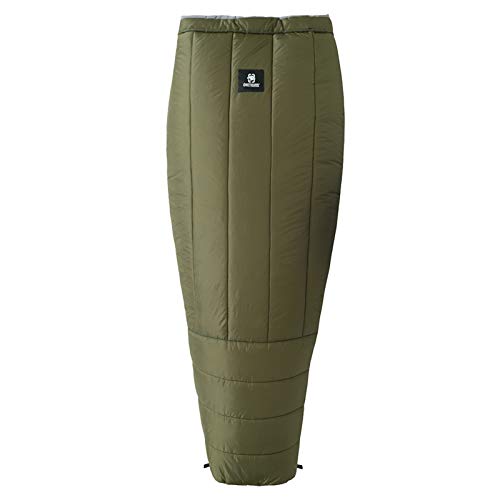
The OneTigris Featherlite is the warm-weather quilt for backpackers who want to try quilt sleeping without paying for premium down. Its synthetic fill handles damp nights better than down, and the 41-degree rating covers summer trips and mild spring and autumn nights. The hook-and-loop footbox seals in warmth or opens flat for venting, and the hollowed back design works with a sleeping mat, so the insulation sits where it warms you instead of being crushed underneath.
Specs
- SEE polyester fill
- Rated down to 41 degrees Fahrenheit, 5 degrees Celsius
- 20D ripstop nylon outer shell, 380T polyester pongee lining
- Weighs 35 ounces, 1000 grams
- Opens to 200 by 85 centimeters, 6.6 by 2.8 feet
- Hook-and-loop footbox that opens flat
- Baffled construction, stuff sack included
- Fits sleepers up to 72 inches tall
Best for: Summer and warm-weather backpacking where a light, affordable synthetic quilt is enough.
Watch out for: At 35 ounces it is the heaviest quilt here, so ultralight hikers should weigh it against the down options.
ASIN: B07TX14FQJ
Which One Fits Your Situation
You hike in cold mountains and want the warmest quilt here
Pick the WIND HARD Twilight II. Its 18-degree limit rating covers frosty shoulder-season nights that the 30-degree quilts cannot, and at just over a pound it adds the least weight for that warmth. Pair it with a warm pad and a hat, since it has no hood, and use the pad straps to seal out drafts.
You sleep in a hammock and want a quilt that works both ways
Pick the KAMMOK Firebelly 30. It works as a top quilt in a hammock and as a ground quilt in a tent, and the poncho mode gives you a warm layer around camp. The 30-degree rating covers most three-season nights, and the wide cut suits sleepers who move around. The hidden zipper makes the poncho switch quick at dusk, so one piece of gear covers sleep and camp.
You count grams and want the lightest down quilt for mild nights
Pick the Outdoor Vitals Down TopQuilt 30. The Regular size weighs 1 pound 3.6 ounces, which is the lightest down option here for nights near freezing. Its tapered shape and 800-plus fill down pack small, and the treated down keeps working if tent condensation finds it. It packs down smaller than the other down quilts here, so it leaves more room in your pack for food and layers on long trips.
You camp in warm weather and want the simplest affordable quilt
Pick the OneTigris Featherlite. Its 41-degree rating suits summer nights, the synthetic fill forgives damp weather, and the footbox opens flat when the night stays warm. It is the heaviest quilt here, but it is also the most forgiving choice for a first quilt. The hook-and-loop footbox opens flat on warm nights, and the synthetic fill keeps working even if the tent leaks a little.
Common Mistakes
- Buying a quilt rated for the average night instead of the coldest night of the trip.
- Forgetting that a quilt has no insulation underneath, so a thin summer pad leaves you cold from below.
- Picking a quilt that is too narrow, then fighting drafts every time you roll over.
- Choosing down for a wet trip with no way to keep it dry, then losing warmth to damp fill.
- Compressing a down quilt tight for months at home, which flattens the loft it needs to insulate.
Frequently Asked Questions
Are backpacking quilts warmer than sleeping bags?
A quilt is not warmer than a sleeping bag with the same fill, because it leaves your underside to the sleeping pad. It saves weight by removing the zipper, hood, and bottom insulation you compress flat anyway. With a warm pad and the right rating, a quilt sleeps just as warm as a bag while weighing less.
What temperature rating should I choose for a backpacking quilt?
Choose a rating below the coldest night you expect, not the average night of your trip. A 30-degree quilt suits most three-season trips, while an 18-degree quilt covers frosty shoulder-season nights. If you sleep cold or your pad is thin, go one step warmer than the forecast suggests, and carry a liner for the coldest nights.
Do I need a special sleeping pad for a backpacking quilt?
You need a pad with enough insulation for the night, because the quilt covers only the top half of your body. Most quilts include straps that hold them to a standard pad, so no special shape is needed. Check that your pad is wide enough for the straps and warm enough for the coldest night you plan to sleep through.
How do I keep a down quilt dry on the trail?
Pack the quilt in a waterproof stuff sack or dry bag inside your pack, and never store it compressed at home. Use a tent or tarp that keeps rain off your sleep system, and air the quilt out each morning so it dries before you pack it. Treated down resists damp better than untreated down, but no down quilt stays warm once soaked through.
More from Amazon
Programs that pair well with the guide above. Offers and eligibility are set by Amazon and may change.
Collect the home and kitchen items you want in one registry that guests can shop from.
Create a wedding registrySet up recurring deliveries of everyday items on eligible products. Terms and savings are set by Amazon.
Explore Subscribe & SaveFree shipping on eligible items, Prime Video and more. Eligible new members can start with a free trial.
Start a Prime free trialAudiobooks and podcasts to listen to on the go. Eligible new members can start with a free trial.
Try Audible freeAs an Amazon Associate we earn from qualifying purchases.