Key takeaways
- Rated capacity with headroom: Choose a chair rated at least 75 to 100 pounds above your weight. That margin absorbs the dynamic load of sitting down quickly and leaning back, which is where cheaper cylinders and welds give out first.
- Seat width and depth: Look for at least 21 inches of usable seat width between the armrests, and enough depth that two fingers fit between the seat edge and the back of your knees. Extra-wide seats matter more than plush padding for all-day comfort.
- Cushion construction: Pocket spring seats resist bottoming out far better than single-density foam, which compresses permanently under sustained load. If a chair only lists “thick foam,” expect the shape to flatten within months.
- Base and casters: Steel or reinforced nylon bases with dual rubber wheels handle heavier loads and protect hardwood and LVT flooring. Plastic bases and hard nylon casters are the two most common failure and noise complaints in this category.
- Adjustable lumbar and arms: Fixed lumbar bumps rarely land where a taller torso needs them, so height-adjustable support is worth prioritizing. Flip-up or 5D arms let you pull close to the desk without the armrests colliding with the desktop edge.
What's inside
Most desk chairs are engineered around a narrow band of bodies, and that band is smaller than the population actually sitting in them. If you carry more weight or more height than the spec sheet anticipated, the failure points show up fast: a seat pan that runs out of width by hour two, armrests that pinch instead of support, a gas lift that sags by mid-afternoon, and a five-star base that starts to creak in a way no one wants to hear. Weight ratings printed on the box are often optimistic, calculated for a static load rather than a real person shifting, reclining, and rolling across a floor eight hours a day.
This guide looks at chairs built from the frame outward for larger bodies, not standard models with a higher number stamped on them. The picks below span roughly 400 to 650 pound capacities and focus on the details that determine whether a chair lasts a year or five: seat width and depth, cushion construction, base and caster material, and how the lumbar support actually meets your back. Consider it a shortlist for anyone who has already replaced one chair too many.
As an Amazon Associate we earn from qualifying purchases.


How to Choose a/an Office Chair Large Person (2026)
- Rated capacity with headroom: Choose a chair rated at least 75 to 100 pounds above your weight. That margin absorbs the dynamic load of sitting down quickly and leaning back, which is where cheaper cylinders and welds give out first.
- Seat width and depth: Look for at least 21 inches of usable seat width between the armrests, and enough depth that two fingers fit between the seat edge and the back of your knees. Extra-wide seats matter more than plush padding for all-day comfort.
- Cushion construction: Pocket spring seats resist bottoming out far better than single-density foam, which compresses permanently under sustained load. If a chair only lists “thick foam,” expect the shape to flatten within months.
- Base and casters: Steel or reinforced nylon bases with dual rubber wheels handle heavier loads and protect hardwood and LVT flooring. Plastic bases and hard nylon casters are the two most common failure and noise complaints in this category.
- Adjustable lumbar and arms: Fixed lumbar bumps rarely land where a taller torso needs them, so height-adjustable support is worth prioritizing. Flip-up or 5D arms let you pull close to the desk without the armrests colliding with the desktop edge.
The Best Office Chair Large Person (2026)s Reviewed
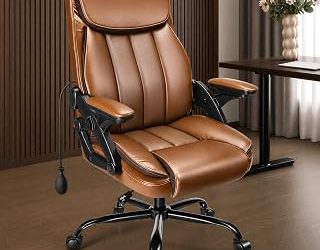
650lbs Big and Tall Executive Leather Chair
The highest capacity pick here, with a padded leather seat and adjustable lumbar support explicitly designed around eight-hour workdays. If you have broken a chair before or want a genuinely wide margin over your weight, this is the one to start with.
600LBS Heavy Duty Chair with 5D Flip Arms
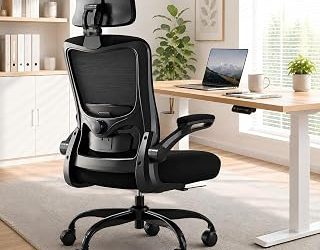
The 5D armrests are the standout: they adjust in height, width, depth, and angle, then flip up entirely when you need to tuck under a desk. Paired with a pocket spring cushion and dual rubber wheels, it is the most adjustable option on this list and the best fit for shared or multi-task workspaces.
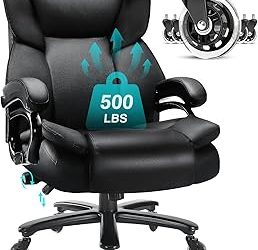
500lbs High Back Executive Chair with Pocket Springs
A well-balanced middle option that combines a pocket spring seat, adjustable lumbar support, and quiet rubber casters in a conventional executive silhouette. It looks appropriate in a home office that doubles as a video call background, which not every heavy-duty chair manages.
500lbs Extra Wide Seat Chair for Back Pain
Built around an extra-wide seat and thick armrest padding, with lumbar support positioned for people whose discomfort is specifically lower back. The upgraded wheels and reinforced base address the two components that usually fail first on high-capacity chairs.
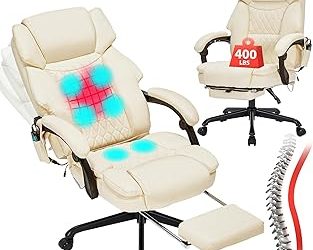
400LBS High Back PU Leather Chair with Flip-Up Arms
The most straightforward value pick, offering extra seat width, a high supportive back, and flip-up arms in clean black PU leather. Best suited to lighter loads within the big-and-tall range or part-time desk use rather than continuous full days.
Frequently Asked Questions
How much weight capacity do I actually need?
Add at least 75 pounds to your body weight when choosing a rating. Manufacturer figures typically reflect static load, so the extra buffer covers real-world movement and extends the life of the gas cylinder.
Are pocket spring cushions worth paying more for?
For larger bodies, yes. Individual springs distribute weight across the seat and rebound rather than compress flat, so the chair still supports you after a year instead of leaving you sitting on the base.
Will these chairs damage hardwood floors?
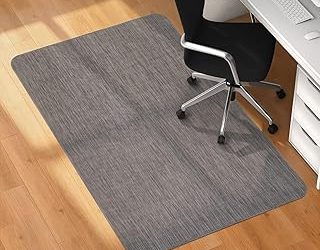
Chairs with rubber or polyurethane-coated casters are generally floor-safe. Avoid hard nylon wheels on wood or luxury vinyl, and add a low-pile rug or chair mat if you roll frequently in one area.
Do flip-up armrests reduce durability?
Not on well-built models, since the hinge sits above the load path and the frame carries the weight. Just avoid using a flipped-up arm as a handhold when standing.
Final Thoughts
For most buyers, the 600LBS chair with 5D flip arms offers the best overall combination of capacity, adjustability, and cushion quality, while the 650lbs leather executive chair is the safer choice if you want maximum structural margin or have outgrown chairs before. If budget is the deciding factor, the 500lbs extra-wide model delivers the seat width and lumbar support that matter most without the premium features.