Key takeaways
- Recline range and mechanism: Look for at least 135° of recline. Electric dual-motor systems offer smoother transitions and more precise positioning than single-lever manual locks, especially if you shift between upright work and relaxed viewing throughout the day.
- Weight capacity and frame construction: If you’re over 200 lbs or simply want a chair that won’t develop wobble after a year, prioritize steel-frame builds rated at 400 lbs or higher. “Big and Tall” isn’t just a size label — it signals reinforced gas lifts and wider seat pans.
- Lumbar support design: Fixed lumbar pillows compress and flatten over time. Adjustable or pocket-spring lumbar systems conform to your spine’s curve and maintain pressure where you need it, even after months of daily use.
- Seat cushion material: Standard foam flattens within six months. Pocket-spring cushions — the kind borrowed from mattress engineering — distribute weight more evenly and resist the dreaded “bottoming out” effect that plagues cheaper chairs.
- Extras that actually matter: Built-in footrests and USB charging ports add genuine value if you work long hours. Massage motors and heat functions are a bonus, but only if the base chair is solid — gimmicks can’t compensate for a weak frame.
What's inside
Shopping for a reclinable office chair in 2026 means wading through a flood of listings that all claim to be ergonomic, all promise lumbar relief, and almost none of them explain why they actually work for your body. The problem isn’t a lack of options — it’s the lack of honest differentiation. Most buyers end up with a chair that reclines beautifully on day one and leaves their lower back screaming by day thirty.
This guide cuts through the noise. I’ve evaluated the top reclinable office chairs available on Amazon right now — factoring in build quality, recline mechanism, weight capacity, material durability, and whether the comfort holds up during an actual eight-hour workday — so you can invest once and sit well for years.
As an Amazon Associate we earn from qualifying purchases.


How to Choose a Reclinable Office Chair (2026)
- Recline range and mechanism: Look for at least 135° of recline. Electric dual-motor systems offer smoother transitions and more precise positioning than single-lever manual locks, especially if you shift between upright work and relaxed viewing throughout the day.
- Weight capacity and frame construction: If you’re over 200 lbs or simply want a chair that won’t develop wobble after a year, prioritize steel-frame builds rated at 400 lbs or higher. “Big and Tall” isn’t just a size label — it signals reinforced gas lifts and wider seat pans.
- Lumbar support design: Fixed lumbar pillows compress and flatten over time. Adjustable or pocket-spring lumbar systems conform to your spine’s curve and maintain pressure where you need it, even after months of daily use.
- Seat cushion material: Standard foam flattens within six months. Pocket-spring cushions — the kind borrowed from mattress engineering — distribute weight more evenly and resist the dreaded “bottoming out” effect that plagues cheaper chairs.
- Extras that actually matter: Built-in footrests and USB charging ports add genuine value if you work long hours. Massage motors and heat functions are a bonus, but only if the base chair is solid — gimmicks can’t compensate for a weak frame.
The Best Reclinable Office Chairs (2026) Reviewed
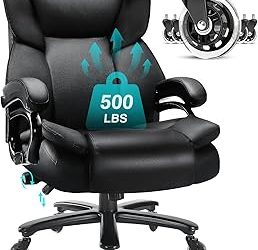
Dual Motor Executive Office Chair (Big & Tall, 450 lbs)
This is the premium pick for anyone who wants electric recline done right. The dual-motor system reaches 170° of zero-gravity positioning with one-touch reset, and the integrated USB ports keep devices charged without cable chaos. At a 450 lb capacity, the reinforced frame inspires genuine confidence — this is a chair built for long-term, heavy-duty use without compromising on smooth, quiet adjustability.
Massage Office Chair with Foot Rest and Heat (Cream)
Where most massage chairs sacrifice build quality for novelty, this model pairs a 6-point vibration and heat system with a surprisingly sturdy 400 lb reclining frame. The cream upholstery gives it a residential feel that works beautifully in a home office or reading nook, and the footrest deploys smoothly for mid-day resets. It’s the chair for someone who wants therapeutic function without the clinical aesthetic.
COMHOMA Big & Tall Ergonomic Gaming Chair with Embossed Leather
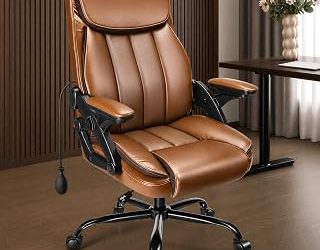
COMHOMA’s embossed leather model stands apart from the sea of flat-membrane gaming chairs. The pocket spring back support delivers pressure distribution closer to a quality mattress than a typical office seat, while the 150° recline and adjustable armrests accommodate both focused desk work and post-meeting decompression. It’s substantial in size and presence — expect it to anchor a room rather than blend into it.
GTPLAYER Big & Tall Office Chair with Pocket Spring Cushion
GTPLAYER took a different approach with soft velvet fabric instead of leather, and the result is a chair that feels warmer and more inviting during cold-weather work sessions. The pocket spring cushion handles lower back pain relief with a lumbar system that genuinely contours rather than pushes. For buyers prioritizing comfort over corporate aesthetics, this one earns its spot.
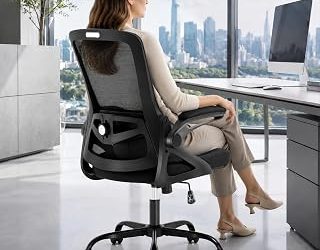
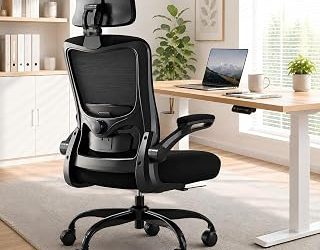
Marsail Ergonomic Mesh Office Chair
The Marsail is the outlier here — a lighter, more breathable option that trades heavyweight recline features for everyday ergonomic fundamentals done well. Its mesh back promotes airflow during long sessions, the 3D flip-up armrests adapt to various desk heights, and the recline function covers the essentials. If your priority is ventilation and adaptability over extreme recline angles, the Marsail delivers smart, no-fuss design.
Frequently Asked Questions
What is the ideal recline angle for an office chair?
For desk work, 110° to 120° maintains neutral spinal alignment. For relaxation or media viewing, 135° to 150° reduces disc pressure significantly. Chairs reaching 170° offer true zero-gravity positioning, which distributes body weight across the entire seat and backrest — ideal for brief rest periods during long workdays.
Are electric recline chairs more durable than manual ones?
Electric dual-motor systems generally last longer because they eliminate the mechanical stress of forceful lever adjustments. The motors move the chair smoothly and consistently, reducing wear on pivot points. The trade-off is that motor failure, while rare, requires replacement parts — something a manual mechanism never needs.
Do pocket-spring cushions really make a difference?
Yes. Standard foam compresses uniformly and loses resilience within months. Pocket springs compress independently under load, which means each section of the seat responds to your body individually. The result is better weight distribution, less pressure on the tailbone and hips, and noticeably slower degradation over time.
How much weight should a “Big & Tall” office chair actually support?
Truly robust Big & Tall chairs are rated for 400 to 450 lbs minimum. This rating reflects not just the seat capacity but the gas lift, base, and caster strength as well. A chair marketed as Big & Tall but rated under 350 lbs may be cutting corners on structural reinforcement.
Final Thoughts
For the best blend of power, comfort, and build integrity, the Dual Motor Executive Office Chair leads the pack with its electric zero-gravity recline and industry-leading weight capacity. If you want therapeutic features woven into a home-friendly design, the Massage Office Chair with Foot Rest and Heat punches well above its price point. And for those who value breathability and clean ergonomic design over maximum recline, the Marsail Ergonomic Mesh is the smart, understated choice. Every chair on this list solves a real problem — the right one depends on the problem you’re solving for.