Key takeaways
- Rated capacity with headroom: Choose a chair rated well above your body weight, not at it. Ratings reflect static load; sitting down involves impact force. A 300-pound sitter is far better served by a 500- or 600-pound chair than one rated 350.
- Seat geometry: Width matters more than any spec sheet number. Look for 21 inches or wider between the armrests, and check seat depth against your thigh length — too deep and the front edge cuts circulation behind the knees.
- Cushion architecture: Pocket-spring seats distribute load across independent coils instead of compressing a single foam slab, which is why they hold their shape years longer. High-density molded foam is the acceptable alternative; thin cut foam is not.
- Base and lift hardware: Insist on a steel or reinforced nylon five-star base, a Class 4 gas cylinder, and rubber or PU-clad casters. Rubber wheels roll silently on hardwood and won’t chew soft flooring.
- Support and silhouette: Adjustable lumbar depth beats a fixed molded curve, and flip-up arms let a wide chair tuck fully under a desk. Choose mesh for visual lightness in a small room, upholstered for a warmer, more furniture-like presence.
What's inside
Most desk chairs are quietly designed around a hypothetical 250-pound sitter. Push past that and the failure points are predictable: the gas cylinder starts drifting downward mid-morning, thin foam compresses into a hard shelf, plastic armrests develop a wobble, and the five-star base creaks on every swivel. The second problem is aesthetic. Chairs built for higher weight capacities have historically been styled like liquidation-sale conference furniture — glossy black bonded leather, wing-shaped headrests, a silhouette that fights every other object in the room. If your desk lives in a bedroom corner or a shared living space, that matters.
This guide looks at six chairs rated between 330 and 750 pounds, assessed on the things that actually determine longevity: frame construction, cushion architecture, seat width, cylinder class, and caster material. Alongside that, we weighed how each one reads visually — proportion, bulk, and whether it disappears into a considered room or dominates it. There are structural picks for all-day work and leaner mesh options for smaller footprints.
As an Amazon Associate we earn from qualifying purchases.




How to Choose a Office Chair For Obese Person (2026)
- Rated capacity with headroom: Choose a chair rated well above your body weight, not at it. Ratings reflect static load; sitting down involves impact force. A 300-pound sitter is far better served by a 500- or 600-pound chair than one rated 350.
- Seat geometry: Width matters more than any spec sheet number. Look for 21 inches or wider between the armrests, and check seat depth against your thigh length — too deep and the front edge cuts circulation behind the knees.
- Cushion architecture: Pocket-spring seats distribute load across independent coils instead of compressing a single foam slab, which is why they hold their shape years longer. High-density molded foam is the acceptable alternative; thin cut foam is not.
- Base and lift hardware: Insist on a steel or reinforced nylon five-star base, a Class 4 gas cylinder, and rubber or PU-clad casters. Rubber wheels roll silently on hardwood and won’t chew soft flooring.
- Support and silhouette: Adjustable lumbar depth beats a fixed molded curve, and flip-up arms let a wide chair tuck fully under a desk. Choose mesh for visual lightness in a small room, upholstered for a warmer, more furniture-like presence.
The Best Office Chair For Obese Person (2026)s Reviewed
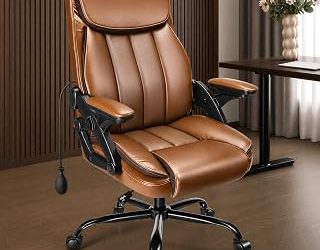
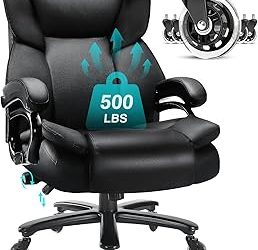
600LBS Heavy Duty Executive Chair with 5D Flip Arms
This is the most complete package here: a 600-pound rating, a pocket-spring seat that resists the flattening that ruins foam chairs, and 5D arms that flip up and out of the way. The dual rubber wheels are the underrated detail — they carry load without gouging floors and stay quiet on hard surfaces.
500lbs Big and Tall Executive Desk Chair
A slightly more restrained take on the same engineering, with adjustable lumbar support and pocket-spring cushioning behind a cleaner high back. The reduced visual bulk makes it the easier choice for a home office that doubles as a guest room or living area.
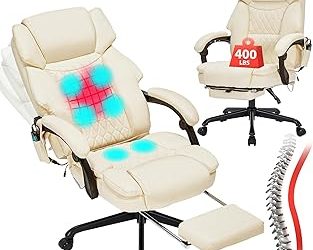
X100 Ergonomic Mesh Chair with Footrest
For anyone who works long stretches and wants to recline, the integrated footrest and 3D adjustable lumbar system turn this into a genuine break chair as well as a work chair. Breathable mesh keeps it cooler than upholstery through summer months.
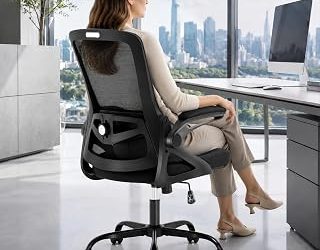
Ergonomic Mesh 400lbs High Back Desk Chair
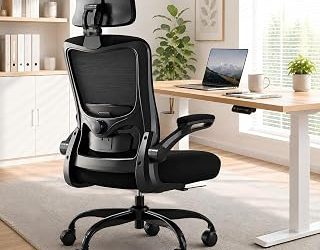
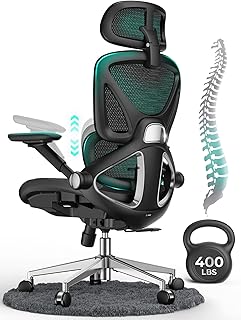
A well-balanced mid-capacity option with 4D flip-up arms, a three-position tilt lock, and an adjustable 3D headrest. The PU casters and open-back profile suit compact rooms where a heavy executive silhouette would overwhelm the space.
330LBS High Back Mesh Office Chair
The lightest and most affordable entry, best for part-time desk work at the lower end of the capacity range. Adjustable lumbar support and flip-up armrests deliver the essentials without visual weight.
Frequently Asked Questions
How much weight capacity do I actually need?
Add at least 100 pounds of margin over your body weight. Ratings are measured under static load, and the dynamic force of sitting down repeatedly is what fatigues cylinders and welds. If you’re near 400 pounds, the 750lbs Big and Tall model gives real structural margin.
Is mesh strong enough for a heavier sitter?
Quality mesh over a steel frame is fine, and it breathes far better than leatherette. That said, mesh seat pans tend to develop a hammock sag over time under sustained load, so a padded or pocket-spring seat with a mesh back is the more durable hybrid.
Does a wider seat always mean more comfort?
Only up to a point. If the seat is much wider than your hips, you lose the lateral support that keeps you centered, and the arms sit too far out to be useful. Match the width to your body, then prioritize cushion quality.
What usually fails first?
The gas cylinder, followed by the armrest mounts. Both are typically replaceable for very little money, so check that the manufacturer sells parts and confirm the warranty covers the cylinder specifically — many exclude it.
Final Thoughts
For all-day work with genuine structural margin, the 600LBS Heavy Duty Executive Chair is the pick — pocket springs and rubber casters are the two features that separate chairs that last from chairs that sag. The 500lbs Big and Tall model offers nearly the same build in a tidier silhouette, and the X100 Mesh Chair with Footrest is the one to choose if breathability and a proper recline matter more than upholstered warmth.