Key takeaways
- Seat pan shape: A waterfall front edge and a gently contoured or saddle-shaped surface let your thighs descend without a hard cutoff behind the knee. Flat slabs concentrate load directly under the sit bones and hip sockets.
- Foam density and depth: Look for high-resilience or cold-cure foam at least three inches thick. Soft, low-density padding bottoms out within weeks, which puts you effectively on the plywood base.
- Adjustable lumbar height, not just depth: Supporting the lower back at the right vertical position rotates the pelvis forward and lifts weight off the hip joints. A lumbar pad you can slide up and down matters more than one that only pushes in.
- Seat height and tilt range: Aim for a hip angle slightly above 90 degrees, with feet flat. A forward seat tilt or reliable recline lets you unload one position and adopt another before stiffness sets in.
- Weight rating with honest width: Big-and-tall builds aren’t only about capacity — the wider pan and beefier gas lift resist the sagging that creates uneven hip loading over time.
What's inside
Hip pain has a way of narrowing your whole world down to the six hours you spend in a chair. It rarely announces itself as a hip problem, either — it shows up as a hot spot under one sit bone, a tight band along the outer thigh, or that involuntary shift to one side by mid-afternoon. The culprit is usually geometry rather than willpower: a seat pan that’s too short, too flat, or too firmly domed forces the pelvis into a posterior tilt, and the hip joint absorbs the difference for the rest of the workday.
This guide approaches the problem the way we’d approach any piece of furniture that has to live in a real room — function first, but with an eye on how it looks parked beside a desk in a shared space. Below you’ll find full chairs built for pressure distribution, plus two cushions worth considering if your current chair is structurally fine and only the seat is failing you. We’ve weighted our picks toward seat depth, cushion architecture, and adjustability at the pelvis, since those are the three variables that actually move the needle on hip comfort.
As an Amazon Associate we earn from qualifying purchases.


How to Choose a/an Office Chair For Hip Pain (2026)
- Seat pan shape: A waterfall front edge and a gently contoured or saddle-shaped surface let your thighs descend without a hard cutoff behind the knee. Flat slabs concentrate load directly under the sit bones and hip sockets.
- Foam density and depth: Look for high-resilience or cold-cure foam at least three inches thick. Soft, low-density padding bottoms out within weeks, which puts you effectively on the plywood base.
- Adjustable lumbar height, not just depth: Supporting the lower back at the right vertical position rotates the pelvis forward and lifts weight off the hip joints. A lumbar pad you can slide up and down matters more than one that only pushes in.
- Seat height and tilt range: Aim for a hip angle slightly above 90 degrees, with feet flat. A forward seat tilt or reliable recline lets you unload one position and adopt another before stiffness sets in.
- Weight rating with honest width: Big-and-tall builds aren’t only about capacity — the wider pan and beefier gas lift resist the sagging that creates uneven hip loading over time.
The Best Office Chair For Hip Pain (2026)s Reviewed
GTPLAYER Big and Tall Gaming Chair
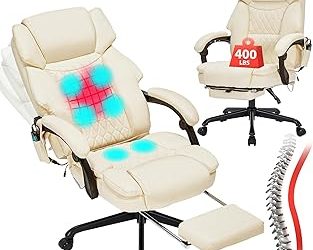
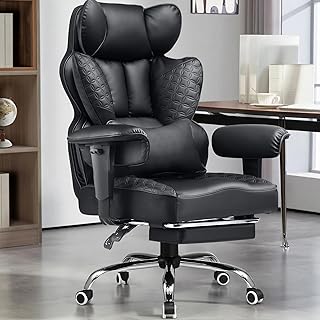
The 3D saddle-shaped cushion here is the real story: it dips slightly where the sit bones land and rises at the outer edges, which keeps the femurs from splaying and takes rotational strain off the hips. Rated to 400 lbs with pocket-spring lumbar support and a retractable footrest, it’s the pick for anyone who needs to alternate between upright work and genuine reclined recovery.
CIOMAN 500lbs Big and Tall Office Chair
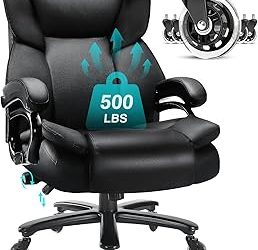
The inflatable lumbar support is the standout feature, letting you dial pelvic support up or down by the hour rather than committing to one fixed curve. Add a 500 lb rating, a generously wide cushion, and rubber casters that roll quietly on hard floors, and you have the most accommodating chair on this list for larger frames.
Ergonomic Office Chair, White/Gold
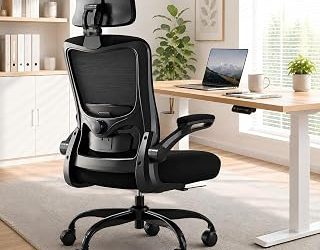
Proof that a therapeutic chair doesn’t have to read as medical equipment — the white and gold treatment sits comfortably in a bedroom office or a room you’d rather not surrender to black mesh. Underneath the styling, the virgin foam seat resists collapse and the 2D lumbar plus 3D headrest give you genuine adjustability at both ends of the spine.
Ergonomic Mesh Office Chair, 400lbs
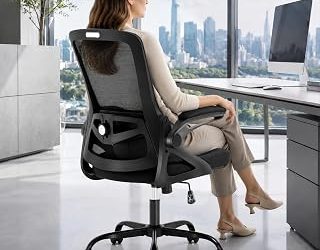
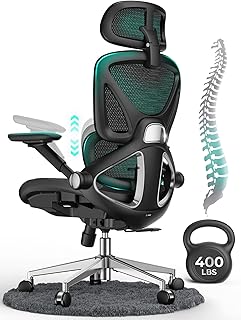
Our value recommendation for warm rooms and long sessions, with breathable mesh, a 400 lb frame, and 4D flip-up arms that tuck away when you want to sit closer to the desk. The three-level tilt lock is the feature to use deliberately: alternate between two settings across the day to keep hip loading from becoming static.
Lexeme X Large Memory Foam Seat Cushion
An X-large footprint means your thighs stay supported rather than dropping off the sides, and the coccyx cutout relieves tailbone pressure that often refers pain into the hips. Pair it with the included lumbar pillow and you can rehabilitate a decent chair for a fraction of a replacement.
Frequently Asked Questions
Can a chair actually reduce hip pain, or just mask it?
A well-configured chair removes a mechanical aggravator, which is meaningful but not curative. Persistent or one-sided hip pain deserves a proper assessment from a clinician, since bursitis, impingement, and referred lumbar pain each respond to different treatment.
Is a cushion enough, or do I need a new chair?
If your chair’s height, lumbar support, and armrests already fit you and only the seat feels punishing, a quality memory foam cushion is the efficient fix. If the frame sags or the seat is too shallow for your femur length, replace the chair.
Should I choose mesh or foam?
Mesh backs breathe beautifully, but for hip pain, prioritize a foam seat pan. Suspended mesh seats can create edge pressure along the front rail — a hybrid with a mesh back and cushioned seat is the safest combination.
How often should I get up?
Every 30 to 45 minutes, briefly. No seat geometry survives four uninterrupted hours, and changing position frequently does more for hip comfort than any single adjustment.
Final Thoughts
For most buyers, the GTPLAYER Big and Tall Gaming Chair strikes the best balance of saddle-shaped seat design, sturdy build, and recline options. Choose the CIOMAN 500lbs Big and Tall if you want adjustable lumbar inflation and maximum seat width, or start with the Lexeme X Large Memory Foam Seat Cushion if your existing chair is worth saving.