Key takeaways
- Height range: Measure from floor to desk surface, then subtract roughly 10 to 12 inches for a comfortable perch height. Most standing desks sit between 38 and 48 inches, so look for a stool that tops out near 31 inches or higher.
- Movement style: Wobble bases encourage constant micro-adjustment and core engagement, which suits shorter bursts. A fixed pedestal with a swivel is calmer and better if you want to focus without negotiating with the furniture.
- Seat shape and padding: Saddle and contoured seats distribute weight forward through the thighs and keep the pelvis neutral. Flat round seats look cleaner but concentrate pressure, so density of foam matters more than thickness.
- Foot support: Once you clear about 28 inches, dangling feet become the limiting factor. A footrest ring or angled base gives you somewhere to brace and dramatically extends how long the stool stays comfortable.
- Base stability and finish: Check for a weighted non-slip base on wobble models and quality casters on drafting styles. A matte black powder-coat disappears into most interiors; chrome draws the eye and reads more industrial.
What's inside
The standing desk solved one problem and quietly created another. After the novelty of the first upright week wears off, most people discover a middle zone their setup doesn’t account for: not standing, not really sitting, just needing somewhere to park for twenty minutes without collapsing the whole ergonomic experiment. A conventional office chair is too low and too committed. A bar stool is too rigid. What the space actually calls for is a perch, something that holds you at desk height while keeping your hips open and your feet engaged.
This guide looks at the stools worth putting under a standing desk in 2026, judged the way I’d judge any piece of furniture entering a room: how it moves, how it holds up, and whether it earns its footprint. I’ve grouped active-sitting wobble stools alongside a more traditional drafting chair, because the right answer depends on how many hours you’re logging and how much support you want when you get there.
As an Amazon Associate we earn from qualifying purchases.


How to Choose a Stool For a Standing Desk
- Height range: Measure from floor to desk surface, then subtract roughly 10 to 12 inches for a comfortable perch height. Most standing desks sit between 38 and 48 inches, so look for a stool that tops out near 31 inches or higher.
- Movement style: Wobble bases encourage constant micro-adjustment and core engagement, which suits shorter bursts. A fixed pedestal with a swivel is calmer and better if you want to focus without negotiating with the furniture.
- Seat shape and padding: Saddle and contoured seats distribute weight forward through the thighs and keep the pelvis neutral. Flat round seats look cleaner but concentrate pressure, so density of foam matters more than thickness.
- Foot support: Once you clear about 28 inches, dangling feet become the limiting factor. A footrest ring or angled base gives you somewhere to brace and dramatically extends how long the stool stays comfortable.
- Base stability and finish: Check for a weighted non-slip base on wobble models and quality casters on drafting styles. A matte black powder-coat disappears into most interiors; chrome draws the eye and reads more industrial.
The Best Standing Desk Stools, Reviewed
Height Adjustable Swivel Wobble Stool, 21–31″
The most generous height range here, dropping low enough to work at a seated desk and rising to meet a standing surface, with a rocking motion that keeps you subtly in motion. The anti-slip bottom does real work, and the wide 10-inch travel makes this the safest pick for a shared or multi-use workstation.
IWMH Sit-Stand Stool with Footrest
The footrest is the differentiator. It turns a perch into something you can actually occupy for an hour, and the 360-degree swivel means you can turn to a second monitor or a colleague without repositioning the base. My default recommendation for anyone splitting the day evenly between sitting and standing.
SONGMICS ACTIVO Wobble Stool, 23.6–33.3″
The tallest range in this group and the most considered design, with a balance mechanism that feels tuned rather than merely springy. Ink black keeps it visually quiet in a living room or open-plan space, and the non-slip base holds firm on hard floors and low-pile rug alike.
IWMH Round Seat Swivel Stool
A backless, minimal silhouette that reads more like a design object than office equipment, which is exactly why it works in a kitchen or bedroom corner. Best suited to shorter sessions where posture is naturally active and you don’t need lumbar contact.
Drafting Chair with Flip-Up Armrests and Footrest Ring
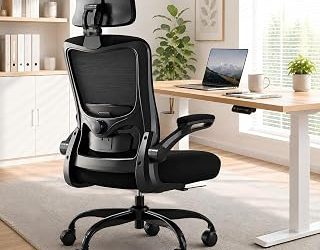
The outlier and the most supportive option, pairing lumbar support with an adjustable footrest ring for long stretches at a raised desk. Flip-up arms let you tuck in close when you’re typing, then open up when you lean back to read.
Frequently Asked Questions
Is a wobble stool actually better for your back?
It encourages postural variation rather than fixing you in one position, which is the real benefit. It’s not a substitute for a properly supported chair over a full workday, but it’s meaningfully better than static perching.
How high should the stool be relative to my desk?
Aim for a seat height roughly 10 to 12 inches below your desk surface, adjusted so your forearms rest parallel to the floor. Most people land toward the upper third of a stool’s range.
Do I still need a footrest if the stool adjusts?
Yes, if you’re above about 28 inches. Unsupported feet shift load into the lower back and shorten your comfortable sitting window considerably.
Can these replace an office chair entirely?
For most people, no. Treat a stool as the third position between standing and full sitting rather than a one-chair solution.
Final Thoughts
For most standing desk setups, the IWMH Sit-Stand Stool with Footrest is the balanced choice, offering active seating without punishing you for staying put. The SONGMICS ACTIVO earns its place if you want the tallest range and the cleanest design language, while the drafting chair with flip-up armrests is the pick for anyone logging long hours who wants genuine back support at raised height.