Key takeaways
- Output at height, not on paper: Light falls off fast, so budget roughly 30-50% more lumens than you would for an eight-foot ceiling. Look for fixtures rated 1200 lumens and up per unit, then multiply by fixture count rather than hoping one centerpiece can carry the room.
- Aimability: On a slope, a fixed downlight throws its beam sideways. Adjustable gimbals, track heads, and multi-directional spots let you correct for pitch and target seating, artwork, or a kitchen island instead of washing a blank wall.
- Slope rating and mounting depth: Confirm the fixture tolerates your pitch or accepts a sloped-ceiling adapter, and check canless designs for junction-box clearance in a rafter cavity where insulation is tight.
- Color temperature control: Selectable CCT models let you tune 2700K for lounging spaces and 4000K for work zones from the same product line, keeping a large open volume visually consistent. High CRI (90+) matters most where art, wood tones, or food are on display.
- Dimming and access: Deep, flicker-free dimming down to 5-10% turns a bright vaulted room into an evening one. Prioritize sealed LED modules with long rated life and remote or app control, because ladder trips are the real cost of ownership.
What's inside
Vaulted ceilings sell the house and then quietly sabotage the lighting plan. All that volume above your head means the fixture sits eight, ten, sometimes fourteen feet from the floor, and light obeys the inverse square law whether or not you like the architecture. A pendant that glowed beautifully in a showroom at seven feet reads as a dim ornament at twelve. Add a sloped mounting surface, a ridge beam in an awkward spot, and the reality that nobody wants to haul a ladder in to change a bulb, and the “statement chandelier” instinct starts to look expensive.
The fixtures that actually work up there tend to be less glamorous and far more strategic: aimable spots that push light where you need it, slim canless downlights that disappear into the plane, and high-output flush mounts that fill the room instead of decorating the apex. This guide covers the six fixtures worth specifying in 2026, what to check before you commit, and how to layer them so a tall room feels warm rather than cavernous.
As an Amazon Associate we earn from qualifying purchases.


How to Choose a Light For Vaulted Ceiling (2026)
- Output at height, not on paper: Light falls off fast, so budget roughly 30-50% more lumens than you would for an eight-foot ceiling. Look for fixtures rated 1200 lumens and up per unit, then multiply by fixture count rather than hoping one centerpiece can carry the room.
- Aimability: On a slope, a fixed downlight throws its beam sideways. Adjustable gimbals, track heads, and multi-directional spots let you correct for pitch and target seating, artwork, or a kitchen island instead of washing a blank wall.
- Slope rating and mounting depth: Confirm the fixture tolerates your pitch or accepts a sloped-ceiling adapter, and check canless designs for junction-box clearance in a rafter cavity where insulation is tight.
- Color temperature control: Selectable CCT models let you tune 2700K for lounging spaces and 4000K for work zones from the same product line, keeping a large open volume visually consistent. High CRI (90+) matters most where art, wood tones, or food are on display.
- Dimming and access: Deep, flicker-free dimming down to 5-10% turns a bright vaulted room into an evening one. Prioritize sealed LED modules with long rated life and remote or app control, because ladder trips are the real cost of ownership.
The Best Light For Vaulted Ceiling (2026)s Reviewed
Ensenior 6″ LED Recessed Wafer Downlights, 12-Pack
The workhorse solution for a vaulted great room: twelve ultra-thin canless wafers at 1200 lumens each, with five selectable color temperatures and dimming to 5%. Spacing them along the slope in two runs delivers even, architectural light no single fixture can match, and the included junction boxes make retrofit work genuinely manageable.
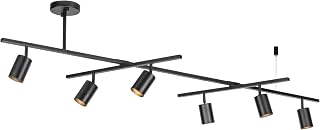
Multi-Directional Adjustable Ceiling Spot Light, 3-Light
A semi-flush track head cluster in matte black that solves the aiming problem outright, with three independently pivoting heads for artwork, a stair landing, or a reading corner. It reads industrial-modern without visual bulk, which keeps it from competing with exposed beams.
LED Dimmable Ceiling Spotlight, CRI≥98
Where color accuracy is non-negotiable, this 12W cylinder spot is the specifier’s pick, with near-perfect CRI≥98 and a warm 3000K output that flatters walnut, textiles, and gallery walls. Cluster two or three on a vaulted plane to build a gallery-grade accent layer.
Shine LUEST 39.4″ Modern Flush Mount
At nearly forty inches wide and 100W, this dimmable acrylic disc is one of the few flush mounts with the scale and output to anchor a tall living or dining space on its own. Remote control for brightness and color temperature is a practical win when the fixture is well out of reach.
12″ Slim LED Flush Mount, 4-Pack
A quiet, cost-effective way to distribute 3200 lumens across a hallway, loft landing, or vaulted bedroom without recessing anything. The 0.67″ profile and five-CCT selector let a four-pack unify adjacent rooms at a fraction of the price of decorative fixtures.
Frequently Asked Questions
How many lights does a vaulted ceiling need?
Plan for layers rather than a count. Most vaulted rooms want general illumination from four to eight recessed or flush fixtures, plus two or three aimable spots for task and accent work. Total room lumens of 3,000-5,000 is a reasonable starting target for an average living space.
Can recessed lights be installed on a slope?
Yes, with the right hardware. Use gimbal trims or sloped-ceiling housings so the beam aims straight down, and verify insulation-contact ratings before cutting into a rafter bay.
Are flush mounts or pendants better up high?
Flush mounts and semi-flush fixtures usually win on maintenance and light distribution. Reserve pendants for spots where a long downrod places them at a usable height, such as over a dining table or stairwell.
What color temperature suits a large vaulted room?
Choose 2700K-3000K for living and sleeping areas to keep the volume feeling intimate, and 3500K-4000K in kitchens and work zones. Selectable-CCT fixtures let you adjust after installation once you see how the space behaves.
Final Thoughts
For most vaulted rooms, build the plan around the Ensenior 6″ wafer 12-pack for even ambient coverage, then add the Multi-Directional 3-Light spot cluster to aim light exactly where the slope would otherwise waste it. If recessing is off the table, the Shine LUEST 39.4″ flush mount delivers the output and presence to carry a tall room on its own.