Key takeaways
- Mount depth before blade span: Measure from ceiling to the top of your head with the bed made, then subtract. A 7-inch ultra-slim housing buys you clearance that a 42-inch sweep can’t compensate for if the blades sit at forehead height.
- Circulation versus exchange: A ceiling fan makes existing air feel cooler on skin. A roof vent fan pulls hot air out and drags cross-breeze in through open windows. Humid climates and small galleys want exchange; dry heat with good shade wants circulation.
- Reversibility is not a gimmick: Intake mode pushes cool evening air down over the bed. Exhaust mode strips cooking steam and shower humidity before it condenses on your window frames. Any vent fan without both directions is doing half a job.
- Amp draw against your bank: Look for stated draw at maximum speed, not average. Multi-speed control matters here — a 10-speed fan lets you dial in the lowest setting that still feels like something, which is where overnight battery math is won.
- Lighting that earns its wire run: Integrated LEDs should be dimmable or at minimum warm-toned. Cool white at full output above a bunk turns a restful space into a walk-in cooler. Color-selectable ambiance lighting is genuinely useful for evening wind-down.
What's inside
Air movement is the unglamorous backbone of a livable rig. You can spec the walnut cabinet fronts, the boucle dinette cushions, the brass-toned reading sconces — and none of it matters at 2 a.m. in August when the air inside the coach has gone thick and still. The trouble is that 12V ceiling fans occupy an odd corner of the market: half the listings are marine crossovers, half are roof vents wearing a ceiling fan’s name, and the specs that actually predict comfort (blade sweep, mount depth, amp draw, motor noise floor) tend to be buried under enthusiastic capitalization.
This guide sorts the category into its two real families — flush-mount ceiling fans that circulate air you already have, and roof vent fans that exchange it entirely — and explains which one belongs above your bed versus your galley. We looked at mounting height, reversibility, integrated lighting quality, rain sensing, and how each unit behaves on a battery bank that also has to run a compressor fridge. Six picks below, chosen for how they perform in a space measured in inches, not square footage.
As an Amazon Associate we earn from qualifying purchases.


How to Choose a 12v Rv Ceiling Fan With Light (2026)
- Mount depth before blade span: Measure from ceiling to the top of your head with the bed made, then subtract. A 7-inch ultra-slim housing buys you clearance that a 42-inch sweep can’t compensate for if the blades sit at forehead height.
- Circulation versus exchange: A ceiling fan makes existing air feel cooler on skin. A roof vent fan pulls hot air out and drags cross-breeze in through open windows. Humid climates and small galleys want exchange; dry heat with good shade wants circulation.
- Reversibility is not a gimmick: Intake mode pushes cool evening air down over the bed. Exhaust mode strips cooking steam and shower humidity before it condenses on your window frames. Any vent fan without both directions is doing half a job.
- Amp draw against your bank: Look for stated draw at maximum speed, not average. Multi-speed control matters here — a 10-speed fan lets you dial in the lowest setting that still feels like something, which is where overnight battery math is won.
- Lighting that earns its wire run: Integrated LEDs should be dimmable or at minimum warm-toned. Cool white at full output above a bunk turns a restful space into a walk-in cooler. Color-selectable ambiance lighting is genuinely useful for evening wind-down.
The Best 12v Rv Ceiling Fan With Light (2026)s Reviewed
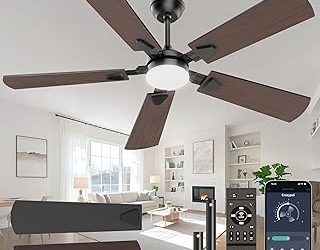
DC 12V 42-Inch Low Profile Flush Mount Ceiling Fan
This is the pick when you want a fan that reads as furniture rather than equipment — a genuine 42-inch sweep in a flush-mount body, with black blades that disappear against a dark ceiling panel instead of drawing the eye. The DC motor runs quietly enough for a bedroom, and the wide span means low speeds move real air, which is the whole point.
Upgraded Remote Control RV Roof Vent Fan with Rain Sensor
Ten speeds and a rain sensor make this the most forgiving vent fan on the list — it closes itself when weather arrives, which matters if you leave the rig unattended. At 14 inches and reversible, it handles both bedroom intake and galley exhaust without complaint.
RV Roof Vent Fan 14×14 with 4-Color LED Ambiance Light
The standout for anyone who cares how a space feels after dark: four selectable LED colors turn a purely functional roof opening into a soft ceiling glow. Ultra-quiet operation and remote control round it out, and the 24V-max tolerance gives it headroom on upgraded electrical systems.
Lumitronics 12V LED Bunk Light and 2-Speed Fan Combo
A smart solution for bunks and tight cabins where a ceiling fan simply won’t fit. The dome light and two-speed fan share one low-draw fixture with a removable lens for cleaning, and the quiet motor won’t wake the person in the bunk below.
EKIZNSN 30-Inch RV 12V Ceiling Fan
The 7-inch ultra-slim mount is the headline here — it fits under low ceilings where larger fans become a hazard, while six speeds give you fine control from barely-there to breezy. Rated for patios and pergolas too, so it earns its keep at the awning as well.
Frequently Asked Questions
Can I run a 12V ceiling fan overnight on battery?
Generally yes. Most DC ceiling fans in this class draw modest current at low and mid speeds, and running one all night typically costs less than a compressor fridge cycling. Check the stated draw and size against your usable amp-hours.
Do I need a roof vent fan if I already have a ceiling fan?
They solve different problems. If your rig traps heat and humidity — and most do — a vent fan is the higher-value addition, because circulating hot air only goes so far.
Is a rain sensor worth the extra cost?
If you camp anywhere with unpredictable weather or leave the vent open while away, yes. Replacing water-damaged interior panels costs far more than the sensor premium.
Will a 12V ceiling fan work on a 24V system?
Only if the unit specifies it. Some models list a 24V maximum tolerance; running a 12V-only fan on 24V will damage the motor. Confirm the rating before wiring.
Final Thoughts
For most rigs, the Upgraded Remote Control Roof Vent Fan is the smartest first purchase — ten speeds, reversible airflow, and rain protection cover the practical bases. If ambiance matters as much as airflow, the 14×14 Vent Fan with 4-Color LED brings genuine design intent to a part of the ceiling nobody usually thinks about. And for low-clearance coaches, the EKIZNSN 30-Inch delivers real sweep in a 7-inch profile.