Key takeaways
- Base and bulb shape: Nearly all chandeliers use an E12 candelabra base, but shape decides the look. B10 and B11 are slim torpedo profiles that suit modern and transitional fixtures, CA10 is the tapered flame tip for traditional arms, and both should be measured against your existing bulbs so glass doesn’t collide with crystal or shades.
- Color temperature: Stay between 2500K and 2700K for living and dining spaces. 2700K is the versatile soft white that flatters paint and textiles; 2500K leans amber and pairs beautifully with aged brass, walnut, and layered lighting schemes. Skip anything at 3000K or above unless the chandelier lives in a utility area.
- Brightness by bulb count: Think in total lumens, not per-bulb wattage claims. A six-arm fixture with 450-lumen bulbs delivers roughly 2,700 lumens, which is plenty for a dining room. Twelve arms often call for the lower 380–460 lumen range to avoid glare, especially with exposed clear glass.
- Real dimming performance: Confirm the bulb is dimmable and check compatibility with your switch. LED filament bulbs draw so little current that older triac dimmers can hum or flicker at low settings. If you dim regularly, look for wide-range dimming and be prepared to swap in an LED-rated dimmer.
- Clear versus frosted glass: Clear glass shows off the filament and creates sparkle through crystal, but it’s harsher at eye level. Frosted diffuses more evenly under shades. Buy in multipacks so every socket matches — mixed batches are the most common reason a chandelier looks off.
What's inside
A chandelier is the one fixture in a home that gets judged from across the room. Yet most of the disappointment people feel about theirs has nothing to do with the frame, the finish, or the crystal — it comes down to six or twelve small bulbs screwed into it. Mismatched color temperatures, a flicker that shows up only on a dimmer, oversized glass that crowds the arms, or a cold bluish cast that flattens warm wood and brass: these are the details that turn a sculptural centerpiece into an eye-level annoyance.
This guide approaches chandelier bulbs the way a designer specifies them — as a visible material, not a hidden component. Below you’ll find the current standouts for E12 candelabra sockets, covering filament-style LEDs that read as authentic under clear glass, flame-tip options for traditional fixtures, and a classic incandescent for anyone who wants that unmistakable amber glow. We’ll also walk through the specs that actually change how a room feels, so you can buy once and stop thinking about it.
As an Amazon Associate we earn from qualifying purchases.


How to Choose a Bulb For Chandelier (2026)
- Base and bulb shape: Nearly all chandeliers use an E12 candelabra base, but shape decides the look. B10 and B11 are slim torpedo profiles that suit modern and transitional fixtures, CA10 is the tapered flame tip for traditional arms, and both should be measured against your existing bulbs so glass doesn’t collide with crystal or shades.
- Color temperature: Stay between 2500K and 2700K for living and dining spaces. 2700K is the versatile soft white that flatters paint and textiles; 2500K leans amber and pairs beautifully with aged brass, walnut, and layered lighting schemes. Skip anything at 3000K or above unless the chandelier lives in a utility area.
- Brightness by bulb count: Think in total lumens, not per-bulb wattage claims. A six-arm fixture with 450-lumen bulbs delivers roughly 2,700 lumens, which is plenty for a dining room. Twelve arms often call for the lower 380–460 lumen range to avoid glare, especially with exposed clear glass.
- Real dimming performance: Confirm the bulb is dimmable and check compatibility with your switch. LED filament bulbs draw so little current that older triac dimmers can hum or flicker at low settings. If you dim regularly, look for wide-range dimming and be prepared to swap in an LED-rated dimmer.
- Clear versus frosted glass: Clear glass shows off the filament and creates sparkle through crystal, but it’s harsher at eye level. Frosted diffuses more evenly under shades. Buy in multipacks so every socket matches — mixed batches are the most common reason a chandelier looks off.
The Best Bulb For Chandelier (2026)s Reviewed
60W Equivalent Clear B11 LED Filament Candelabra Bulbs, 6-Pack
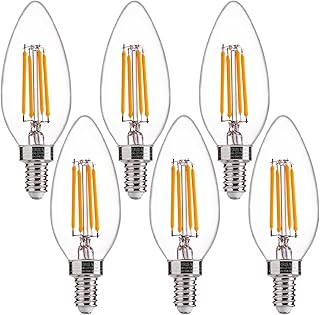
The strongest all-around choice for a statement fixture: 60W-equivalent output in a slim clear B11 with a genuinely convincing filament pattern. The 2700K tone stays warm without going orange, and the six-pack sizing matches most mid-size chandeliers exactly.
E12 Flame Tip Candle Bulbs, 4W 460 Lumen, 12-Pack
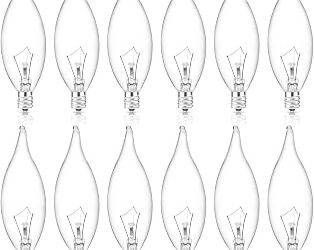
Built for traditional and crystal fixtures where a flame-tip silhouette matters. At 460 lumens each, a full twelve-arm install lands bright but not glaring, and the value per bulb is hard to beat when you’re relamping an entire chandelier.
COLWATT 12-Pack CA10 Candelabra Bulbs, 2500K
Choose these when you want warmth over neutrality — 2500K reads distinctly amber and does lovely things to brass, bronze, and dark wood. The clear CA10 glass and moderate 380 lumens make it a smart pick for ceiling fans and pendants where output is spread across many sockets.
12-Pack Dimmable B11 Vintage Filament Bulbs, 450 Lumens
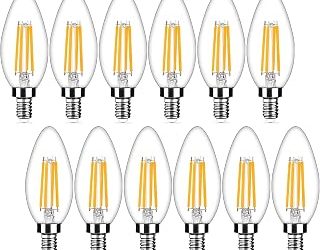
A clean, well-balanced filament bulb that dims smoothly across most of the range rather than dropping out early. The clear glass and 2700K color make it an easy default for open kitchens and entryway fixtures that stay on for hours.
E12 B10 Edison Filament Bulbs, 470 Lumens, 5-Pack
The most refined-looking option here, with a narrow B10 body and visible Edison-style filament that suits minimalist and industrial fixtures. The five-pack works well for smaller chandeliers or as a matched set for sconces flanking the main fixture.
Frequently Asked Questions
Can I mix LED and incandescent bulbs in one chandelier?
Technically yes, visually no. Even at identical color temperatures, the two render color differently and the mismatch is obvious on a fixture where all bulbs are visible at once. Replace the full set.
Why do my LED chandelier bulbs flicker when dimmed?
Almost always a dimmer mismatch. Legacy dimmers were designed for high-wattage incandescent loads and can’t regulate a handful of 4W LEDs. An LED-compatible dimmer resolves it in most cases.
How bright should a dining room chandelier be?
Aim for roughly 2,000 to 3,000 total lumens over a standard table, then dim from there. Bulb count matters more than individual brightness — twelve sockets need less output each than six.
Is 60W-equivalent too bright for exposed clear bulbs?
For fixtures at or near eye level, yes. Clear glass at 60W-equivalent can be uncomfortable in a dining nook or stairwell. Use 40W-equivalent for exposed installations and save the higher output for shaded or higher-mounted fixtures.
Final Thoughts
For most homes, the 60W Equivalent Clear B11 LED Filament 6-Pack is the specification to beat — accurate warmth, convincing filament detail, and enough output for a primary fixture. If you’re relamping a larger traditional chandelier, the E12 Flame Tip 12-Pack delivers the right silhouette at the right price, while the COLWATT 2500K set is the one to reach for when your palette skews brass, bronze, and warm wood.