Key takeaways
- Pump before capacity: Attics sit above your living space, so gravity drainage is usually impossible. A built-in condensate pump lets you route a hose up and out through a soffit, gable, or existing drain line. Without one, you are climbing a ladder to empty a bucket every day.
- Auto defrost is non-negotiable: Unconditioned attics drop well below 60°F in shoulder seasons. Standard room dehumidifiers ice over and stall. Look for hot-gas or auto defrost rated down to roughly 33–41°F.
- Match pints to volume, not floor area: Square footage claims assume eight-foot ceilings. Attics have sloped, tall, irregular geometry and constant air leakage, so size up one tier from what the box suggests.
- Footprint and access: Measure your hatch or pull-down opening first. Low-profile commercial units slide through tight openings; tall consumer towers often will not, and cannot sit level on joists.
- Humidistat quality: A unit that cycles on a real humidistat and restarts after a power blip will hold 45–50% RH unattended. Cheap sensors overshoot, run constantly, and drive up your bill.
What's inside
Attics are the forgotten room in most homes — a sealed pocket of air sitting directly under the hottest, coldest, and wettest surface of the entire structure. When warm interior air rises and meets a cool roof deck, moisture condenses on sheathing, rafters, and insulation. The result rarely announces itself. It shows up months later as musty air pushing down through ceiling vents, cupped hardwood on the floor below, rusted nail heads, or insulation that has gone flat and useless. Anyone who has pulled up a hatch and smelled that damp-cardboard note knows the feeling.
The fix is not a bigger fan or another box of vents. It is controlled dehumidification sized to an unconditioned, temperature-swinging space. This guide covers the units that actually hold up in attic conditions: models with low-temperature auto defrost, built-in condensate pumps for vertical drainage, and honest coverage ratings. Below are our picks for 2026, followed by a buying framework and answers to the questions we hear most from homeowners and renovators.
As an Amazon Associate we earn from qualifying purchases.



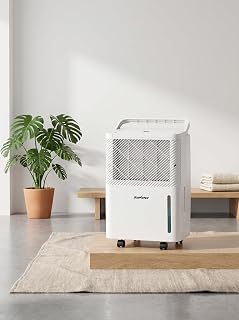
How to Choose a Dehumidifier For Attic (2026)
- Pump before capacity: Attics sit above your living space, so gravity drainage is usually impossible. A built-in condensate pump lets you route a hose up and out through a soffit, gable, or existing drain line. Without one, you are climbing a ladder to empty a bucket every day.
- Auto defrost is non-negotiable: Unconditioned attics drop well below 60°F in shoulder seasons. Standard room dehumidifiers ice over and stall. Look for hot-gas or auto defrost rated down to roughly 33–41°F.
- Match pints to volume, not floor area: Square footage claims assume eight-foot ceilings. Attics have sloped, tall, irregular geometry and constant air leakage, so size up one tier from what the box suggests.
- Footprint and access: Measure your hatch or pull-down opening first. Low-profile commercial units slide through tight openings; tall consumer towers often will not, and cannot sit level on joists.
- Humidistat quality: A unit that cycles on a real humidistat and restarts after a power blip will hold 45–50% RH unattended. Cheap sensors overshoot, run constantly, and drive up your bill.
The Best Dehumidifier For Attic (2026)s Reviewed
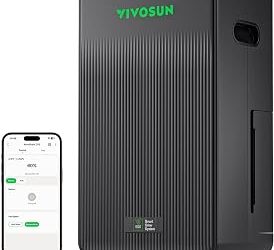
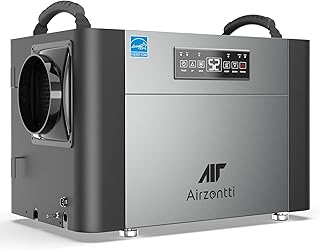
155 Pint Commercial Dehumidifier with Pump and Drain
This is the heavyweight choice for large, leaky, or actively damp attics, and the Energy Star rating keeps running costs sane for a unit this size. The integrated pump plus auto defrost combination is exactly the spec sheet you want when the space is unconditioned year-round.
75 Pint Crawl Space Dehumidifier with Pump and Drain Hose
Built for crawl spaces, which makes it unusually well suited to attics — low profile, 200 CFM of air movement, and coverage to 4,000 sq. ft. It fits through awkward hatches better than almost anything in its capacity class, and set-and-forget humidity control means you install it once and stop thinking about it.
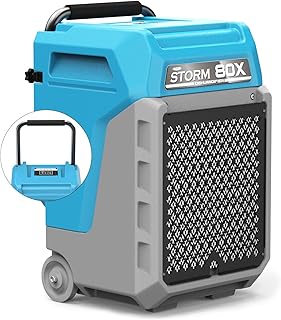
ALORAIR Storm 80X, 170 PPD LGR
LGR (low grain refrigerant) technology pulls moisture at temperatures where conventional compressors give up, which is why restoration crews trust it. The six-year limited warranty and wheeled housing make it the pick for anyone dealing with active water damage or a chronically wet roof deck.
KNKA Energy Star 80 Pint Dehumidifier
A strong middle path: 4,500 sq. ft. of coverage, continuous drain hose, and genuinely smart humidity control at a consumer price. Best in finished or semi-finished attic rooms that stay within normal temperature range rather than raw, uninsulated ones.
Hisense 50-Pint Portable Dehumidifier
Quiet, efficient, and well-behaved in converted attic bedrooms or studios where noise matters as much as performance. Treat it as a comfort tool for conditioned attic space, not a remediation unit for a cold roof cavity.
Frequently Asked Questions
What humidity level should I target in an attic?
Aim for 45–55% relative humidity. Below 40% you risk drying out wood framing unnecessarily; above 60% you are in mold and dust-mite territory.
Do I still need attic ventilation if I run a dehumidifier?
It depends on your assembly. Vented attics rely on airflow and a dehumidifier fights that incoming outdoor air. Sealed or spray-foamed attics are the ideal candidate for mechanical dehumidification.
Can I leave a dehumidifier running unattended up there?
Yes, provided it has a pump, a secured hose, auto restart, and a dedicated outlet. Install a leak sensor nearby as cheap insurance and inspect the drain line seasonally.
Will a small 25-pint unit work?
Only in a compact, well-sealed, conditioned attic room under about 1,500 sq. ft. The 25-pint class is a maintenance tool, not a solution for a genuinely damp roof cavity.
Final Thoughts
For most homeowners, the 75 Pint Crawl Space Dehumidifier hits the sweet spot of low-profile fit, pump drainage, and real cold-weather capability. Step up to the 155 Pint Commercial unit for large or persistently wet attics, or the ALORAIR Storm 80X if you are recovering from water damage and want restoration-grade performance with a warranty to match.