Key takeaways
- Motor type: DC motors draw roughly 60–70% less power than AC equivalents, run cooler, and give you six or more speed steps instead of three. For bedrooms, the low end matters most — a true whisper speed is only possible with DC.
- Color temperature control: Look for 3CCT switching (typically 3000K, 4000K, 5000K) plus independent dimming. Warm-dim capability at 3000K is what separates a fixture you’ll actually leave on in the evening from one you’ll replace.
- Downrod and ceiling height: Blades should sit 8–9 feet off the floor. Flush-mount setups suit 8-foot ceilings; anything above 9 feet needs an extended downrod, so confirm what’s in the box before you buy an adapter separately.
- Blade finish and sightlines: You see the underside of a fan far more than the top. Dual-finish blades and matte metal housings photograph and live better than glossy plastic, which telegraphs its price point under direct light.
- Reversibility and controls: A reverse setting makes a fan useful in winter by pushing warm air down. Remote control is standard now; app or timer functions are worth it only if you’ll genuinely use scheduling.
What's inside
Forty-eight inches is the size most people land on by accident. A 52-inch fan overwhelms a 12×12 bedroom, a 44-inch model looks undersized above a dining table, and somewhere between the two sits the blade span that actually fits the rooms most of us live in. The trouble is that the 48-inch category is crowded with fixtures that treat the light as an afterthought — a flat pancake of cool white glare bolted to the motor housing, dimmable in theory, harsh in practice. When a fan is the only object hanging in the middle of your ceiling, it deserves more consideration than a spec sheet skim.
This guide looks at 48-inch ceiling fans with integrated lighting through a design lens as much as a performance one: how the light behaves at night, whether the blade profile reads as intentional from below, and how quietly the motor runs when the room goes silent. We’ve grouped picks across the styles that matter right now — minimal DC-motor fans, mid-century-leaning wood blades, caged farmhouse silhouettes, and the retractable “fandelier” hybrids that disappear into a chandelier when the blades aren’t spinning.
As an Amazon Associate we earn from qualifying purchases.


How to Choose a 48 Inch Ceiling Fan With Light (2026)
- Motor type: DC motors draw roughly 60–70% less power than AC equivalents, run cooler, and give you six or more speed steps instead of three. For bedrooms, the low end matters most — a true whisper speed is only possible with DC.
- Color temperature control: Look for 3CCT switching (typically 3000K, 4000K, 5000K) plus independent dimming. Warm-dim capability at 3000K is what separates a fixture you’ll actually leave on in the evening from one you’ll replace.
- Downrod and ceiling height: Blades should sit 8–9 feet off the floor. Flush-mount setups suit 8-foot ceilings; anything above 9 feet needs an extended downrod, so confirm what’s in the box before you buy an adapter separately.
- Blade finish and sightlines: You see the underside of a fan far more than the top. Dual-finish blades and matte metal housings photograph and live better than glossy plastic, which telegraphs its price point under direct light.
- Reversibility and controls: A reverse setting makes a fan useful in winter by pushing warm air down. Remote control is standard now; app or timer functions are worth it only if you’ll genuinely use scheduling.
The Best 48 Inch Ceiling Fan With Light (2026)s Reviewed
YUHAO 48″ Brushed Nickel DC Ceiling Fan
A quietly confident all-rounder: the DC motor delivers six speeds with almost no audible hum, and the 3CCT dimmable LED gives you real control over evening light instead of a single fixed tone. ETL listing for covered outdoor use makes it a rare fan that works equally well in a bedroom or on a screened porch.
Honeywell Carmel 48″ Ceiling Fan
The Carmel is the safe architectural choice, with a slim silver housing and a choice of gray oak or brown chestnut blades that reads clean against white ceilings. Honeywell’s build quality and parts availability are the real argument here — this is a fan you install once and forget about.
Fanbulous 48″ Black Ceiling Fan
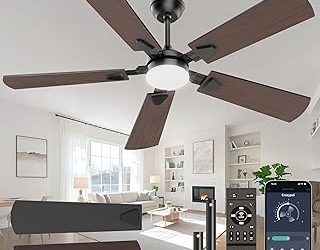
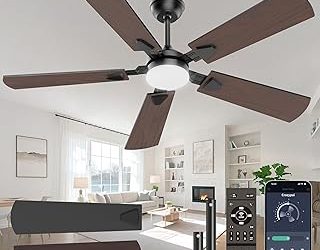
Matte black, five flat blades, no ornamentation — this is the fan for rooms where you want the ceiling to stay visually quiet. The DC motor and 3CCT adjustable LED punch above the category, and the low speeds are genuinely low.
48″ Retractable Fandelier
The blades tuck away when the fan is off, leaving a brushed nickel chandelier form that suits dining rooms and bedrooms where a conventional fan would feel utilitarian. App and remote control, six speeds, and a timer make it the most feature-dense pick on this list.
Fanbulous 48″ Farmhouse Caged Fan
A two-light caged design with black-and-walnut dual-finish blades that lands the rustic look without tipping into costume. The DC motor keeps it quiet and reversible, which caged farmhouse fans in this price range often aren’t.
Frequently Asked Questions
What room size suits a 48-inch fan?
Rooms between roughly 100 and 225 square feet — think standard bedrooms, home offices, dining rooms, and smaller living spaces. Above 250 square feet, step up to 52 inches or run two fans.
Are integrated LED lights replaceable?
Usually the LED panel or module is replaceable rather than the individual bulb, and most rated lifespans run 25,000 hours or more. Check whether the manufacturer sells the module separately before committing.
Do I need an electrician to install one?
If you’re replacing an existing fan on a fan-rated ceiling box, it’s a manageable DIY job. If you’re converting a light-only box or adding new wiring, hire a licensed electrician — standard boxes aren’t rated for the dynamic load.
Is a fandelier as effective as a standard fan?
Retractable models move slightly less air than fixed-blade fans of the same span because the blade geometry is compromised for stowing. For bedrooms and dining rooms, the difference is negligible.
Final Thoughts
For most rooms, the YUHAO 48″ brushed nickel fan is the best balance of quiet DC performance and genuinely usable lighting, while the Honeywell Carmel is the pick if longevity and finish options matter more than feature count. If your ceiling is doing decorative work, the retractable fandelier gives you a chandelier by day and a fan by night without asking you to choose.