Key takeaways
- Sizing and placement: Keep the fixture roughly 75 percent of the mirror’s width and mount it 75 to 80 inches from the floor. If you can add sconces flanking the mirror at eye level, do it, since side light eliminates the overhead shadow problem entirely.
- Color temperature and CRI: Aim for 2700K to 3000K for a soft, flattering room and 4000K if you want a crisper, more clinical feel. Whatever you choose, look for CRI 90 or higher so skin tones and cosmetics read accurately.
- Glass versus acrylic: Clear glass shades look sharp and architectural but expose the bulb, so they need frosted or filament-style lamps to avoid hotspots. Frosted glass and acrylic diffuse more evenly and hide fingerprints better.
- Finish and moisture: Powder-coated black and brushed nickel hold up best in a steamy room. Brushed gold and unlacquered brass can patina over time, which is a feature to some buyers and a flaw to others, so check whether the fixture is sealed.
- Dimming and bulb type: Integrated LED fixtures are slim and efficient but cannot be relamped. E26 sockets let you swap bulbs and change the room’s mood cheaply. Either way, confirm the fixture is dimmer-compatible before you wire it in.
What's inside
Bathroom lighting is the one fixture in the house that gets judged twice a day, in unforgiving conditions. Most builder-grade vanity bars throw a single flat wash from above, which carves shadows under the eyes and turns skin a strange shade of gray. The result is a room that photographs well and functions poorly: fine for wiping the counter, useless for shaving, terrible for makeup. The fix is rarely more lumens. It is better placement, warmer color rendering, and shades that diffuse rather than glare.
This guide looks at six vanity lights worth installing in 2026, chosen for how they handle light on a face rather than how they look switched off in a product photo. We cover finish durability in a humid room, glass versus acrylic diffusion, dimming behavior, and the sizing math that keeps a three-light bar in proportion to your mirror. Whether you are working in warm brass, matte black, or classic brushed nickel, there is a genuinely good option below.
As an Amazon Associate we earn from qualifying purchases.


How to Choose a Bathroom Vanity Light (2026)
- Sizing and placement: Keep the fixture roughly 75 percent of the mirror’s width and mount it 75 to 80 inches from the floor. If you can add sconces flanking the mirror at eye level, do it, since side light eliminates the overhead shadow problem entirely.
- Color temperature and CRI: Aim for 2700K to 3000K for a soft, flattering room and 4000K if you want a crisper, more clinical feel. Whatever you choose, look for CRI 90 or higher so skin tones and cosmetics read accurately.
- Glass versus acrylic: Clear glass shades look sharp and architectural but expose the bulb, so they need frosted or filament-style lamps to avoid hotspots. Frosted glass and acrylic diffuse more evenly and hide fingerprints better.
- Finish and moisture: Powder-coated black and brushed nickel hold up best in a steamy room. Brushed gold and unlacquered brass can patina over time, which is a feature to some buyers and a flaw to others, so check whether the fixture is sealed.
- Dimming and bulb type: Integrated LED fixtures are slim and efficient but cannot be relamped. E26 sockets let you swap bulbs and change the room’s mood cheaply. Either way, confirm the fixture is dimmer-compatible before you wire it in.
The Best Bathroom Vanity Lights (2026) Reviewed
3-Light Brushed Gold Vanity Light with Clear Glass Shades
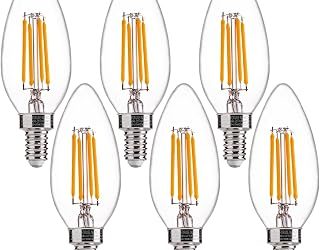
The warm gold finish and slim clear cylinders give this one a boutique-hotel look for a fraction of designer pricing, and the arms rotate so you can point the shades up for ambient light or down for task light. Pair it with frosted Edison-style bulbs; clear filament lamps in clear glass create noticeable glare in a small bathroom.
FonmYim Brushed Nickel 3-Light with Frosted Glass
This is the safest choice for a shared or family bathroom, since the milky frosted shades diffuse light softly and hide the bulb completely. Brushed nickel is also the most forgiving finish for water spots, and the E26 sockets mean you can dial in exactly the color temperature you want.
Ascher 3-Light Brushed Nickel Wall Sconce
Ascher’s version is the value pick, with a clean straight-bar profile and clear glass shades that suit a transitional or lightly industrial bathroom. Build quality is solid for the price, though the backplate is fairly narrow, so it will not cover the scars left by a larger old fixture.
Zarbitta 17.23″ Black 3-Light Vanity Light
At just over 17 inches, this is the one to buy for a compact mirror or a powder room where a 24-inch bar would overwhelm the wall. The matte black frame reads modern without tipping into farmhouse, and it looks equally at home in a hallway or above kitchen cabinetry.
LED Dimmable Matte Black 22″ with Rotatable Heads
The standout feature here is the 360-degree rotatable acrylic heads, which let you aim light precisely at the mirror instead of the ceiling. It is fully dimmable, but note the 6000K cool white output is bright and blue-leaning, so it suits utilitarian and getting-ready spaces more than a spa-like retreat.
Frequently Asked Questions
Should the shades face up or down?
Facing up bounces light off the ceiling for softer, more even room light. Facing down delivers stronger task light on the counter but creates harsher shadows on the face. For most bathrooms, shades up plus a good mirror is the better combination.
How wide should my vanity light be?
Stay just under the width of the mirror, roughly 70 to 80 percent. A three-light bar around 22 to 24 inches suits a standard 30-inch vanity, while a 17-inch fixture is right for smaller mirrors.
Do these fixtures need a damp-rated label?
Over a vanity, standard fixtures are typically acceptable since they sit outside the shower’s direct spray zone. Anything inside a shower or tub enclosure must be damp or wet rated, and local code always takes precedence.
Can I install a vanity light myself?
If you are replacing an existing fixture on an existing box, it is a straightforward swap once power is off at the breaker. New wiring, a relocated box, or added dimmer circuits should go to a licensed electrician.
Final Thoughts
For most bathrooms, the FonmYim brushed nickel fixture is the easiest recommendation, since frosted glass solves the glare problem before you even choose a bulb. Choose the brushed gold clear-glass option if you want the room to feel designed rather than merely lit, and the Zarbitta 17-inch black bar if you are working with a narrow mirror and need proportion on your side.