Key takeaways
- Lumens versus spread: Raw output matters less than how the light distributes. A 21,000-lumen triple-head tripod fills a garage bay; a 3,000-lumen panel is plenty for cabinet interiors or a workbench. Multi-head designs with individual switches let you dial brightness down without losing coverage.
- Color temperature control: Around 5000K to 6500K reads as clean daylight and reveals flaws in sanding, grout, and paint. Warmer 3000K to 4000K settings help you judge how wood tones and upholstery will look in a lamp-lit living room. Adjustable models cover both jobs.
- Runtime and recharge path: Check amp-hours, not just claimed hours, and note whether the light steps down output to stretch battery life. USB-C recharging is the practical choice since it shares chargers with everything else you own. AA-powered units trade runtime for the ability to swap cells anywhere.
- Mounting flexibility: Magnets, hooks, tripods, and detachable heads determine whether you hold the light or forget about it. Telescoping stands earn their keep on ceiling work, drywall repair, and lighting a whole room during a power outage.
- Build and ingress rating: IP65 or IP66 means dust and rain won’t end the tool. Look for impact-tolerant housings and recessed lenses, since a work light’s most common failure mode is a fall from a sawhorse.
What's inside
Anyone who has tried to hang a gallery wall at dusk, refinish a dresser in a windowless garage, or trace a wiring fault behind a media console knows the real obstacle isn’t skill. It’s shadow. Overhead fixtures throw light from exactly the wrong angle, clamp lamps tether you to an outlet, and phone flashlights wash out depth entirely. Color judgment collapses under bad light, and finish work suffers for it.
Battery-powered work lights solve that by putting a movable, aimable light source wherever the project happens to be. The 2026 crop has matured considerably: lithium packs now run a full working session, tripods telescope tall enough to light a whole room, and adjustable color temperature means you can preview how a stain or paint will actually read under warm evening light. Below are the models worth your attention, plus the specs that separate a genuinely useful tool from a bright toy.
As an Amazon Associate we earn from qualifying purchases.



How to Choose a Battery Powered Work Light (2026)
- Lumens versus spread: Raw output matters less than how the light distributes. A 21,000-lumen triple-head tripod fills a garage bay; a 3,000-lumen panel is plenty for cabinet interiors or a workbench. Multi-head designs with individual switches let you dial brightness down without losing coverage.
- Color temperature control: Around 5000K to 6500K reads as clean daylight and reveals flaws in sanding, grout, and paint. Warmer 3000K to 4000K settings help you judge how wood tones and upholstery will look in a lamp-lit living room. Adjustable models cover both jobs.
- Runtime and recharge path: Check amp-hours, not just claimed hours, and note whether the light steps down output to stretch battery life. USB-C recharging is the practical choice since it shares chargers with everything else you own. AA-powered units trade runtime for the ability to swap cells anywhere.
- Mounting flexibility: Magnets, hooks, tripods, and detachable heads determine whether you hold the light or forget about it. Telescoping stands earn their keep on ceiling work, drywall repair, and lighting a whole room during a power outage.
- Build and ingress rating: IP65 or IP66 means dust and rain won’t end the tool. Look for impact-tolerant housings and recessed lenses, since a work light’s most common failure mode is a fall from a sawhorse.
The Best Battery Powered Work Lights (2026) Reviewed
GoGonova Cordless Work Light with Tripod
The most versatile pick here: three lamp heads, an 8AH battery, three output levels up to 2200 lumens, and a color range spanning 4000K to 6500K. The detachable tripod means it works as a room-filling flood one minute and a handheld inspection light the next, which is exactly what renovation work demands.
21000-Lumen Tripod Work Light
This is the heavy artillery for garage builds, basement framing, and any space where you want daylight conditions after dark. Three independently switched heads and an IP66 rating make it practical rather than merely bright, though the sheer output is overkill for detail work indoors.
LUTEC 3500LM Magnetic Work Light with Stand
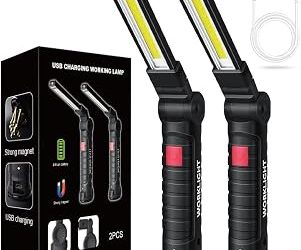
A well-judged middle ground: 3500 lumens at a crisp 5000K, three modes, magnetic mounting, and an integrated stand. The magnet is the standout feature for automotive and appliance work, where sticking the light to sheet metal frees both hands instantly.
Tresda Telescopic Camping Light with Remote
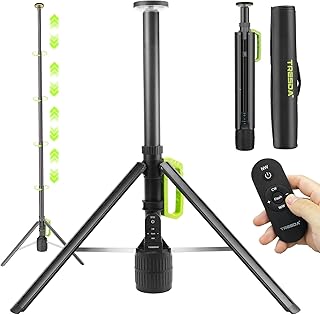
The 8.4-foot telescoping pole turns this into something closer to temporary room lighting than a task light, and the remote control is a genuine convenience when the head is above head height. Three color temperatures and 3000 lumens make it a strong outage backup as well as a job-site tool.
LETOUR Rechargeable LED Tube Light
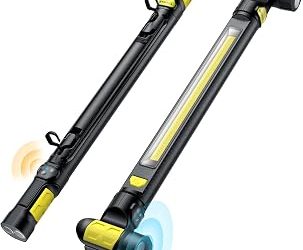
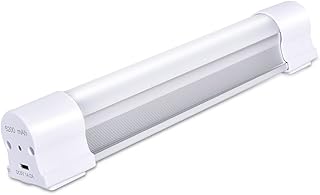
The tube form factor casts soft, even light with far less glare than a point-source flood, which suits close cabinetry and finish work. Two magnets, five dimming levels, and up to 60 hours of runtime at low output make it the one to keep in a drawer permanently.
Frequently Asked Questions
How many lumens do I actually need?
For workbench and cabinet tasks, 1000 to 3000 lumens is comfortable. Lighting an entire garage bay or room calls for 5000 lumens and up, ideally split across multiple heads to avoid harsh hotspots.
Are rechargeable or AA-powered lights better?
Rechargeable lithium models deliver more output and longer runtime per dollar. AA-powered units like the Sunzone two-pack make sense as glovebox and emergency-kit backups, where you want fresh cells available without a charger.
Can these double as household emergency lighting?
Yes, and it’s one of the strongest arguments for buying a good one. Telescoping tripod models bounce light off a ceiling to illuminate a whole room, which is far more livable during an outage than candles or flashlights.
Does color temperature really affect my project?
Substantially. Cool daylight tones expose sanding scratches and uneven coverage, while warmer settings show you how a finish will read in the room’s actual evening lighting. Judging paint or stain under one temperature only is how mismatches happen.
Final Thoughts
For most homes, the GoGonova tripod light is the smartest single purchase, pairing adjustable color temperature with a detachable head that adapts to nearly any task. Step up to the 21000-lumen tripod if you regularly work in a garage or unfinished space, and add the LETOUR tube light as the low-glare companion for close finish work.