Key takeaways
- Seat dimensions: Look for generous seat width and depth, with enough room to change position without pressing against the armrests or seat edge.
- Weight capacity: Choose a chair with a published capacity comfortably above your own weight. A larger margin can support steadier long-term performance.
- Cushioning: Pocket springs, thick foam, and layered padding generally provide more resilient support than a thin foam seat that quickly compresses.
- Adjustability: Prioritize adjustable lumbar support, seat height, armrests, tilt tension, and recline. These features help the chair fit your body rather than the other way around.
- Base and mobility: A reinforced base and quiet rubber casters are especially useful on hard flooring, where undersized wheels can feel noisy or unstable.
What's inside
Finding a truly comfortable office chair for long hours is harder when standard models feel narrow, under-supported, or fragile. A chair can look executive-ready yet develop uneven cushioning, restrictive armrests, or an unstable base once it is used throughout the workday.
This guide focuses on the details that matter most for bigger and taller sitters: seat width, weight capacity, cushioning, lumbar adjustment, wheel quality, recline range, and desk compatibility. We have also considered how each design fits into a modern home office rather than treating comfort as an excuse for bulky styling.
As an Amazon Associate we earn from qualifying purchases.


How to Choose a/an Big And Tall Office Chair For Long Hours (2026)
- Seat dimensions: Look for generous seat width and depth, with enough room to change position without pressing against the armrests or seat edge.
- Weight capacity: Choose a chair with a published capacity comfortably above your own weight. A larger margin can support steadier long-term performance.
- Cushioning: Pocket springs, thick foam, and layered padding generally provide more resilient support than a thin foam seat that quickly compresses.
- Adjustability: Prioritize adjustable lumbar support, seat height, armrests, tilt tension, and recline. These features help the chair fit your body rather than the other way around.
- Base and mobility: A reinforced base and quiet rubber casters are especially useful on hard flooring, where undersized wheels can feel noisy or unstable.
The Best Big And Tall Office Chair For Long Hours (2026)s Reviewed
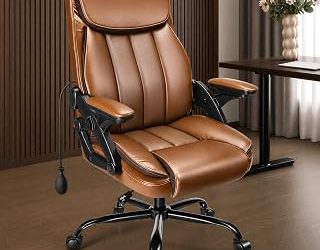
600LBS Heavy-Duty Executive Chair with 5D Flip Arms
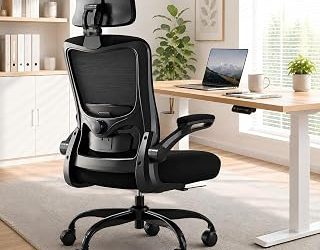
This chair makes a strong first impression with its high-back profile, pocket-spring cushion, lumbar support, and dual rubber wheels. The 5D flip arms are particularly practical in a compact home office because they can move out of the way when you need to pull closer to the desk or slide the chair beneath it.
500lbs Big and Tall Executive Chair with Lumbar Support
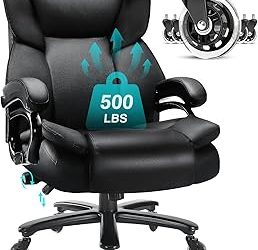
A sensible choice for buyers who want substantial cushioning without an overly complicated control layout, this model combines a high back, adjustable lumbar support, pocket-spring seating, and quiet rubber wheels. Its executive silhouette should blend easily with wood desks, neutral upholstery, and more polished home-office schemes.
Big and Tall Reclining Chair with Foot Rest
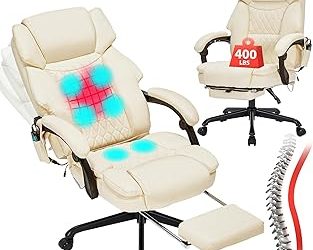
Designed for people who alternate between focused work and relaxed sessions, this chair adds a footrest to its wide spring-cushion seat. The reclining format and cross-legged-friendly design make it appealing for reading, gaming, or extended screen time, although it will need more clearance than a conventional task chair.
400lbs Heavy-Duty Drafting Chair with Foot Ring
This is the most workstation-specific option in the group. Its tall seat, 5-inch-thick cushion, flip-up arms, lumbar support, and adjustable footrest ring suit standing desks and elevated work surfaces, making it a useful pick when a standard chair leaves your desk height feeling awkward.
500lbs Extra-Wide Executive Chair with Upgraded Wheels
For buyers prioritizing an accommodating seat and padded touch points, this model pairs adjustable lumbar support with a thick armrest pad, heavy-duty base, and upgraded casters. It has the reassuring proportions of a traditional executive chair while adding the practical mobility needed for a larger home-office setup.
Frequently Asked Questions
What makes an office chair suitable for long hours?
Long-session comfort comes from a combination of fit and adjustability rather than padding alone. A supportive backrest, pressure-distributing seat, adjustable lumbar area, stable base, and the ability to keep your feet flat are all important.
Is a higher weight capacity always better?
Not necessarily, but it is a useful indicator of the chair’s intended build strength. Also check the seat dimensions, frame construction, base, and warranty; a high capacity does not help if the seat feels cramped or the controls are difficult to use.
Are footrests useful on an office chair?
A footrest can be valuable for reclining, reading, gaming, or taking short breaks between work tasks. It should not replace proper desk height and posture during focused work, and it needs enough room to extend without striking nearby furniture.
What floor surface works best with rubber wheels?
Rubber casters are generally well suited to hardwood, vinyl, laminate, and other hard surfaces because they tend to roll more quietly and are less likely to mark the floor. On thick carpet, larger wheels may provide smoother movement.
Final Thoughts
The 600LBS Heavy-Duty Executive Chair with 5D Flip Arms is the most versatile overall pick for generous support and flexible arm positioning. The 500lbs Extra-Wide Executive Chair is a strong alternative for padded comfort and everyday mobility, while the 400lbs Drafting Chair is the better match for a standing desk or elevated workstation.