Key takeaways
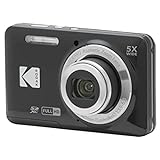
- Pro: Five optical zoom levels in a pocketable form factor, rare at this price.
- Pro: KODAK color science produces pleasing JPEGs straight out of camera, minimizing post-processing.
- Con: Video resolution lags behind modern smartphones, so it is a stills-first device.
A travel camera has to solve one specific problem: it must fit in your bag, survive a full day of sightseeing without a dead battery, and still produce images you would not be embarrassed to post. The gap between a camera that does this and one that does not often comes down to zoom range, video stabilization, and how the manufacturer treats build quality at a given price point. Most buyers overshoot — spending on a mirrorless system they leave in the hotel safe because it is too bulky — or undershoot, grabbing a generic camcorder that renders shaky footage no one watches to the end.
For this roundup we compared published specifications, current street prices, and aggregated owner feedback across eight cameras that consistently appear in travel-photography discussions heading into 2026. The shortlist spans ultra-budget handhelds under fifty dollars to gimbal-stabilized creators’ rigs over five hundred, so a reader on any budget can find a starting point. What follows is a structured comparison designed to help you match a camera to a specific trip style rather than simply chase megapixels.
As an Amazon Associate we earn from qualifying purchases at no extra cost to you. Product prices and availability are accurate as of the date shown and are subject to change.



Quick Picks
| Product | Best for | Price |
|---|---|---|
| KODAK PIXPRO FZ55 (Black) | Budget zoom photography | $139.99 |
| KODAK PIXPRO FZ45 | Lowest reliable travel price | $99.99 |
| DJI Osmo Pocket 3 | Stabilized 4K vlogging on the go | $439 |
| CGXUED Vlogging Camera | Ultra-budget handheld video | $33.15 |
| KODAK PIXPRO FZ55 (Blue) | Same as Black, color preference | $139.99 |
| Duluvulu 4K Digital Camera | High-resolution stills on a tight budget | $59.99 |
| DJI Osmo Pocket 3 Creator Combo | Complete creator kit for serious vloggers | $545 |
| KODAK PIXPRO FZ55 (Red) | Same as Black, color preference | $139.99 |
How We Picked
We evaluated each camera against four criteria that matter most for travel use: image and video quality relative to price, physical size and portability, battery or power-source practicality on a full day out, and the breadth of owner-reported reliability data. A camera that scores well on specs but runs on three AA cells with no spare-option guidance, or one that weighs a kilogram with its gimbal attached, gets penalized. The goal is to surface models whose published numbers and real-world feedback align, so buyers avoid the spec-sheet traps common at the low end.
The 8 Best Camera For Travel in 2026
KODAK PIXPRO FZ55 (Black)
This compact is the sensible default for travelers who want more reach than a smartphone without hauling interchangeable lenses. The 16-megapixel sensor paired with a 5X optical zoom covers wide architectural shots and mid-range portraits in one body.
- Pro: Five optical zoom levels in a pocketable form factor, rare at this price.
- Pro: KODAK color science produces pleasing JPEGs straight out of camera, minimizing post-processing.
- Con: Video resolution lags behind modern smartphones, so it is a stills-first device.
Skip it if your travel content is primarily video or you demand RAW flexibility for editing.
KODAK PIXPRO FZ45
The FZ45 strips the PIXPRO line down to its essentials: a 16-megapixel sensor, 4X optical zoom, and AA-battery power that lets you swap cells anywhere in the world. It is the cheapest entry here with a recognizable brand name.
- Pro: Runs on widely available AA batteries, eliminating the dead-battery anxiety of proprietary packs.
- Pro: Sub-$100 price makes it a low-risk backup or first camera for a casual traveler.
- Con: One fewer optical zoom level than the FZ55, noticeable when shooting distant subjects.
Skip it if you need more than 4X reach or care about video stabilization.
DJI Osmo Pocket 3
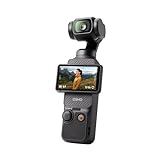
The Osmo Pocket 3 is a gimbal-stabilized vlogging camera with a one-inch CMOS sensor and 4K/120fps video output. For travelers whose primary medium is motion, nothing at this price matches its mechanical stabilization in such a small body.
- Pro: Built-in three-axis gimbal delivers smooth walking-and-shooting footage without external hardware.
- Pro: One-inch sensor handles low-light scenes better than any phone in its price range.
- Con: Fixed lens means no optical zoom; you crop digitally or physically move closer.
Skip it if you still prefer compact zoom photography and will never film video for an audience.
CGXUED Vlogging Camera
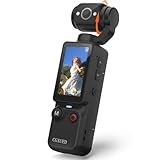
At just over thirty dollars this mini camcorder is an impulse-buy option for teens or for parents who need a rough handheld recorder without risking an expensive device. It covers the absolute floor of travel video capture.
- Pro: Price is so low that damage or loss during a trip carries minimal financial stress.
- Pro: Compact and lightweight enough to clip to a backpack strap.
- Con: Image and build quality are visibly below every other entry on this list; owner feedback flags soft video and noisy stills.
Skip it unless budget is a hard ceiling and you only need casual reference footage.
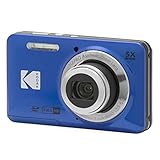
KODAK PIXPRO FZ55 (Blue)
Internally identical to the Black FZ55 above, the Blue variant exists for buyers who prefer a pop of color on their gear. Specifications, optics, and sensor are unchanged; the decision is purely aesthetic and availability.
- Pro: Same 5X optical zoom and 16MP sensor that make the FZ55 a strong compact pick.
- Pro: Distinctive color makes it easy to spot on a crowded hotel shelf or in a shared bag.
- Con: Limited stock can cause the price to fluctuate or disappear when demand spikes.
Skip it if you prefer neutral gear colors or want a matching set with a companion camera.
Duluvulu 4K Digital Camera
The Duluvulu packs a 48-megapixel sensor, 4K video, a 3-inch 180-degree flip screen, and 16X zoom into a body under sixty dollars. On paper it out-specs cameras costing three times as much, which is both its appeal and its warning flag.
- Pro: Flip screen enables front-facing vlogging and waist-level travel selfies without a phone.
- Pro: Comes with an SD card and two batteries in the box, reducing hidden accessory costs.
- Con: Owner feedback is mixed on autofocus accuracy and long-term durability; it is a spec-value play, not a brand-trust play.
Skip it if reliable autofocus and weather sealing matter more than listed megapixels.
DJI Osmo Pocket 3 Creator Combo
The Creator Combo adds wireless microphone transmitters, a wider-angle lens attachment, and a quick-charge handle to the base Osmo Pocket 3. For travel vloggers who interview locals or narrate in windy conditions, the audio package alone justifies the premium over the standard body.
- Pro: Included wireless mic pair eliminates the need to buy audio accessories separately.
- Pro: Quick-charge handle extends shooting time on multi-day excursions without finding an outlet.
- Con: Total cost passes $500, putting it in mirrorless-body territory where image quality per dollar is higher.
Skip it if you already own a separate mic system or do not produce audio-driven content.
KODAK PIXPRO FZ55 (Red)
Like the Blue and Black variants, the Red FZ55 shares identical internals: 16MP, 5X optical zoom, and the same KODAK JPEG engine. Buyers choosing Red typically want high-visibility gear or are matching a color scheme for a team of travel companions.
- Pro: Unchanged optics and sensor mean no performance compromise versus other colors.
- Pro: Bright finish makes the camera easy to locate in a dark backpack compartment.
- Con: Availability is spottier than the Black model, so you may need to check current stock.
Skip it if you are buying multiple units and want uniform, understated gear.
Buying Guide
Optical zoom range versus sensor size
Travel photographers face a constant trade-off: bigger sensors deliver cleaner images but demand more space for the lens to match their pixel pitch. A compact with 5X optical zoom and a small sensor, like the FZ55, reaches subjects that a phone cannot while staying pocketable. If you need more than 10X reach in a travel body, you are looking at bridge or mirrorless territory that adds weight. Decide your realistic zoom ceiling before comparing megapixels.
Stabilization method matters more than frame rate
For video, the difference between usable and unusable travel footage is almost always stabilization, not resolution or fps. Optical image stabilization and software correction help but cannot match a three-axis mechanical gimbal like the one inside the Osmo Pocket 3. If you walk-and-talk on location, prioritize gimbal stabilization over a higher 4K frame rate on a smaller sensor.
Power logistics on a trip
Proprietary lithium packs are lighter and charge faster but leave you stranded if the cable or wall adapter fails. AA-battery cameras like the FZ45 sacrifice a few percent of battery efficiency for universal availability in any drugstore abroad. If you travel to remote regions or multi-day hikes, weigh whether the convenience of USB-C charging is worth the risk of a dead pack with no swap option.
Our Verdict
Our top pick for most travelers is the DJI Osmo Pocket 3 at $439: it fills the gap between phone and mirrorless by delivering stabilized, broadcast-quality video in a pocket-sized body with low-light performance no phone matches. The budget pick is the KODAK PIXPRO FZ45 at $99.99, which gives a reliable brand-name compact with AA-battery flexibility for the price of two museum tickets. If you produce long-form YouTube content with on-camera dialogue, the Osmo Pocket 3 Creator Combo at $545 wins because its bundled wireless audio saves you from a separate microphone purchase.
FAQ
Is a dedicated travel camera still worth it in 2026?
Yes, if your trip involves more walking than a phone battery can sustain, or if you need optical zoom beyond roughly 5X without adding a telephoto lens to your kit. Phones have closed the gap on wide-angle stills but still fall short on extended zoom reach and gimbal-stabilized video at the sub-$500 tier.
Do I need 48 megapixels for travel photography?
In practice, no. A well-executed 16-megapixel sensor produces prints and social posts that are indistinguishable from a mediocre 48-megapixel implementation. Megapixel count becomes meaningful when you frequently crop heavily or print beyond A3; otherwise it inflates file sizes and processing demands without improving the image you will actually share.
What is the difference between the DJI Osmo Pocket 3 and the Creator Combo?
The base model includes the camera, a quick-release case, and a wrist strap. The Creator Combo adds two wireless microphone transmitters, a wide-angle lens, a quick-charge handle, and a carrying pouch. If you interview people or record narration outdoors, the audio accessories justify the price premium; otherwise the base body captures identical video.
Can compact cameras match phone image quality?
On bright, wide-angle scenes, modern phone computational photography still edges out small-sensor compacts. However, phones lose their advantage once you need optical zoom, subject-background separation at longer focal lengths, or sustained video capture without thermal throttling. The travel camera earns its place in those specific use cases, not as a general-purpose replacement for your phone.