Key takeaways
- Seat height range: Measure from floor to your desk surface, then subtract 10 to 12 inches for your ideal seat height. Standing desks typically land between 38 and 48 inches, so look for a cylinder that tops out near 34 inches rather than a standard 21-inch office lift.
- Footrest ring geometry: A ring that adjusts independently of the seat is non-negotiable. Fixed rings force your hips into whatever angle the manufacturer guessed, while adjustable ones let you set a true 90-degree knee bend at any seat height.
- Flip-up arms: These let the chair tuck fully under a raised desk and free your shoulders during keyboard work. Check that the hinge locks in the down position — cheap versions drift under forearm pressure.
- Back support depth: Perching engages your core differently than sitting, so lumbar contact matters more, not less. Prioritize an adjustable lumbar pad or a mesh back with genuine curvature over a flat panel.
- Base diameter and capacity: Taller chairs have a higher center of gravity, so a wide five-star base and a stated capacity well above your weight are structural requirements. A 400-pound rating on a tall stool signals a serious cylinder and frame, not just marketing.
What's inside
Standing desks solved one problem and quietly created another. The moment you raise a work surface to 42 inches, your old task chair becomes irrelevant — too low to reach, too shallow to perch on, and completely unable to support the half-seated posture that makes long standing sessions sustainable. Most people end up alternating between locked knees and an awkward lean against the desk edge, which is exactly the fatigue pattern the sit-stand setup was supposed to prevent.
The fix is a tall drafting-style chair: elevated cylinder, footrest ring for load distribution, and a backrest that meets your lumbar curve at standing-desk height. This guide looks at the models worth putting in a considered room — the ones that handle flip-up arms without wobble, hold their gas lift under real weight, and don’t read as office-supply-catalog filler next to a walnut desk. Below you’ll find the picks, then a short framework for matching a stool to your desk height and body.
As an Amazon Associate we earn from qualifying purchases.


How to Choose a Chairs For Standing Desk (2026)
- Seat height range: Measure from floor to your desk surface, then subtract 10 to 12 inches for your ideal seat height. Standing desks typically land between 38 and 48 inches, so look for a cylinder that tops out near 34 inches rather than a standard 21-inch office lift.
- Footrest ring geometry: A ring that adjusts independently of the seat is non-negotiable. Fixed rings force your hips into whatever angle the manufacturer guessed, while adjustable ones let you set a true 90-degree knee bend at any seat height.
- Flip-up arms: These let the chair tuck fully under a raised desk and free your shoulders during keyboard work. Check that the hinge locks in the down position — cheap versions drift under forearm pressure.
- Back support depth: Perching engages your core differently than sitting, so lumbar contact matters more, not less. Prioritize an adjustable lumbar pad or a mesh back with genuine curvature over a flat panel.
- Base diameter and capacity: Taller chairs have a higher center of gravity, so a wide five-star base and a stated capacity well above your weight are structural requirements. A 400-pound rating on a tall stool signals a serious cylinder and frame, not just marketing.
The Best Chairs For Standing Desk (2026)s Reviewed
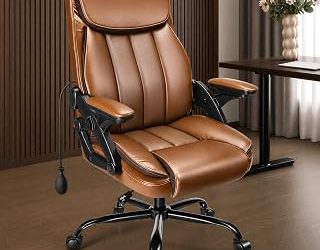
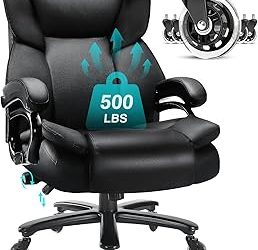
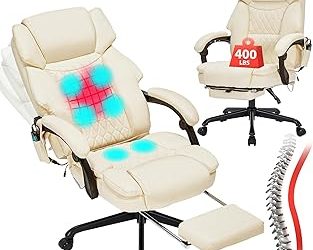
Drafting Chair Tall Office Chair with Flip-up Armrests and Adjustable Footrest Ring
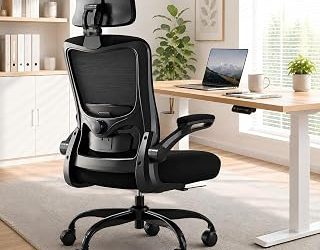
This is the well-rounded default: executive-style padding, flip-up arms that clear a raised desk, and a footrest ring that moves independently so you can dial in leg angle rather than accept it. The lumbar support is adjustable enough to work for both perching and full sitting, which matters if your desk spends half the day down.
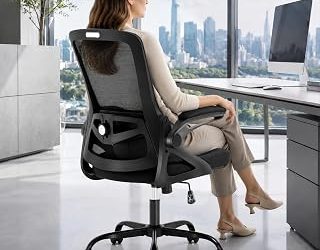
Drafting Chair High-Back Mesh Standing Desk Stool
The high mesh back is the differentiator here — it delivers shoulder-blade coverage that most drafting stools skip, and the breathability keeps things comfortable during long stretches. A strong choice for warm rooms or anyone who finds foam-backed stools stifling by afternoon.
Executive Office Chair with Adjustable Lumbar Support, 400lbs
The 400-pound capacity and breathable mesh panel make this the sturdiest pick of the group, with a flip-up armrest design that keeps the footprint tight. Worth noting it sits at conventional desk height rather than drafting height, so pair it with an adjustable desk you actually lower, not a fixed tall surface.
Drafting Chair with Flip-Up Arms and Lumbar Support, Counter Height
Built specifically for counter-height work — think kitchen-island setups and 40-inch fixed desks — with a lumbar curve that holds up better than the price suggests. The adjustable footrest and flip-up arms cover the fundamentals without visual bulk.
Armless Drafting Chair with Footrest and Wheels
Removing the arms entirely gives you the cleanest silhouette and the freest range of motion, which suits creative work, drafting tables, and anyone who found armrests in the way. The high back keeps it from feeling like a bare stool, and it rolls easily between stations.
Frequently Asked Questions
Do I still need a chair if I have a standing desk?
Yes. Research consistently favors alternating postures over sustained standing, and a tall stool gives you a third option between standing and full sitting — partial weight support that keeps your hips open and your feet loaded.
What seat height works for a 42-inch desk?
Aim for roughly 30 to 32 inches of seat height. That leaves the standard 10 to 12 inches of clearance between seat and surface, so your forearms stay level with the desktop.
Are footrest rings actually necessary?
They are. Without one, your legs dangle and all your weight concentrates on the back of your thighs, which restricts circulation within minutes. The ring redistributes load and stabilizes your pelvis.
Will a drafting chair work at a normal desk?
Only if you lower it substantially, and many drafting cylinders don’t drop below 24 inches. If your desk stays at 29 or 30 inches most of the time, a conventional ergonomic chair is the better buy.
Final Thoughts
For most standing-desk setups, the Drafting Chair with Flip-up Armrests and Adjustable Footrest Ring is the balanced choice — correct height, real lumbar adjustment, and arms that get out of the way. Choose the High-Back Mesh Standing Desk Stool if breathability and upper-back coverage rank higher for you, or the Armless Drafting Chair if you want maximum freedom of movement and a quieter visual footprint in the room.