The best charcuterie board sets match your serving space, guest count, and cleaning habits: choose a compact 12–16-inch board for small households, a 17–20-inch solid-wood set for most gatherings, or a two-tier 20–24-inch set when you need maximum variety without covering the entire table.
Our top picks
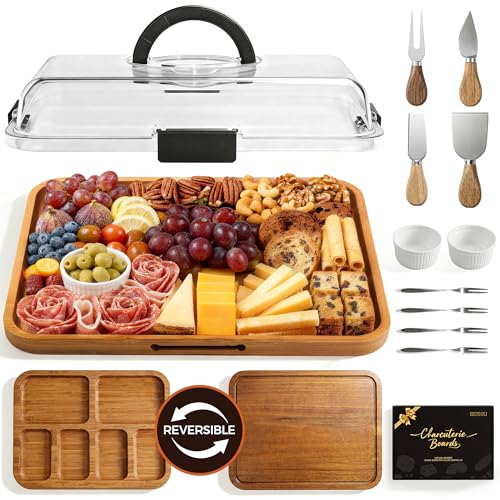 Renmxj Charcuterie Board with Lid
- [Complete Gift Set] No extra purchases required! This…
- [Dual-Sided Board with Universal Airtight Lid] The reversible…
- [Nature Carbonized Bamboo Board] Made of premium carbonized…
 SMIRLY Charcuterie Boards Set
- Become a Great Host - Impress guests with…
- Perfect for Any Gathering - Measuring 15.7" L…
- Stylish Housewarming Gift - A perfect gift for…
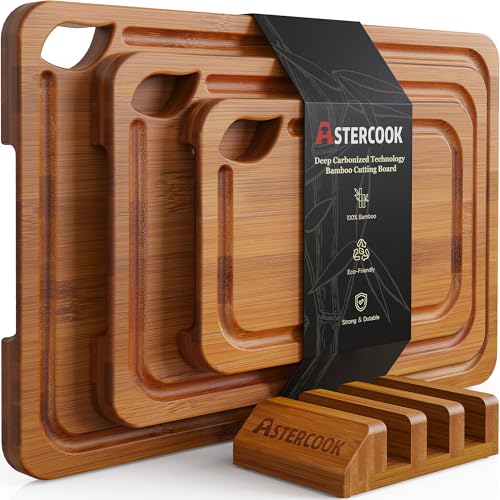 Astercook Deep-Carbonized Bamboo Cutting Boards for Kitchen
- 【Deep-Carbonized Bamboo for Lasting Strength】 Crafted from premium…
- 【Complete Set with Space-Saving Stand】 Unlike ordinary wooden…
- 【Sized Right for Every Task】 The set includes…
| Product | Key specs | |
|---|---|---|
| Renmxj Charcuterie Board with Lid | [Complete Gift Set] No extra purchases required! This… [Dual-Sided Board with Universal Airtight Lid] The reversible… [Nature Carbonized Bamboo Board] Made of premium carbonized… | Check price |
| SMIRLY Charcuterie Boards Set | Become a Great Host - Impress guests with… Perfect for Any Gathering - Measuring 15.7" L… Stylish Housewarming Gift - A perfect gift for… | Check price |
| Astercook Deep-Carbonized Bamboo Cutting Boards for Kitchen | 【Deep-Carbonized Bamboo for Lasting Strength】 Crafted from premium… 【Complete Set with Space-Saving Stand】 Unlike ordinary wooden… 【Sized Right for Every Task】 The set includes… | Check price |
 CAWIU Large Bamboo Charcuterie Board Set with | Freshness with Style: CAWIU’s bamboo charcuterie board comes… All-in-One Set: This complete charcuterie board set includes… Premium Bamboo Craft: Made from durable, eco-friendly bamboo,… | Check price |
As an Amazon Associate we earn from qualifying purchases at no extra cost to you.
Quick picks by entertaining situation
| Situation | Best board type | Useful specifications | Why it works |
|---|---|---|---|
| Small apartment or date night | Compact acacia or bamboo set | 12–16 inches wide; 2–4 knives; 1–2 bowls | Fits a coffee table or two-person dining table without crowding plates |
| Family with children and pets | Thick, single-level hardwood board | 1–1.25 inches thick; rounded edges; removable bowls | More stable, easier to supervise, and less likely to tip than a tall tiered design |
| Frequent dinner parties | Large solid-wood serving set | 18–22 inches wide; 4–6 knives; 3–4 bowls | Handles several cheeses, sliced meats, fruit, nuts, and condiments at once |
| Renter with limited storage | Reversible board with nesting accessories | 14–18 inches; integrated drawer or underside storage | Reduces cabinet clutter and stores vertically in a narrow cupboard |
| Outdoor or buffet-style serving | Bamboo board with separate trays | 16–20 inches; lightweight; 2–4 removable containers | Easier to carry from kitchen to patio and simpler to rearrange |
What size charcuterie board do you need?
Board dimensions affect both capacity and usability. A board’s advertised length usually measures its outside edge, including handles, so the food-safe surface may be 1–3 inches smaller. For a useful estimate, allow roughly 4–6 inches of board width per guest when the board is an appetizer, or 6–8 inches per guest when it is replacing a meal.
- 12–14 inches: best for two to four people and about three to five food varieties.
- 16–18 inches: a versatile size for four to six guests, with room for two cheeses, two meats, fruit, crackers, and a dip.
- 20–22 inches: suitable for six to ten guests, provided your dining table has enough clearance.
- Two-tier or expandable sets: useful when table width is limited, but they add height, weight, and more pieces to wash.
Before buying, measure the serving surface rather than guessing. Leave at least 4 inches between the board and the table edge so guests can reach around it without knocking glasses or plates. On a 36-inch-wide dining table, a 20-inch board leaves about 8 inches of working space on each side; that is comfortable for a centerpiece but tight if every guest also needs a dinner plate.
Wood versus bamboo: durability and maintenance
| Material | Typical thickness | Strengths | Trade-offs | Cleaning needs |
|---|---|---|---|---|
| Acacia or other hardwood | 0.75–1.25 inches | Attractive grain, good impact resistance, substantial feel | Heavier; can stain or dry out without occasional oiling | Hand-wash and dry immediately; condition periodically |
| Maple or walnut | 0.75–1.25 inches | Dense surface, refined appearance, suitable for regular use | Usually costs more; walnut may show knife marks and food stains | Hand-wash only; use food-safe board oil when the surface looks pale or rough |
| Bamboo | 0.5–1 inch | Lightweight, relatively affordable, less absorbent than many woods | Can split at glued joints if soaked; often harder on knife edges | Hand-wash, dry upright, and avoid prolonged moisture |
| Engineered wood or veneer | 0.5–1 inch | Lower cost and consistent appearance | Surface may peel or swell if liquid reaches seams | Wipe promptly; avoid soaking and dishwashers unless explicitly approved |
For the most durable everyday option, look for a one-piece or well-laminated hardwood board with a smooth, sealed surface and no exposed end-grain cracks. Bamboo is a practical choice when low weight matters, but inspect the joints: visible gaps, rough glue lines, or a hollow sound can indicate construction that will not tolerate repeated wetting.
Juice grooves: helpful feature or lost serving space?
A juice groove is a channel cut around the perimeter to catch liquid from grapes, oranges, tomatoes, or soft cheeses. It is valuable when the board will hold moist foods, but it reduces the flat area available for crackers and sliced meat. On a 16-inch board, a groove that is 0.5 inch from the edge can remove several inches of practical placement space.
Choose a groove that is approximately 0.25–0.4 inches wide and deep enough to contain drips without becoming difficult to scrub. A groove on only one side is useful if the board is reversible; the plain side gives you more room for dry foods. Avoid very narrow grooves with sharp corners, where crumbs and cheese oils accumulate.
Included knives and bowls: what actually matters
Many sets advertise a high accessory count, but the useful pieces are more important than the number. A practical four-knife arrangement includes a hard-cheese knife, a soft-cheese spreader, a narrow slicing knife, and a small fork or serving pick. Six-piece sets may add a plane-style cheese knife and another spreader, which helps when several cheeses are served simultaneously.
- Stainless-steel blades: look for secure handles and blades at least 2.5–4 inches long for controlled serving.
- Bowls: two 3–4-inch bowls are enough for olives, nuts, honey, or jam; larger 5-inch bowls take up more board area but reduce refills.
- Storage drawers: convenient for keeping tools together, but crumbs and moisture can collect inside. Remove accessories and clean the drawer after use.
- Magnetic or underside storage: saves space, although loose knives can rattle during carrying unless the holder is secure.
- Removable bowls: are preferable to fixed recesses because they can be washed properly and replaced if damaged.
Do not choose a set based solely on the number of forks or tiny condiment cups. A board with four dependable tools and two washable bowls is usually more useful than one with twelve accessories that are difficult to store and clean.
Cleaning requirements that affect long-term value
Most wooden and bamboo charcuterie boards should be hand-washed with warm water and mild dish soap, then dried immediately. Do not leave them submerged, place them in a dishwasher, or allow them to dry flat while wet; moisture can warp the board or open laminated seams. Wipe oily foods away promptly, and sanitize after serving raw meat by following the cleaner manufacturer’s food-contact directions.
Apply food-safe mineral oil when the surface becomes dry, lighter in color, or slightly rough. Depending on use, this may be every four to eight weeks. Avoid olive oil, vegetable oil, and other kitchen oils that can become sticky or rancid. For a board with a juice groove, use a small brush to remove residue rather than forcing a cloth into the channel.
Glass, marble, and plastic inserts are easier to sanitize, but they can be heavier, noisier, or harsher on knives. If quick cleanup matters more than a traditional wood appearance, a board with a removable, dishwasher-safe serving tray can be a sensible compromise.
How to judge construction before buying
Weight is a useful clue. A large 20-inch solid-wood board may weigh 5–9 pounds before food is added, while a similar bamboo board may weigh 3–6 pounds. That difference matters when carrying a loaded board through a narrow doorway or from kitchen to patio. Check that handles have enough clearance for a full grip—around 1.5 inches is more comfortable than a shallow finger slot.
Inspect the feet, too. Non-slip feet should keep the board stable without lifting it so high that food becomes difficult to reach. Feet that are glued rather than screwed or firmly integrated are often the first parts to loosen. On tiered sets, test whether the upper tray wobbles when a knife or bowl is removed. A lower center of gravity is safer around children and pets.
Price and the best overall choice
Basic bamboo sets usually cost about $25–$50. Better-finished hardwood sets with several tools and bowls commonly fall in the $50–$120 range, while large premium hardwood or multi-level sets can reach $120–$250 or more. Pay for board thickness, stable construction, washable accessories, and a finish you can maintain—not simply for a larger accessory count.
For most homes in 2026, the best charcuterie board sets are 16–18-inch hardwood or bamboo designs with at least two removable bowls, four useful serving tools, a smooth reversible surface, and either a moderate juice groove or a plain serving side. That combination serves four to six people, fits common dining tables, and avoids the storage and cleaning burden of oversized novelty sets.