Key takeaways
- Blot wine, coffee, or sauce instead of rubbing it deeper into the weave.
- Rinse oily food stains with a small amount of liquid detergent before washing.
- Do not use chlorine bleach unless the manufacturer specifically permits it.
- Wash heavily soiled placemats separately from lint-producing towels.
- Dry fully before storage to prevent a musty odor or mildew.
Best Cloth Placemat Sets for Entertaining
The best cloth placemat set for entertaining is usually a tightly woven cotton-linen blend with a washable finish, a finished edge, and dimensions of about 13 by 19 inches—large enough for a dinner plate, cutlery, and a glass without crowding most tables.
That recommendation changes with your table, guests, and cleanup routine. Linen looks refined but wrinkles easily; cotton is easier to wash and usually more forgiving; polyester blends resist stains and hold their shape but may feel less natural. The right choice is less about appearance alone and more about how the placemats handle heat, spills, repeated washing, and the space available at each place setting.
Our top picks


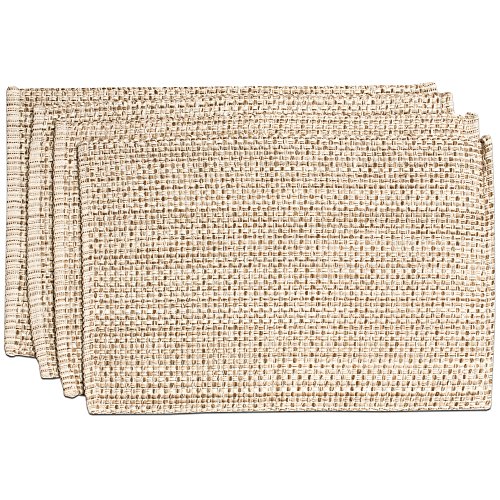

As an Amazon Associate we earn from qualifying purchases at no extra cost to you. Ratings are shown as listed on Amazon.
Quick picks by entertaining situation
| Situation | Best placemat type | Why it fits | What to watch for |
|---|---|---|---|
| Formal dinner or holiday meal | Washed linen or cotton-linen, 13 by 19 inches | Natural texture and a generous surface for layered place settings | Wrinkles and possible shrinkage; check care instructions |
| Children, pets, or frequent spills | Cotton-polyester blend with a tight weave | Dries quickly, resists staining, and needs less ironing | May retain oily marks unless washed promptly |
| Small apartment or narrow table | Thin cotton or polyester, 12 by 17 inches | Uses less table depth and stores compactly | May not leave room for large dinnerware or serving utensils |
| Hot serving dishes | Heavier cotton canvas or quilted fabric with heat-resistant batting | Provides more insulation than a thin decorative weave | Still requires a trivet for cast iron, roasting pans, or cookware straight from the oven |
| Rental home or low-maintenance dining | Colorfast, machine-washable polyester blend | Maintains shape and is less likely to require pressing | Check whether the finish feels slippery on polished tables |
Fabric comparison: appearance versus everyday performance
Cotton
Cotton placemats have a soft hand and absorb spills rather than allowing them to run across the table. A medium-weight weave is suitable for daily meals, while cotton canvas offers better structure and modest heat protection. The trade-off is shrinkage and wrinkling. Cotton also absorbs tomato, wine, coffee, and grease, so stains are easier to remove when treated before the fabric dries.
Linen and cotton-linen blends
Linen has the most distinctive texture for entertaining and becomes softer with washing. Pure linen generally wrinkles more and can feel relatively thin unless it is a substantial weight. A blend containing roughly 30% to 55% linen keeps much of the natural look while improving stability and reducing pressing time. Look for prewashed fabric if a relaxed, slightly rumpled appearance is acceptable.
Polyester and cotton-polyester blends
Polyester resists water-based staining, dries quickly, and is less prone to shrinkage. It is practical for buffet meals, children’s dinners, and large gatherings where laundering must be simple. Cotton-polyester blends add a more natural texture than pure polyester while improving wrinkle resistance. Very smooth polyester, however, can slide on glass or highly polished wood unless the reverse side has texture.
Jacquard, damask, and coated fabrics
Woven jacquard and damask patterns can disguise small marks and create a more formal table without embroidery that snags. A coated cotton or polyester surface provides better wipe-clean performance, but coatings can crack, peel, or feel stiff over time. These materials are useful for outdoor entertaining or messy meals, though they may not deliver the soft drape associated with traditional cloth.
What to check before buying a set
Dimensions and table clearance
Most cloth placemats measure between 12 by 17 and 14 by 20 inches. The common 13 by 19-inch size accommodates a dinner plate up to about 11 inches wide, a fork and knife, and a water glass placed near the upper corner. Oversized 14 by 20-inch mats look generous but can crowd narrow tables.
Allow at least 24 inches of table length per seated adult for comfortable elbow room. A 60-inch rectangular table therefore fits two people on each long side more comfortably than three, even if three place settings technically fit. On a 36-inch-deep table, a 19-inch placemat leaves only about 8.5 inches of uncovered space between opposing mats. That can be tight when both settings include large glasses or serving bowls.
| Table size | Comfortable seating | Recommended placemat size | Practical note |
|---|---|---|---|
| 36-inch round | 2 to 4 | 12 by 17 inches | Choose slimmer mats to preserve central serving space |
| 48-inch round | 4 | 13 by 19 inches | Four standard mats fit with reasonable spacing |
| 60 by 36-inch rectangle | 4 comfortably, 6 tightly | 12 by 17 or 13 by 19 inches | Use narrow mats if you place serving dishes at the center |
| 72 by 40-inch rectangle | 6 comfortably | 13 by 19 or 14 by 20 inches | Large mats work if each person receives at least 24 inches of length |
Heat protection
Cloth placemats protect against scratches, crumbs, and brief contact with warm dishes; they are not automatically heat pads. Single-layer linen or cotton may protect a finished surface from a warm plate but offers little insulation against a saucepan or baking dish. For heat protection, choose a quilted construction with cotton batting or a heat-resistant inner layer, preferably around 2 to 4 millimeters thick. Use a separate trivet for cookware above serving temperature, especially on lacquered, waxed, or antique surfaces.
Edge construction
The edges usually wear before the center fabric. A narrow double-fold hem gives a clean profile but can fray if the stitching is sparse. Mitered corners look polished on formal sets, while rounded corners are less likely to catch and curl. For frequent washing, look for two parallel lines of stitching near the hem, securely backstitched corners, and no loose decorative threads. Serged edges can be durable, though an exposed overlock stitch may look casual.
Wrinkle control
If you do not want to iron after every wash, prioritize cotton-polyester blends, textured weaves, or prewashed linen. Remove placemats from the dryer while slightly damp and lay them flat or hang them over a wide bar. A short tumble on low heat followed by immediate folding reduces creases. Avoid folding them while they are still hot, as sharp permanent-looking lines can develop along the fold.
Washability and stain resistance
Machine-washable placemats are the safest choice for regular entertaining. Before buying, check whether the care label permits warm washing, because cold-only fabric can be inconvenient after oily or protein-based spills. A tight weave generally releases crumbs and liquids more easily than a loose, open weave. Dark or heathered colors hide marks, but pale fabrics make it easier to see whether a stain has been fully removed.
- Blot wine, coffee, or sauce instead of rubbing it deeper into the weave.
- Rinse oily food stains with a small amount of liquid detergent before washing.
- Do not use chlorine bleach unless the manufacturer specifically permits it.
- Wash heavily soiled placemats separately from lint-producing towels.
- Dry fully before storage to prevent a musty odor or mildew.
For entertaining, a set of six is suitable for a standard dining table, while sets of eight or twelve reduce mismatched replacements after a large meal. Buying two identical six-piece sets is often more useful than buying one decorative set of four: it gives you spares when a guest spills something and keeps the table visually consistent.
How much should a good set cost?
Basic cotton or polyester sets usually cost about $15–$35 for four to six placemats. Better cotton-linen blends, heavier jacquards, and quilted heat-resistant styles commonly fall around $35–$90 per set. Hand-finished linen, embroidered designs, and substantial heirloom-quality fabrics can cost $90–$180 or more. The higher price is most worthwhile when it reflects fabric weight, colorfastness, prewashing, and reinforced construction rather than decoration alone.
Final buying recommendation
For most homes, choose six 13-by-19-inch cotton-linen or cotton-polyester placemats with a tight weave, colorfast finish, double-stitched hems, and machine-washable care. Choose pure linen when the relaxed texture matters more than wrinkle control, quilted cotton when warm dishes are common, and polyester-rich fabric when quick cleanup is the priority. Measure the table before ordering, leave about 24 inches of length per person, and treat the placemat as a surface protector—not a substitute for a trivet under very hot cookware.