Key takeaways
- Seat height range: Measure your desk surface and subtract roughly 10–12 inches for comfortable clearance. Most sit-stand desks land between 40 and 48 inches, which means you want a chair topping out near 30 inches — not the 21 inches a standard office chair offers.
- Footrest ring: This is the component that separates a drafting chair from a tall stool. Look for an adjustable ring rather than a fixed one, since a few inches of vertical play makes the difference between supported thighs and dangling legs.
- Weight capacity and base diameter: Tall chairs sit on a longer gas cylinder, so stability comes from a wide five-star base. Heavy-duty models rated to 400–450 pounds also tend to use thicker steel and better casters, which is worth the upgrade even if you don’t need the capacity.
- Back and lumbar design: Perched postures push the pelvis forward, so adjustable lumbar support matters more here than at a seated desk. Mesh backs breathe well for long sessions; a taller backrest helps if you lean back to think.
- Arms and footprint: Flip-up armrests let the chair tuck fully under a raised desk when you switch to standing, which keeps a small studio from feeling cluttered. If you work in a tight corner, that detail earns its keep daily.
What's inside
A standing desk solves one problem and quietly creates another. The moment you raise a work surface to 40 inches or higher, a conventional task chair becomes irrelevant — you either stand for hours longer than your body wants to, or you perch on a kitchen stool with your heels hooked around the legs and your lower back doing all the work. The result is a beautifully specified desk paired with the worst seat in the house.
Drafting chairs exist precisely for this gap. They extend the seat height well past standard office range, add a footrest ring so your legs have somewhere to live, and keep the ergonomic hardware — lumbar support, tilt, height-adjustable arms — that a stool throws away. Below are the models worth considering in 2026, plus the specs that actually determine whether a chair works with your desk or fights it.
As an Amazon Associate we earn from qualifying purchases.


How to Choose a Drafting Chairs For Standing Desk (2026)
- Seat height range: Measure your desk surface and subtract roughly 10–12 inches for comfortable clearance. Most sit-stand desks land between 40 and 48 inches, which means you want a chair topping out near 30 inches — not the 21 inches a standard office chair offers.
- Footrest ring: This is the component that separates a drafting chair from a tall stool. Look for an adjustable ring rather than a fixed one, since a few inches of vertical play makes the difference between supported thighs and dangling legs.
- Weight capacity and base diameter: Tall chairs sit on a longer gas cylinder, so stability comes from a wide five-star base. Heavy-duty models rated to 400–450 pounds also tend to use thicker steel and better casters, which is worth the upgrade even if you don’t need the capacity.
- Back and lumbar design: Perched postures push the pelvis forward, so adjustable lumbar support matters more here than at a seated desk. Mesh backs breathe well for long sessions; a taller backrest helps if you lean back to think.
- Arms and footprint: Flip-up armrests let the chair tuck fully under a raised desk when you switch to standing, which keeps a small studio from feeling cluttered. If you work in a tight corner, that detail earns its keep daily.
The Best Drafting Chairs For Standing Desk (2026)s Reviewed
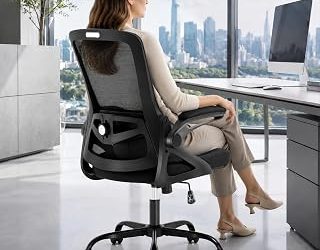
Drafting Chair with 22″–30″ Seat Height and 7″ Lift Footrest Ring
The widest usable adjustment range in this group, which makes it the safe choice if you share a desk or haven’t settled on a working height yet. The seven-inch footrest travel is the standout spec — most competitors give you three or four — and the mesh back with flip-up arms keeps it visually light in a home office.
Drafting Chair with Flip-Up Armrests and Adjustable Footrest Ring (Black)
A clean, restrained executive silhouette that reads more furniture than equipment, which matters when the chair lives in a living space. Lumbar support and footrest are both adjustable, and the black finish disappears against nearly any desk material.
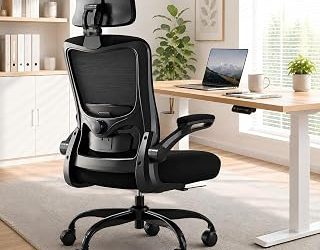
Big and Tall Drafting Office Chair, 450 lb Capacity
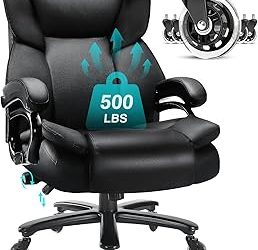
Built around a wider, thicker seat cushion and a reinforced base, this is the pick for larger frames or anyone who has cracked a cheap gas cylinder before. The full-mesh back handles long sessions without heat buildup, and the adjustable lumbar and armrests dial in properly rather than approximately.
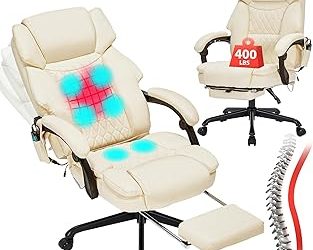
PU Leather Drafting Chair, 400 lb Capacity
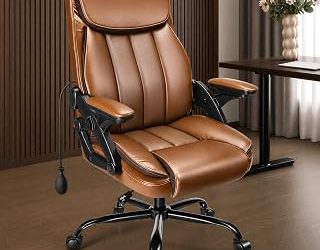
Choose this one for rooms where mesh looks too utilitarian — the PU leather seat gives it a softer, more residential presence next to warm woods and brass. It keeps the practical hardware intact: adjustable footrest ring, lumbar support, and flip-up arms.
Adjustable Drafting Chair for Artists
A straightforward, heavy-duty stool-style chair aimed at drawing tables and craft benches where you shift position constantly. Less design flourish than the others, but the height range and footrest make it genuinely comfortable for detail work.
Frequently Asked Questions
What seat height do I need for my standing desk?
Subtract about 10 to 12 inches from your desk surface height. For a 44-inch desk, aim for a chair that reaches 32 to 34 inches; if the maximum is 30 inches, lower the desk slightly when you sit.
Is the footrest ring actually necessary?
Yes. Without it your legs hang unsupported, which loads the backs of your thighs and pulls your pelvis into a slouch within minutes. An adjustable ring is the single biggest comfort variable on these chairs.
Mesh or PU leather?
Mesh breathes better and suits long working days. PU leather wipes clean easily and looks more polished in shared living areas, but it warms up over several hours.
Can I use a drafting chair at a normal desk?
Most drop low enough to work at a 29- to 30-inch desk, though the footrest ring becomes dead weight. If you split time between both heights, confirm the minimum seat height before buying.
Final Thoughts
For most home offices, the Drafting Chair with 22″–30″ Seat Height and 7″ Lift Footrest Ring is the most adaptable choice thanks to its generous adjustment range. Larger users should go straight to the Big and Tall 450 lb model, while anyone furnishing a room where the chair needs to look intentional will be happier with the PU Leather version.