Key takeaways
- Undertone before color: Warm finishes (caramel, honey, amber walnut) sit comfortably beside oak floors, brass, and cream textiles. Cool or ashy finishes pair better with gray-toned flooring and black metal. Mismatched undertones are the reason a technically correct color still looks wrong.
- Sheen level: Matte and satin topcoats scatter light, disguising crumbs, fine scratches, and hand smudges. Glossy and lacquered surfaces amplify a room’s brightness but demand near-constant wiping — a reasonable trade for a formal dining room, a poor one for a family breakfast table.
- What’s actually under the finish: Solid hardwood and bamboo can be sanded and refinished; veneers and laminates cannot, though quality laminate resists staining better than raw wood. Sintered or resin marble-look tops give you veining without the porousness of real stone.
- Sunlight exposure: Direct light shifts most stained woods over time — acacia and walnut typically deepen, bamboo can lighten. If your table sits in a bay window, either commit to the patina or choose a pigmented finish that ages more predictably.
- Footprint and function: Allow 36 inches of clearance around the table for chairs and traffic. Where space is tight, prioritize extension leaves or integrated drawers over raw tabletop inches; a 47- to 55-inch table with storage often outperforms a fixed 71-inch slab in a compact room.
What's inside
Finish is the decision buyers underestimate. Shoppers agonize over length and seat count, then choose a color from a single thumbnail shot under studio lighting — and discover that the “walnut” they ordered reads cool and purple against warm oak floors, or that a high-gloss top turns into a fingerprint ledger by the second week. Compounding the problem, finish vocabulary on furniture listings is unregulated: caramel, honey, rustic natural, and walnut can describe nearly identical stains or wildly different ones depending on who wrote the copy.
This guide approaches dining tables the way a stylist would — starting with surface character, then working back to structure. Below are six tables spanning warm bamboo, oiled acacia, transitional honey stains, two-tone farmhouse walnut, and a marble-look statement top with integrated LED, with notes on how each finish behaves in real rooms: how it handles sunlight, scuffs, water rings, and the daily reality of a household that eats at its table.
As an Amazon Associate we earn from qualifying purchases.


🛒 Best Price Today on Amazon
Prime members get fast, free shipping on everything above, plus member-only deals. New members get a 30-day free trial — cancel anytime.
How to Choose a Finish Dining Room Table (2026)
- Undertone before color: Warm finishes (caramel, honey, amber walnut) sit comfortably beside oak floors, brass, and cream textiles. Cool or ashy finishes pair better with gray-toned flooring and black metal. Mismatched undertones are the reason a technically correct color still looks wrong.
- Sheen level: Matte and satin topcoats scatter light, disguising crumbs, fine scratches, and hand smudges. Glossy and lacquered surfaces amplify a room’s brightness but demand near-constant wiping — a reasonable trade for a formal dining room, a poor one for a family breakfast table.
- What’s actually under the finish: Solid hardwood and bamboo can be sanded and refinished; veneers and laminates cannot, though quality laminate resists staining better than raw wood. Sintered or resin marble-look tops give you veining without the porousness of real stone.
- Sunlight exposure: Direct light shifts most stained woods over time — acacia and walnut typically deepen, bamboo can lighten. If your table sits in a bay window, either commit to the patina or choose a pigmented finish that ages more predictably.
- Footprint and function: Allow 36 inches of clearance around the table for chairs and traffic. Where space is tight, prioritize extension leaves or integrated drawers over raw tabletop inches; a 47- to 55-inch table with storage often outperforms a fixed 71-inch slab in a compact room.
The Best Finish Dining Room Table (2026)s Reviewed
BAKEVE Bamboo Dining Table, 47.2″ Walnut
FSC-certified bamboo takes stain evenly and resists the seasonal cupping that plagues wide solid-wood tops, and the walnut tone here lands warm rather than muddy. At 47.2 inches it’s the pick for apartments and eat-in kitchens where a mid-century silhouette needs to double as a workspace.
Acacia Verve 48″ Solid Wood Dining Table, Caramel
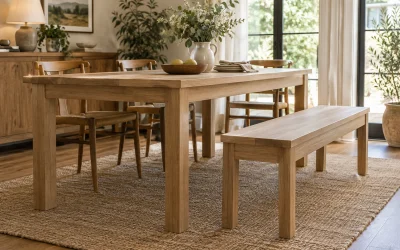
Acacia’s natural grain contrast does the design work, and the caramel finish leaves it visible instead of burying it in pigment — expect variation from plank to plank, which is the point. Solid construction means scuffs can be sanded and re-oiled rather than lived with permanently.
VASAGLE MAEZO Extendable Dining Table
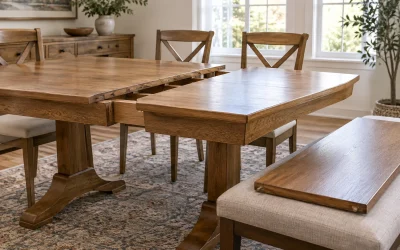
The honey brown finish is the most flexible neutral in this lineup, reading traditional with upholstered chairs and contemporary with molded ones. Extending from four to eight seats makes it the strongest choice for anyone who hosts occasionally but doesn’t want a banquet table year-round.
71″ Imitation Marble Dining Table with LED
A crisp white marble-look top with subtle striping and a grille base, plus perimeter LED lighting that turns the table into the room’s focal point after dark. It seats six to eight comfortably and wipes clean easily, though the smooth surface shows dust and needs frequent attention to stay photogenic.
55″ Farmhouse Dining Table with Drawers, Walnut & Black
Two-tone finishing — warm walnut top over a black base — anchors a room without the heaviness of an all-dark table, and the drawers plus open shelving absorb linens, chargers, and school papers. Ideal for open-plan spaces where the dining table is also the household’s default drop zone.
Frequently Asked Questions
Which finish hides everyday wear best?
Matte or satin mid-tone woods with visible grain, such as acacia in caramel or bamboo in walnut. Busy grain and low sheen break up light, so small scratches and water spots simply don’t register the way they do on solid black, pure white, or high-gloss surfaces.
Should my table finish match my floors?
No — matching closely usually flattens a room. Aim for a two-to-three-shade difference in the same undertone family, or go deliberately contrasting, like a honey brown table over dark flooring.
Are marble-look tops durable enough for daily meals?
Engineered marble-look tops handle daily use well and resist staining better than untreated wood. Use trivets for hot cookware, and clean spills promptly to avoid dulling the surface over time.
How do I protect a stained wood finish?
Wipe with a damp cloth and dry immediately, skip ammonia and all-purpose sprays, and use placemats under ceramics. Re-oil oiled finishes once or twice a year; sealed finishes just need consistent moisture control.
Final Thoughts
For most homes, the VASAGLE MAEZO extendable table in honey brown offers the widest tonal range and the most usable flexibility. Choose the Acacia Verve 48″ in caramel if you want authentic grain and a finish you can maintain for decades, or the 71″ imitation marble table with LED when the goal is a bright, high-impact centerpiece for larger gatherings.