Key takeaways
- Start with the room, not the laptop: A bed tray, a rolling cart, and a fixed writing desk are three different pieces of furniture. Decide whether the desk stays put, tucks away, or follows you between the sofa and the kitchen before comparing specs.
- Check the height range, not just “adjustable”: For seated typing you want the surface near elbow level, roughly 27–29 inches for most adults. Standing needs closer to 40–44 inches. A cart that tops out at 38 inches is a tall sitting desk, not a standing one.
- Trade footprint for vertical storage: Under 40 inches wide is the sweet spot for bedrooms and apartments. Shelves, a bookcase side panel, or a CPU stand recover the storage a small top gives up.
- Read the weight capacity honestly: A 33-pound rating handles a laptop, a lamp, and a coffee. It does not handle a 32-inch monitor plus a mechanical keyboard. Wider bases and locking casters matter more than the number alone.
- Plan power and light from the start: Built-in outlets, USB ports, and integrated LEDs remove the extension cord and clip lamp you would otherwise add later — worth prioritizing if the desk sits away from a wall socket.
What's inside
Laptops go anywhere, which is exactly the problem. The machine is portable; the surface underneath it rarely is. Most of us end up working from a sofa cushion, a bed, or a kitchen island that sits three inches too high, and the body keeps score — a tilted neck, floating wrists, a cable snaking toward the nearest outlet. A dedicated laptop desk fixes the geometry, and in a small home it has to do that without eating the floor plan.
This guide looks at six desks that solve different versions of that problem: a padded tray for bed and couch sessions, two rolling sit-stand carts for people who move between rooms, a compact writing desk with vertical storage, and two lit desks built for bedrooms that double as study and gaming corners. Each was assessed on real footprint, height range, load rating, assembly effort, and whether the finish holds up in a room you actually live in.
As an Amazon Associate we earn from qualifying purchases.


How to Choose a Laptop Computer Desk (2026)
- Start with the room, not the laptop: A bed tray, a rolling cart, and a fixed writing desk are three different pieces of furniture. Decide whether the desk stays put, tucks away, or follows you between the sofa and the kitchen before comparing specs.
- Check the height range, not just “adjustable”: For seated typing you want the surface near elbow level, roughly 27–29 inches for most adults. Standing needs closer to 40–44 inches. A cart that tops out at 38 inches is a tall sitting desk, not a standing one.
- Trade footprint for vertical storage: Under 40 inches wide is the sweet spot for bedrooms and apartments. Shelves, a bookcase side panel, or a CPU stand recover the storage a small top gives up.
- Read the weight capacity honestly: A 33-pound rating handles a laptop, a lamp, and a coffee. It does not handle a 32-inch monitor plus a mechanical keyboard. Wider bases and locking casters matter more than the number alone.
- Plan power and light from the start: Built-in outlets, USB ports, and integrated LEDs remove the extension cord and clip lamp you would otherwise add later — worth prioritizing if the desk sits away from a wall socket.
The Best Laptop Computer Desks (2026) Reviewed
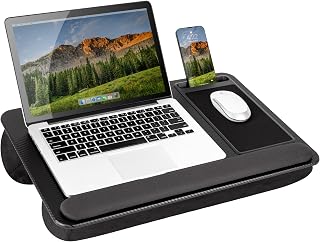
Adjustable Lap Desk with USB Port
The most practical pick for anyone whose real office is a bed or a sectional: a 23.6″ x 15.7″ top that fits a 17-inch laptop, tilts and rises to a comfortable angle, and arrives ready to use with no assembly. The USB port, storage drawer, and side bookshelf turn it from a tray into a small workstation, and the non-slip surface keeps a laptop from creeping downhill.
Mount-It! Rolling Laptop Desk
A genuine sit-stand cart with a 29.6″–44.2″ range, which is wide enough to cover seated work and standing calls for most heights. The 23.6″ x 20.5″ top is deeper than typical carts, so a laptop and a notebook coexist, and the wheels make it easy to park beside a chair or roll it out of the way entirely.
Tangkula Computer Desk with Bookshelf
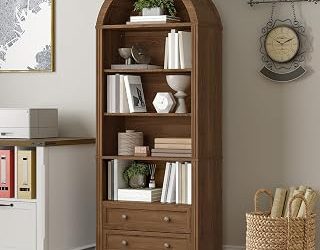
The choice when the desk needs to look like furniture. The natural wood finish and open side shelving read warm rather than office-supply, and the CPU stand plus tiered storage let a compact frame absorb books, a printer, or a tower without spreading sideways.
BONTEC Mobile Standing Desk
A narrow rolling podium with a separate keyboard tray, which is the detail that makes standing work sustainable — screen high, hands lower. At a 33-pound capacity it is laptop-and-tablet territory, best suited to living rooms, classrooms, and anyone presenting on their feet.
Lufeiya White Computer Desk with LED and Outlets
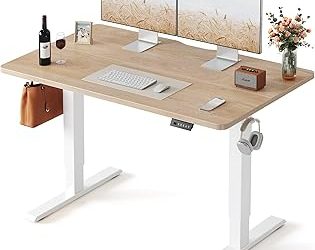
A 40-inch white desk with integrated LEDs, a charging station, and a monitor riser, aimed squarely at bedrooms and shared study spaces. The built-in outlets are the quiet win here: one cord to the wall, everything else plugged in at the desk.
Frequently Asked Questions
Are lap desks actually bad for your posture?
A lap desk used flat on a mattress is a compromise, but an adjustable model with height and tilt is meaningfully better than balancing a laptop on your thighs. It lifts the screen closer to eye level and gives your wrists a stable, level surface.
What height should a laptop desk be?
Around 28 inches seated for average adult height, with your forearms roughly parallel to the floor. If you are shorter or taller than average, an adjustable-height cart is worth the modest premium over a fixed desk.
Do I still need a monitor stand if I only use a laptop?
Yes, if you work more than an hour or two at a stretch. Raising the screen and adding an external keyboard is the single cheapest ergonomic upgrade for laptop-only setups, which is why desks with an integrated riser are worth a second look.
Will a rolling desk damage hardwood or scratch tile?
Quality carts ship with soft casters, and locking wheels prevent the drift that causes scuffing. On delicate floors, a thin rug or felt pad under the parked position removes the concern entirely.
Final Thoughts
For flexible, room-to-room work, the Mount-It! Rolling Laptop Desk offers the most usable height range and the steadiest top. The Adjustable Lap Desk is the smartest buy for bed and sofa sessions, and the Tangkula Computer Desk with Bookshelf is the one to choose when the desk has to earn its place visually as well as functionally.