Key takeaways
- Base type first: Most fan light kits use an E12 candelabra socket, but plenty of older and builder-grade fans take E26 medium bases. Unscrew one existing bulb and measure the threaded portion before you order anything — roughly half an inch across is E12, closer to an inch is E26.
- Envelope size and clearance: Fan shades sit close to the socket. Compact shapes like B11, T6, G16.5, and A15 slide into tight bowls where a full-size A19 will press against the glass or peek below the rim.
- Dimming, decided upfront: Non-dimmable bulbs on a dimmer circuit buzz, strobe, and die early. If your fan runs on a wall dimmer or a remote with light-level control, buy dimmable and confirm the driver is rated for it.
- Color temperature that matches the room: 2700K reads warm and residential under wood ceilings and near warm-toned lamps. 4000K feels crisp and modern in kitchens and offices. 5000K is task lighting — use it in laundry rooms, workshops, and garages, not over a dining table.
- CRI above 85: Color rendering index is the quiet difference between a room that looks styled and one that looks flat. Look for 85+ as a floor and 90+ where art, upholstery, or paint color matters.
What's inside
Ceiling fan lighting is the detail most rooms get wrong. The fan itself gets chosen with care — blade finish, span, motor noise — and then the light kit gets filled with whatever bulbs were left in the garage. The result is a fixture that flickers on a dimmer, throws a greenish cast across your paint colors, or worse, doesn’t fit at all because the shade clearance is tighter than a standard A19 allows. Add vibration into the mix, since a spinning motor is a rough neighborhood for a bulb, and it’s easy to see why fan lights burn out faster than anything else in the house.
This guide narrows the field to bulbs built for the specific demands of fan light kits: compact envelopes that clear shallow glass, base types that actually match candelabra sockets, and color rendering good enough to flatter wood, brass, and textiles rather than wash them out. Below you’ll find picks across E12 and E26 bases, in warm and cool color temperatures, with notes on where each one earns its spot.
As an Amazon Associate we earn from qualifying purchases.


How to Choose Light Bulbs for Ceiling Fans in 2026
- Base type first: Most fan light kits use an E12 candelabra socket, but plenty of older and builder-grade fans take E26 medium bases. Unscrew one existing bulb and measure the threaded portion before you order anything — roughly half an inch across is E12, closer to an inch is E26.
- Envelope size and clearance: Fan shades sit close to the socket. Compact shapes like B11, T6, G16.5, and A15 slide into tight bowls where a full-size A19 will press against the glass or peek below the rim.
- Dimming, decided upfront: Non-dimmable bulbs on a dimmer circuit buzz, strobe, and die early. If your fan runs on a wall dimmer or a remote with light-level control, buy dimmable and confirm the driver is rated for it.
- Color temperature that matches the room: 2700K reads warm and residential under wood ceilings and near warm-toned lamps. 4000K feels crisp and modern in kitchens and offices. 5000K is task lighting — use it in laundry rooms, workshops, and garages, not over a dining table.
- CRI above 85: Color rendering index is the quiet difference between a room that looks styled and one that looks flat. Look for 85+ as a floor and 90+ where art, upholstery, or paint color matters.
The Best Light Bulbs for Ceiling Fans, Reviewed
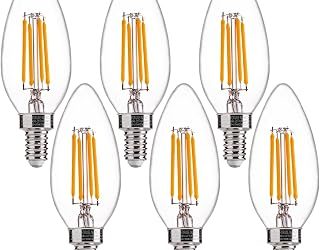
comzler E12 LED Candelabra Bulbs, 2700K
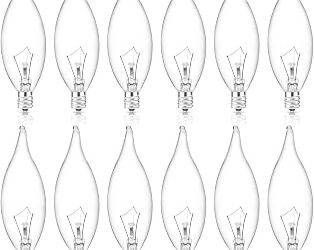
The default warm-white choice for classic fan kits: a slim B11 candle shape at 500 lumens with CRI 85+, which keeps wood tones and warm metals looking rich instead of muddy. Note that these are non-dimmable, so pair them with a standard switch or a fan remote that only toggles the light on and off.
GvvooHome E12 Dimmable, 4000K
My pick when the fan lives in a kitchen, home office, or anywhere the palette leans cool and architectural. The 90+ CRI is genuinely uncommon at this price, and full dimmability means you can push 600 lumens for task work then pull it back for evening.
ALAMPEVER G16.5 Dimmable, 2700K
The globe silhouette is the design-forward option here, and it looks intentional in exposed-socket fan kits and open cages where the bulb is part of the composition. Dimmable, 550 lumens, soft white, and a twelve-pack that covers a fan plus a vanity or sconce run.
A15 LED E26 Ceiling Fan Bulbs, 5000K
For medium-base fans that need real working light, this compact A15 delivers 600 lumens of daylight in a body small enough to clear shallow shades. Non-dimmable and unapologetically bright — best in utility spaces, garages, and covered work areas.
Cotanic E26 A15, 4000K
Same small-envelope, medium-base convenience with a more livable neutral white that suits kitchens and hallways without tipping into clinical. CRI 85+ and 600 lumens make it a sensible one-for-one swap for tired incandescents.
Frequently Asked Questions
How do I know whether my fan takes E12 or E26?
Remove a bulb and look at the threads. E12 candelabra bases are about 12mm across, roughly the diameter of a pencil. E26 medium bases are about 26mm, the same as a standard household bulb.
Why do bulbs in my ceiling fan burn out so fast?
Vibration and heat. Enclosed shades trap warmth around the driver, and constant motor movement stresses filaments and solder joints. LEDs handle both better than incandescents, and a compact bulb with breathing room around it lasts longer than one crammed against glass.
Can I mix color temperatures in one fixture?
Don’t. Even a 300K difference between adjacent bulbs is visible and reads as a defect. Buy multipacks so every socket matches.
What about outdoor or covered-porch fans?
Check for a damp-location rating. Most of the bulbs here are specified for indoor use, and humidity is hard on LED electronics over time.
Final Thoughts
For most homes, the GvvooHome E12 dimmable is the smartest all-around buy — 90+ CRI and true dimming cover almost every room. Choose the comzler 2700K candelabra if your space runs warm and traditional, and the Cotanic E26 A15 if your fan takes medium bases and you want neutral white without the clinical edge.