Key takeaways
- Weight rating with headroom: Buy at least 100 pounds above your current weight. Static ratings are measured under ideal, motionless conditions, and real use adds leaning, rocking, and sitting down quickly. A 500 lb rating for a 350 lb user is comfortable margin, not overkill.
- Seat width and depth: Look for 22 inches or more of usable width between armrests, not just overall seat width. Depth matters too: you want two to three fingers of clearance behind your knees so the front edge isn’t cutting circulation.
- Cushion construction: Pocket-spring seats hold their shape far longer than single-density foam, which compresses into a hard shell under sustained load. If a listing only says “thick padding,” treat that as a red flag.
- Base and cylinder hardware: Steel or heavy-gauge aluminum five-star bases, class 4 gas lifts, and dual or rubber-coated casters. Nylon bases and standard cylinders are where cheap big-and-tall chairs fail first.
- Adjustable lumbar, not fixed: A pillow sewn into the backrest is decoration. You want a lumbar pad that slides vertically and adjusts in depth so it lands on your natural curve, which sits higher or lower depending on torso length.
What's inside
Most office chairs are designed around a fictional body: about 5’9″, roughly 180 pounds, seated for maybe two hours at a stretch. If you’re a larger person, you already know how that fiction ends. The seat pan feels like a park bench after twenty minutes, the armrests pinch inward at the hips, the gas cylinder starts sinking on its own, and somewhere around month four the base develops a creak that makes video calls feel like a liability. It isn’t a personal failing. It’s a spec sheet problem.
This guide looks at seating built for real weight loads and wider frames, judged the way I’d judge any piece of furniture going into a home: structure first, comfort second, and looks that don’t announce “medical supply catalog.” I’ve focused on chairs rated from 400 to 650 pounds, with attention to seat width, cushion construction, base material, and lumbar adjustment that actually moves where your back needs it. Below are the standouts, plus what to check before you commit.
As an Amazon Associate we earn from qualifying purchases.


How to Choose an Office Chair For Fat People (2026)
- Weight rating with headroom: Buy at least 100 pounds above your current weight. Static ratings are measured under ideal, motionless conditions, and real use adds leaning, rocking, and sitting down quickly. A 500 lb rating for a 350 lb user is comfortable margin, not overkill.
- Seat width and depth: Look for 22 inches or more of usable width between armrests, not just overall seat width. Depth matters too: you want two to three fingers of clearance behind your knees so the front edge isn’t cutting circulation.
- Cushion construction: Pocket-spring seats hold their shape far longer than single-density foam, which compresses into a hard shell under sustained load. If a listing only says “thick padding,” treat that as a red flag.
- Base and cylinder hardware: Steel or heavy-gauge aluminum five-star bases, class 4 gas lifts, and dual or rubber-coated casters. Nylon bases and standard cylinders are where cheap big-and-tall chairs fail first.
- Adjustable lumbar, not fixed: A pillow sewn into the backrest is decoration. You want a lumbar pad that slides vertically and adjusts in depth so it lands on your natural curve, which sits higher or lower depending on torso length.
The Best Office Chairs For Fat People (2026), Reviewed
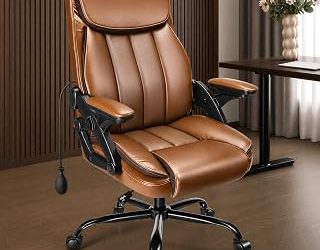
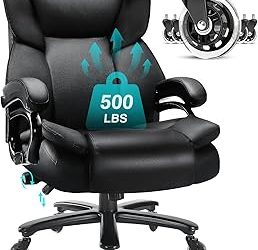
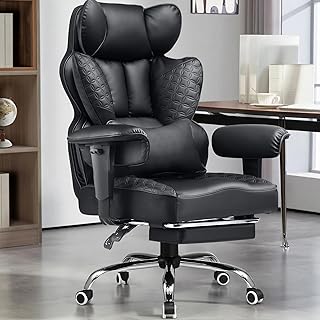
650 lbs Big and Tall Leather Executive Chair
The highest-capacity pick here, and the one I’d point toward anyone who has broken a chair before. The padded leather shell reads as traditional executive rather than task chair, so it suits a wood-desk study better than a minimalist setup, and it’s genuinely built for eight-hour days.
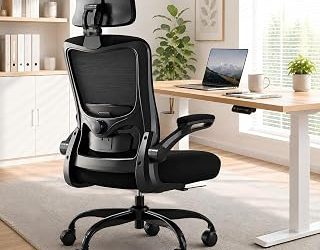
600 lbs Heavy Duty Chair with 5D Flip Arms
The flip-up arms are the quiet star: they let you tuck the chair fully under a desk and remove the hip pinch that ruins wider seats. Pocket-spring cushioning and dual rubber wheels round out a chair that feels considerably more expensive than it looks.
500 lbs High Back Executive Chair with Pocket Spring Cushion
A well-balanced middle option with a tall supportive back, sliding lumbar support, and quiet rubber casters that won’t chew up hardwood or a low-pile rug. This is the safest all-rounder if you want one chair to just work without fuss.
500 lbs Extra Wide Seat Chair for Back Pain
Built around the seat rather than the silhouette: an unusually generous seat pan, thick armrest padding, and a reinforced base with upgraded casters. Choose this one if hip and thigh pressure has been your main complaint.
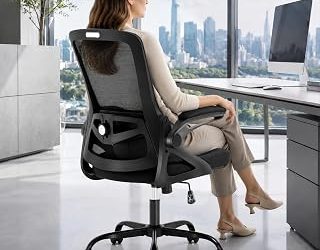
YFO Big and Tall Mesh Chair, 500 lbs
The breathable option, and the best-looking of the group in a modern room. Mesh keeps things cool through long sessions, while 2D arms and a wide seat keep the ergonomics honest instead of trading support for airflow.
Frequently Asked Questions
Are weight ratings on office chairs accurate?
They’re manufacturer-tested static figures, so treat them as a ceiling rather than a target. Buying with meaningful margin is the single most effective way to avoid cylinder sag and base fatigue.
Mesh or leather for larger users?
Leather and bonded upholstery over pocket springs generally give more structured support and durability. Mesh wins on temperature regulation, which matters if you run warm or work in a room without great airflow.
Does a footrest actually help?
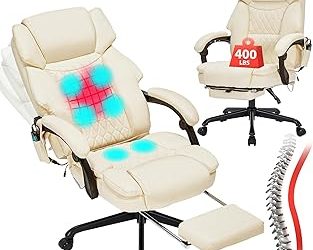
It does for reclining breaks and shorter legs, which is why the GTPLAYER Big and Tall gaming chair earns a look at 400 lbs. For active desk work, floor contact with both feet remains the better default.
How long should a heavy-duty chair last?
Three to five years of daily use is a fair expectation from a properly rated chair with a steel base. Foam-only seats often flatten well before that.
Final Thoughts
If you want maximum structural confidence, the 650 lbs leather executive chair is the clear choice. The 600 lbs model with 5D flip arms is the best overall balance of capacity, comfort, and desk practicality, while the YFO mesh chair is the pick for warm rooms and modern interiors where a cooler, lighter silhouette matters more than a boardroom look.