Key takeaways
- Weight rating with headroom: Buy at least 100 lbs above your actual weight. Ratings are tested statically, but real use involves shifting, leaning, and dropping into the seat — dynamic loads that exceed the number on the box.
- Base and cylinder material: A five-star steel or aluminum base is non-negotiable; nylon is where budget chairs fail first. Look for a Class 4 gas cylinder, the grade rated for sustained heavy loads without sinking.
- Cushion construction: Pocket springs wrapped in high-density foam resist compression far better than single-density foam alone. If you sit six or more hours daily, this is the single biggest comfort variable.
- Seat width and depth: Aim for 21 inches of usable width minimum, and check that depth leaves two to three fingers between the seat edge and the back of your knees. Flip-up arms help if the chair needs to tuck under a desk.
- Adjustable lumbar, not fixed: A molded curve set for someone else’s spine is worse than none. Height- and depth-adjustable lumbar support lets you place pressure where your lower back actually needs it.
What's inside
Most office chairs are engineered for an imaginary average body, and that assumption shows up fast. Gas lifts sink by mid-afternoon, nylon bases develop hairline cracks, and foam that felt generous in week one flattens into a pancake by month three. If you carry more weight than the spec sheet anticipated, the failure isn’t your fault — it’s a design brief that never included you. The result is a cycle of replacing chairs every eighteen months and quietly bracing yourself every time you lean back.
This guide looks at seating built to a different standard: reinforced steel frames, pocket-spring seat cushions borrowed from mattress construction, and weight ratings from 400 to 650 pounds that are structural, not marketing. Below you’ll find the models worth your attention in 2026, a short buying framework for judging any big-and-tall chair on its merits, and honest notes on where each one earns its keep in a working home office.
As an Amazon Associate we earn from qualifying purchases.


How to Choose a/an Office Chair For Heavy People (2026)
- Weight rating with headroom: Buy at least 100 lbs above your actual weight. Ratings are tested statically, but real use involves shifting, leaning, and dropping into the seat — dynamic loads that exceed the number on the box.
- Base and cylinder material: A five-star steel or aluminum base is non-negotiable; nylon is where budget chairs fail first. Look for a Class 4 gas cylinder, the grade rated for sustained heavy loads without sinking.
- Cushion construction: Pocket springs wrapped in high-density foam resist compression far better than single-density foam alone. If you sit six or more hours daily, this is the single biggest comfort variable.
- Seat width and depth: Aim for 21 inches of usable width minimum, and check that depth leaves two to three fingers between the seat edge and the back of your knees. Flip-up arms help if the chair needs to tuck under a desk.
- Adjustable lumbar, not fixed: A molded curve set for someone else’s spine is worse than none. Height- and depth-adjustable lumbar support lets you place pressure where your lower back actually needs it.
The Best Office Chair For Heavy People (2026)s Reviewed
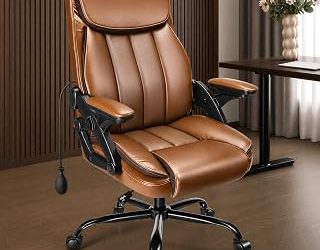
650lbs Large Big and Tall Executive Office Chair
The highest-capacity pick here, and the one to choose if you want to stop thinking about weight limits entirely. Thickly padded leather over a reinforced frame makes it a genuine eight-hour chair, though its scale reads more boardroom than minimalist study — plan your room around it rather than the reverse.
600LBS Heavy Duty Office Chair with 5D Flip Arms
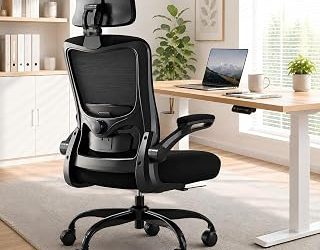
The standout for adjustability: 5D armrests move up, in, forward, and pivot, which matters enormously if you alternate between typing, reading, and reclining. Pocket-spring cushioning and dual rubber wheels round out a chair that feels considered rather than simply overbuilt.
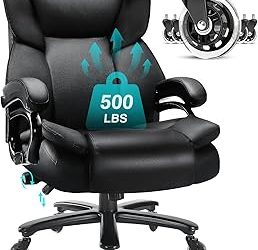
500lbs Big and Tall High Back Executive Chair
The value sweet spot in this lineup. You get the same pocket-spring seat and adjustable lumbar found on pricier models, plus quiet rubber casters that won’t chew up hardwood or leave tracks on a rug — a detail cheap chairs almost always get wrong.
650lbs Reclining Executive Chair with Foot Rest
A recline-and-footrest combination at a 650 lb rating is genuinely rare, making this the pick for anyone whose home office doubles as a reading chair or evening retreat. The PU leather is breathable enough for long sessions, and the adjustable lumbar holds position better than the price suggests.
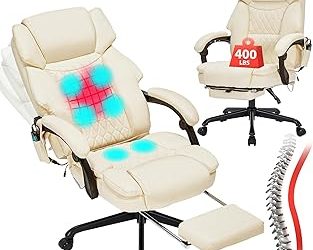
Massage Office Chair with Heat and Foot Rest
Six-point vibration and seat heat sound like novelty features until you’ve spent a winter afternoon with lower-back tension. Rated to 400 lbs, it’s the lightest-duty option here, so treat it as a comfort-forward choice rather than a maximum-capacity one.
Frequently Asked Questions
How much weight capacity do I actually need?
Add roughly 100 lbs to your body weight as a buffer. Static ratings don’t account for the force of sitting down quickly or rocking back, and running a chair near its ceiling accelerates wear on the cylinder and base.
Is leather or mesh better for heavier users?
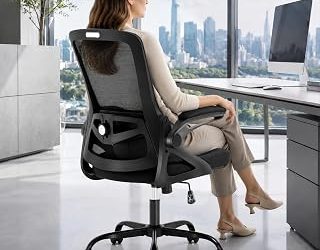
Leather and PU leather pair better with the thick, dense cushioning heavy-duty chairs require, and they’re more durable at stress seams. Mesh breathes better but rarely comes in ratings above 400 lbs, since the frame geometry that makes mesh work limits load capacity.
Why do gas cylinders keep sinking?
Almost always because the cylinder is under-rated for the load. Class 4 cylinders are built for this; anything lower will slowly bleed pressure. Most cylinders are replaceable as a cheap standalone part if an otherwise good chair starts drifting.
Do I need a footrest?
Only if you plan to recline. For upright desk work it’s dead weight, but for anyone using one chair for both focused work and breaks, it meaningfully extends how long the chair stays comfortable.
Final Thoughts
For most buyers, the 600LBS Heavy Duty Chair with 5D Flip Arms hits the best balance of capacity, adjustability, and everyday livability. If budget is the priority, the 500lbs High Back Executive Chair delivers pocket-spring comfort and adjustable lumbar without the premium, while the 650lbs Reclining Chair with Foot Rest is the one to pick when your office chair needs to work just as hard off the clock.