Key takeaways
- Hide grade: Top-grain cowhide develops a patina and resists cracking; bonded leather is shredded scrap adhered to backing and will flake at stress points. PU is a legitimate budget choice — just buy it knowing it’s a coated fabric, not hide, and expect a shorter service life in high-use setups.
- Seat depth and height range: Measure from the back of your knee to your hip and leave two fingers of clearance at the seat edge. Executive chairs often run deep, so shorter users should prioritize models with a low starting seat height rather than assuming a gas lift solves it.
- Lumbar contour over lumbar gadgets: A backrest shaped to meet the curve of your spine outperforms a bolted-on cushion that shifts every time you move. Look for a molded or thickened backrest with visible shaping through the mid-back.
- Base and caster hardware: Polished aluminum bases carry weight better than nylon and photograph far better in an open-plan room. Rubber or PU-sleeved casters roll silently on hardwood and won’t scar a finish the way bare plastic wheels do.
- Visual footprint: High-back chairs read formal and anchor a dedicated study; mid-back models disappear into a bedroom nook or shared living space. Match the silhouette to the room’s role before you fall for the leather color.
What's inside
Leather is the one desk chair material that reads as furniture rather than equipment, which is exactly why it’s so easy to get wrong. Shop the category for an hour and you’ll find split-hide upholstery sold as “genuine leather,” foam that flattens by month four, and silhouettes so bulky they swallow a small home office whole. The prices swing wildly too, and the expensive option isn’t reliably the better one.
This guide sorts the field by what actually holds up in a lived-in room: hide quality, seat geometry, base construction, and whether the proportions suit your space and your body. Below are six leather chairs worth considering in 2026, followed by a buying framework, short reviews of the standouts, and answers to the questions that come up most.
As an Amazon Associate we earn from qualifying purchases.


How to Choose a Office Chair Leather (2026)
- Hide grade: Top-grain cowhide develops a patina and resists cracking; bonded leather is shredded scrap adhered to backing and will flake at stress points. PU is a legitimate budget choice — just buy it knowing it’s a coated fabric, not hide, and expect a shorter service life in high-use setups.
- Seat depth and height range: Measure from the back of your knee to your hip and leave two fingers of clearance at the seat edge. Executive chairs often run deep, so shorter users should prioritize models with a low starting seat height rather than assuming a gas lift solves it.
- Lumbar contour over lumbar gadgets: A backrest shaped to meet the curve of your spine outperforms a bolted-on cushion that shifts every time you move. Look for a molded or thickened backrest with visible shaping through the mid-back.
- Base and caster hardware: Polished aluminum bases carry weight better than nylon and photograph far better in an open-plan room. Rubber or PU-sleeved casters roll silently on hardwood and won’t scar a finish the way bare plastic wheels do.
- Visual footprint: High-back chairs read formal and anchor a dedicated study; mid-back models disappear into a bedroom nook or shared living space. Match the silhouette to the room’s role before you fall for the leather color.
The Best Office Chair Leather (2026)s Reviewed
YFO Home Office Desk Chair, Brown Leather
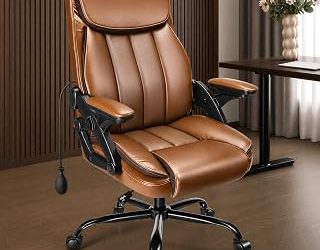
A restrained, mid-century-leaning task chair with rubber casters and adjustable height — the practical pick if you want warm brown leather without the boardroom bulk. Lumbar support is present and honest rather than elaborate, which suits shorter work sessions and smaller rooms best.
Genuine Leather Executive Chair with 135° Recline
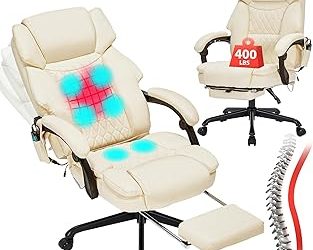
The most complete package here: real leather, an aluminum base, quiet casters, adjustable arms, and a recline that opens far enough to actually rest in. The high back and clean stitching give it a designed-object presence, so treat it as furniture you’ll see every day, not just a seat.
Genuine Leather Mid-Back Executive Chair, Black
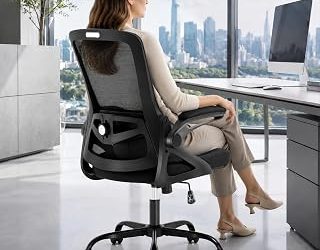
Mid-back proportions and aluminum arms make this the quiet achiever for compact spaces or rooms where the desk shouldn’t dominate. The thickened backrest is the standout detail — it holds its shape under daily use rather than compressing into a hollow.
Top-Grain Cowhide Executive Chair
Top-grain hide, an adjustable headrest, and a three-position lockable recline put this in genuine heirloom-adjacent territory. It’s the one I’d choose for a home office that doubles as a client-facing room, since the leather will age into something better looking than it started.
Leather Office Chair for Shorter Frames, Brown
Purpose-built for users under about 5’5″, with a lower seat range and shallower cushion so your feet reach the floor without a footrest workaround. Upholstery is PU rather than hide, which is a fair trade for the fit advantage at this price.
Frequently Asked Questions
Is genuine leather worth the premium over PU?
For daily eight-hour use, yes — hide breathes better, resists cracking, and improves visually with age. For a few hours a week, well-made PU delivers most of the look for a fraction of the cost.
Will a leather chair feel hot in summer?
Real leather regulates temperature reasonably well and stays cooler than coated PU, which traps heat against the body. In a warm room, choose perforated or lighter-colored hide and skip glossy finishes.
How much weight capacity do I actually need?
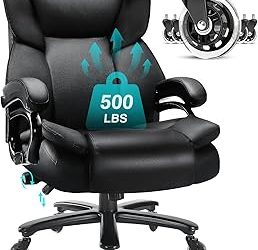
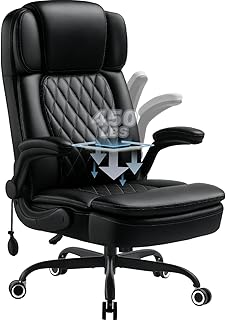
Standard executive chairs top out near 250–300 lbs. If you’re near that ceiling, size up to a heavy-duty model such as the 450 lb big-and-tall option, which adds a metal base and spring cushion for genuine long-term stability.
How do I care for leather upholstery?
Dust weekly with a dry microfiber cloth and condition every six months with a pH-neutral leather cream. Keep the chair out of direct sun, which is the fastest route to fading and surface cracking.
Final Thoughts
If you want one chair to live with for a decade, the Top-Grain Cowhide Executive Chair earns it on materials alone. The Genuine Leather Executive Chair with 135° Recline is the better all-rounder for comfort and hardware quality, while the Mid-Back Executive Chair in black is the smartest choice for a small or shared room where restraint matters more than presence.