Key takeaways
- Match the mat to the floor, not the room: Hard-floor mats have a smooth underside with grip texture or a non-slip coating. Carpet mats have cleats that bite into pile. Using a carpet mat on hardwood will mark it; using a hard-floor mat on carpet means it slides constantly.
- Measure your actual roll zone: Map how far you travel to reach a printer, drawer, or second monitor. A 36″ x 48″ mat suits a compact single desk; 47″ x 60″ or 54″ x 32″ makes sense for L-shaped setups and wider workstations.
- Thickness governs stability: Around 1/5″ is genuinely heavy duty and resists cracking under a loaded chair. Roughly 1/4″ designed for low pile stays firm without wobble. Thin, flimsy sheets telegraph every floorboard seam and curl at the edges.
- Decide between invisible and decorative: Crystal-clear PVC disappears and lets good flooring stay the focus. Espresso or dark grey mats, including rattan woven patterns, work better in living rooms and bedrooms where a transparent rectangle looks like packaging.
- Check the shape and the finish: A lipped mat tucks under the desk and keeps the working area flat. Rectangular mats are simpler to position. Beveled or tapered edges reduce trip risk and stop chair wheels catching on the way on and off.
What's inside
Casters are quietly brutal. A rolling chair loaded with body weight concentrates pressure into five small wheels, and those wheels drag grit across your floor hundreds of times a day. On engineered hardwood you get a dull halo around the desk. On laminate you get micro-scratches that catch light at exactly the wrong angle. On carpet you get a compressed, greyed rectangle that never quite recovers. Most people notice the damage about eighteen months after it started, which is roughly seventeen months too late.
A chair mat is unglamorous insurance, but the wrong one causes its own problems: curling corners, cracking in cold rooms, cloudy plastic that yellows by spring, or a surface so slick the chair drifts every time you lean back. This guide looks at the mats worth putting under a desk in 2026, from woven-pattern PVC that reads more like a rug than a shield, to clear hard-floor mats, to low-pile carpet options with a proper lip. We cover sizing, thickness, floor compatibility, and the details that separate a mat you forget about from one you replace.
As an Amazon Associate we earn from qualifying purchases.


![[Upgraded Version] Crystal Clear 1/5" Thick 54" x 32" Heavy Duty Hard Chair Mat, Can be Used on Carpet or Hard Floor](https://m.media-amazon.com/images/I/71lmM3s++QL._AC_UL320_.jpg)


How to Choose a/an Office Chair Mats (2026)
- Match the mat to the floor, not the room: Hard-floor mats have a smooth underside with grip texture or a non-slip coating. Carpet mats have cleats that bite into pile. Using a carpet mat on hardwood will mark it; using a hard-floor mat on carpet means it slides constantly.
- Measure your actual roll zone: Map how far you travel to reach a printer, drawer, or second monitor. A 36″ x 48″ mat suits a compact single desk; 47″ x 60″ or 54″ x 32″ makes sense for L-shaped setups and wider workstations.
- Thickness governs stability: Around 1/5″ is genuinely heavy duty and resists cracking under a loaded chair. Roughly 1/4″ designed for low pile stays firm without wobble. Thin, flimsy sheets telegraph every floorboard seam and curl at the edges.
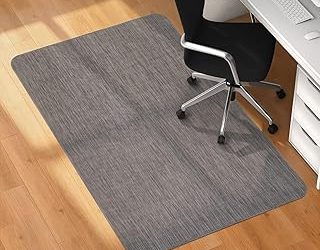
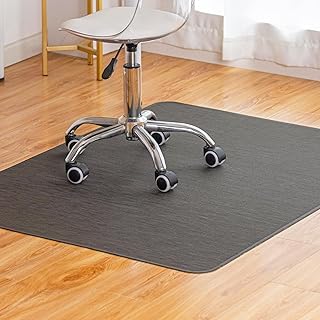
- Decide between invisible and decorative: Crystal-clear PVC disappears and lets good flooring stay the focus. Espresso or dark grey mats, including rattan woven patterns, work better in living rooms and bedrooms where a transparent rectangle looks like packaging.
- Check the shape and the finish: A lipped mat tucks under the desk and keeps the working area flat. Rectangular mats are simpler to position. Beveled or tapered edges reduce trip risk and stop chair wheels catching on the way on and off.
The Best Office Chair Mats (2026)s Reviewed
Baroyal Hard Floor Chair Mat, 36″ x 48″ (Espresso)
The espresso finish is the draw here: heavy-duty PVC that protects wood and tile while looking like an intentional floor covering rather than a plastic sheet. At 36″ x 48″ it fits a standard desk footprint, and the non-slip underside keeps it planted without adhesive.
Blvornl Anti-Slip PVC Mat, Rattan Woven Pattern
Our pick for shared spaces. The dark grey rattan texture reads as a low-profile rug, and solid PVC construction means spills wipe off rather than soak in, which matters for a home office that doubles as a dining area.
Blvornl Ultra Large Chair Mat, 47.2″ x 60″ (Black)
Sized for wide or corner desks where a standard mat leaves wheels running off the edge. It is genuinely heavy, which is the point: mass plus an anti-slip base is what stops large mats from creeping across hardwood.
Crystal Clear Heavy Duty Mat, 1/5″ Thick, 54″ x 32″
The most versatile option on this list, rated for carpet or hard floor at a full 1/5″ thickness. That rigidity is what keeps a loaded chair from sinking, and the clarity means patterned tile or good oak stays visible.
Low Pile Carpet Chair Mat, 1/4″ Thick (with Lip)
Purpose-built for low-pile carpet, with a lip that slides under the desk to keep the main surface unobstructed. Semi-transparent so it blends with most carpet colors, and firm enough to give casters a proper rolling surface instead of a spongy one.
Frequently Asked Questions
Will a PVC mat damage hardwood over time?
A hard-floor mat with a smooth or lightly textured underside will not. The risk comes from using a carpet mat, whose gripper cleats can dent or scratch finished wood, or from trapping grit underneath. Lift and sweep beneath the mat every few weeks.
Do I need a lip?
Only if your desk has clearance underneath and you want the flat working area extended forward. Rectangular mats are easier to reposition and better suited to standing desks or unusual layouts.
How do I flatten a mat that arrives curled?
Unroll it, weight the corners with books, and give it 24 to 48 hours in a warm room. Cold slows PVC’s recovery, so avoid unpacking in an unheated garage.
Can I use a hard-floor mat on carpet anyway?
It will slide and flex. On thick pile it can also crack over time because the plastic keeps bending under load. Buy for the surface you actually have.
Final Thoughts
For most desks on wood or tile, the Kuyal Clear 36″ x 48″ mat is the sensible default: correctly sized, transparent, and unfussy. If you want protection that suits a visible room, the Blvornl rattan woven mat earns its place, while the Crystal Clear 1/5″ 54″ x 32″ is the one to choose if you need real thickness and the flexibility to move between carpet and hard floor.