Key takeaways
- Tabletop vs. base: Decide before you buy. Bases tolerate almost any furniture or chalk paint. Tabletops need an acrylic-urethane style all-in-one coating or a chalk paint you commit to sealing with a wipe-resistant topcoat.
- Coverage math: A 4 oz or 5 oz sample covers roughly a chair, a set of legs, or a small side table. A standard six-seater table with two coats realistically wants a quart or more, so buy volume for full projects and testers for color trials.
- Prep claims: “No sanding” usually means no full strip-to-wood sanding, not zero prep. Degrease with a mild cleaner and scuff-sand any glossy factory lacquer, or adhesion will fail at the edges first.
- Sheen and scuff behavior: Flat matte looks beautiful in photos but telegraphs every fingerprint and burnish mark. Satin or a matte base under a satin sealer holds up far better on a surface people lean on.
- Indoor air quality and cure time: Water-based, low-odor, low-VOC formulas let you work in the dining room itself. Note that dry-to-touch in 30 minutes is not cured; most coatings need several days to a week before heavy use.
What's inside
A dining table is the hardest-working surface in the house, which is exactly why repainting one goes wrong so often. Wipe-downs after every meal, hot serving dishes, condensation rings, a kid’s fork dragged across the top: any of these will find the weak spot in a finish within a month. Most shoppers reach for whatever furniture paint has the prettiest color card, discover that “no sanding required” was only half the story, and end up with a tabletop that scratches down to bare wood by the second dinner party.
The fix is less about brand loyalty and more about matching the product to the part of the table you’re painting. Legs, aprons, and pedestals are forgiving and suit fast-drying chalk formulas. Tabletops need either a genuinely tough all-in-one coating or a chalk paint plus a real protective topcoat. Below are the paints worth your time in 2026, plus a short checklist for choosing between them and honest notes on which ones need sealing before food goes anywhere near them.
As an Amazon Associate we earn from qualifying purchases.




🛒 Best Price Today on Amazon
Prime members get fast, free shipping on everything above, plus member-only deals. New members get a 30-day free trial — cancel anytime.
How to Choose Paint for a Dining Table (2026)
- Tabletop vs. base: Decide before you buy. Bases tolerate almost any furniture or chalk paint. Tabletops need an acrylic-urethane style all-in-one coating or a chalk paint you commit to sealing with a wipe-resistant topcoat.
- Coverage math: A 4 oz or 5 oz sample covers roughly a chair, a set of legs, or a small side table. A standard six-seater table with two coats realistically wants a quart or more, so buy volume for full projects and testers for color trials.
- Prep claims: “No sanding” usually means no full strip-to-wood sanding, not zero prep. Degrease with a mild cleaner and scuff-sand any glossy factory lacquer, or adhesion will fail at the edges first.
- Sheen and scuff behavior: Flat matte looks beautiful in photos but telegraphs every fingerprint and burnish mark. Satin or a matte base under a satin sealer holds up far better on a surface people lean on.
- Indoor air quality and cure time: Water-based, low-odor, low-VOC formulas let you work in the dining room itself. Note that dry-to-touch in 30 minutes is not cured; most coatings need several days to a week before heavy use.
The Best Dining Table Paints (2026), Reviewed
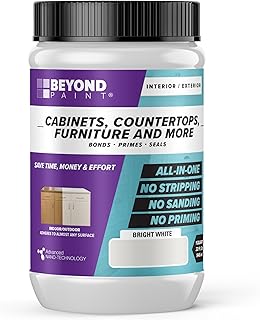
Beyond Paint All-in-One Refinishing Paint, Bright White
This is the pick when the tabletop itself is being painted, not just the base. The bonding formula grips slick veneers and previously finished wood with minimal prep, and the quart size means you can cover a full table and chairs without color-matching a second batch. Two coats plus adequate cure time gives the most durable result on this list.
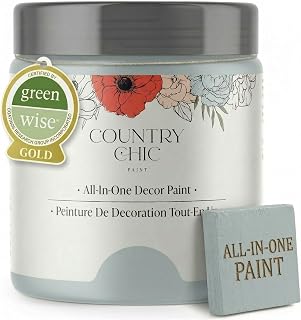
Country Chic All-in-One Chalk Paint, Belle of the Ball
A refined, low-VOC chalk-style paint with primer and topcoat built in, and the light blue is a genuinely usable dining-room color rather than a novelty. The 4 oz size is best treated as a sample pot for legs, chairs, or a color test before committing to a whole table.
Furniture Paint Kit with Tools, French Roast
Buying the brush and roller alongside the paint removes the most common beginner mistake: applying a self-leveling finish with the wrong applicator. The deep coffee brown suits mid-century and farmhouse bases especially well, and the low-odor water-based formula is comfortable to use indoors.
Chalky Chicks Starless Night Chalk Paint
A dense matte black that reaches full opacity in two coats over most wood, with a 30-minute recoat window that makes a set of chairs or a pedestal base a single-afternoon job. Seal it if it goes anywhere near plates, as flat black shows every wipe mark.
DWIL Matte Finish Furniture Paint, White
A clean, odorless white that lays down smoothly and stays bright rather than drifting yellow, which is where cheaper whites fail. At 5 oz it is scaled for chairs, aprons, and trestle bases rather than an entire tabletop.
Frequently Asked Questions
Do I need a topcoat on a painted dining table?
On the tabletop, yes, unless you are using an all-in-one refinishing paint rated for horizontal surfaces. Chalk paint on its own is porous and will stain from oil, wine, and repeated wiping. Two to three thin coats of a water-based polyurethane or a purpose-made furniture sealer is the difference between one season and ten years.
Can I really skip sanding?
You can skip stripping, but not cleaning. Degrease thoroughly, then lightly scuff any high-gloss factory finish with 220-grit so the paint has something to bite into. Edges and corners are where adhesion failures start.
How much paint does a dining table need?
Budget a quart for a six-seater table with two coats, and a second quart if you are painting matching chairs. The 4 oz and 5 oz sizes are ideal for color testing and small components.
How long before we can eat on it?
Dry-to-touch happens in under an hour with these formulas, but wait a week before regular use, placemats, or hot dishes. Full cure is what delivers scratch and block resistance.
Final Thoughts
For a full table refinish where durability decides everything, Beyond Paint All-in-One in Bright White is the safest bet. If you want color and character on legs, chairs, and bases, Country Chic’s Belle of the Ball delivers a sophisticated finish with minimal fuss, while Chalky Chicks Starless Night is the fastest route to a modern black base, provided you seal it properly.