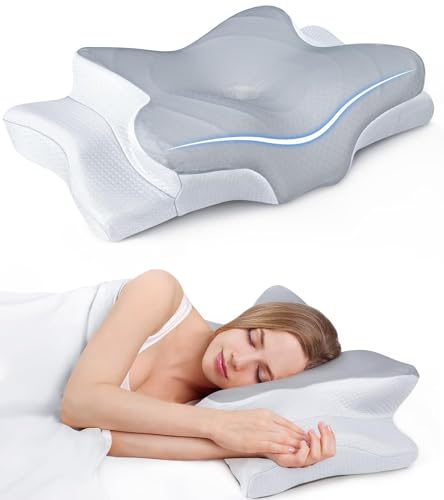
For most neck-pain-prone sleepers, a contoured memory foam pillow such as the Tempur-Pedic TEMPUR-Neck suits back and side sleepers who want fixed support, while an adjustable shredded-fill pillow like the Coop Home Goods Original suits people who need to fine-tune height. Stomach sleepers usually do better with a thin, soft pillow. None of these is a treatment, and persistent or radiating neck pain, numbness or weakness is a reason to see a doctor or physical therapist rather than shop for a new pillow.
Our top picks



As an Amazon Associate we earn from qualifying purchases at no extra cost to you.
Pillows for neck pain at a glance
| Pillow | Best for | Key stated features | Limits |
|---|---|---|---|
| Tempur-Pedic TEMPUR-Neck | Back and side sleepers who like a firm, shaped pillow | The maker lists a contoured profile in its proprietary foam, with a lower curve for the neck and a raised edge | Fixed shape, warm feel for some sleepers, odor on unboxing reported by some owners |
| Coop Home Goods Original Adjustable | Sleepers who want to change loft | The maker describes a zippered cover over shredded memory foam and microfiber fill that can be added or removed | Fill can shift and clump, so it needs fluffing |
| Purple Harmony | Hot sleepers wanting a springy, cooler feel | The maker lists a Hyper-Elastic Polymer grid layered with a comfort layer, offered in several heights | Heavier, different feel from foam, premium tier |
| Eli and Elm Cotton Cloud | Side sleepers wanting a cushioned, adaptable pillow | The maker lists a cotton cover and a fill that can be adjusted | Less contouring than molded foam |
| Standard cervical roll or wedge pillow | Budget-minded back sleepers | Simple shaped foam or fiber supports | Less refined shaping, can feel too high |
What actually matters when choosing
Pillow guidance from sleep and spine organizations is consistent on one point: the goal is a neutral position in which the head is roughly in line with the spine, not tilted up or sagging down. Which pillow achieves that depends on your sleep position, shoulder width and mattress firmness, which is why no single model is right for everyone.
Loft and sleep position
Loft is the pillow height once your head is on it. Side sleepers need more loft because the gap between ear and mattress equals the shoulder width. Back sleepers generally need a medium loft, often with a lower curve under the neck. Stomach sleepers generally need very low loft, since a tall pillow can bend the neck backward. Many makers publish height ranges for each model, so compare those numbers rather than relying on words like “medium”.
Firmness and fill
Memory foam gives a slow, contouring response and holds its shape. Latex-style and grid materials are springier and tend to feel cooler and more buoyant. Shredded fills let you adjust height but need regular fluffing. Down and feather pillows are soft and compressible, which some side sleepers like, but they usually give less consistent support for a sore neck. Fiberfill is the typical budget tier and tends to flatten sooner.
Cover, temperature and allergies
If you sleep warm, look for makers that state a ventilated core, gel-infused layer or breathable cover. Cooling claims vary a lot and reviewers often describe them as modest. If you have allergies, look for stated hypoallergenic cover fabrics and washable covers. Foam cores usually cannot go in the washing machine, so follow the care label and use a removable, washable pillowcase protector.
Picks by sleeper
Back sleepers
A contoured pillow with a gentle neck curve is the common choice. The TEMPUR-Neck is a frequently cited example in reviewer round-ups from sleep-focused outlets, which tend to describe it as firm and supportive but not for everyone. Compare the size options, since the maker offers several heights.
Side sleepers
Because the loft requirement is higher, adjustable models like the Coop Home Goods Original are popular: you remove fill until the head sits level with the spine. Reviewers often mention the initial adjustment as a real task, since it can take several tries.
Stomach sleepers
A thin, soft pillow or a very low-profile model is the usual direction. Some sleepers use no head pillow and a small pillow under the pelvis instead, but if you are unsure, ask a physical therapist about positioning rather than guessing.
Combination sleepers
Medium-loft, medium-firm pillows with some give let you roll between positions. An adjustable-fill pillow can also work because you tune it to the position you spend the most time in.
Budget tiers and trade-offs
| Tier | What you typically get | Trade-off |
|---|---|---|
| Budget | Basic shaped foam, fiberfill, simple wedge or roll designs | Shorter lifespan, firmer or flatter over time, limited height choices |
| Mid-range | Adjustable shredded-foam pillows, solid molded foam, washable covers | Good balance, but some tuning may be needed |
| Premium | Branded molded foam or engineered grid pillows, multiple heights, longer warranties | Higher outlay without a guarantee it suits your body |
Look for a trial period or return policy from the maker, because comfort is personal and a pillow often needs a week or two of use before you can judge it.
Pick X if …
| If you … | Pick |
|---|---|
| Want fixed contouring and sleep mostly on your back | Tempur-Pedic TEMPUR-Neck or a similar molded foam pillow |
| Are unsure about the right height | An adjustable shredded-fill pillow such as Coop Home Goods Original |
| Sleep hot | A grid pillow such as Purple Harmony, or a model with a ventilated cover |
| Want a soft, easily reshaped pillow for side sleeping | A cotton-cover adjustable pillow like Eli and Elm Cotton Cloud |
| Have a tight budget | A basic cervical roll or contour pillow, replaced more often |
| Sleep on your stomach | A thin, low-loft pillow |
Alternatives to consider
- Rolled towel or small neck roll: a low-cost way to experiment with support under the neck before buying. Keep it comfortable and never forced.
- Body pillow or knee pillow: side sleepers sometimes find that supporting the hips and knees changes how the neck feels, since the whole spine is aligned.
- Mattress review: a mattress that is too soft or too firm changes how much loft you need. A new pillow cannot fully fix a mismatched mattress.
Care and safety notes
Follow the maker’s care instructions: most molded foam pillows are spot-clean only, and shredded fills may allow a gentle machine wash of the cover only. Replace a pillow that has lost its shape, since a flattened pillow no longer offers the support it did. New foam can have an odor on unboxing; makers usually suggest airing it out. Do not rely on a pillow to correct a serious posture issue without professional advice.
How to test a pillow when your neck is sensitive
Change one thing at a time. If you switch pillow, mattress position and sleeping style all at once, you will not know which change helped or hurt. Lie on your back and side and check that your head is level with the spine and that you are not holding tension to stay in place. Give a new pillow at least one to two weeks, unless it clearly increases pain, in which case stop and seek advice. Note whether you wake with stiffness, numbness or headaches and share this with a doctor or physical therapist if it persists.
Common mistakes
- Choosing a very firm or very tall pillow on the assumption that more support is always better.
- Ignoring sleep position when buying.
- Keeping a worn-out pillow because it feels familiar.
- Expecting a pillow to solve pain that needs medical assessment.
Frequently Asked Questions
What pillow height is best for neck pain?
The best height keeps your head level with your spine. Side sleepers usually need a higher loft that fills the gap between ear and shoulder, while back sleepers need less and stomach sleepers need the least. Compare the maker’s stated height figures with your shoulder width.
Are memory foam pillows better than feather pillows for a sore neck?
Memory foam tends to hold its shape and give consistent support, which many reviewers prefer. Feather and down are softer and easier to scrunch but can flatten overnight. Personal preference and sleep position decide it.
How long does a neck pillow last?
Makers give different lifespans, and many suggest replacing pillows every one to three years depending on material. Replace sooner if it stays flat, develops lumps or no longer feels supportive.
Can a pillow cure neck pain?
No. A pillow can make a sleeping position more comfortable, but it is not a medical treatment. If pain lasts, wakes you at night, or comes with numbness, tingling or weakness in the arms, see a doctor.
Should I use a cervical roll or a contour pillow?
A roll gives a narrow area of support under the neck and suits some back sleepers, while a contour pillow supports both head and neck and also works for side sleeping. Try the one your sleep position suits, and use a return policy if offered.
How long should I give a new pillow to adjust?
Many sleepers report an adjustment period of one to two weeks, since your body is used to the old setup. If discomfort increases rather than eases, consider a different loft or stop using it.
More from Amazon
Programs that pair well with the guide above. Offers and eligibility are set by Amazon and may change.
Collect the home and kitchen items you want in one registry that guests can shop from.
Create a wedding registrySet up recurring deliveries of everyday items on eligible products. Terms and savings are set by Amazon.
Explore Subscribe & SaveFree shipping on eligible items, Prime Video and more. Eligible new members can start with a free trial.
Start a Prime free trialAudiobooks and podcasts to listen to on the go. Eligible new members can start with a free trial.
Try Audible freeAs an Amazon Associate we earn from qualifying purchases.