Key takeaways
- Center over corner: A dehumidifier needs air moving through it from all sides. Position it away from walls and drapery, ideally 6 to 12 inches clear, and near the middle of the room or close to a doorway where air naturally circulates. Tucking it behind a sofa chokes intake and tanks the efficiency you paid for.
- Match capacity to square footage: A 95 oz tank model handles up to roughly 1,000 sq ft of enclosed space. Open basements, split levels, and whole-floor jobs need a compressor unit rated for 4,000 sq ft or more. Undersizing means the unit runs constantly and never reaches setpoint.
- Plan the water exit: Tank units are fine where you pass daily and can empty them. Anywhere you won’t check often — crawlspace, utility room, second home — choose continuous drainage and site the unit above or beside a floor drain so gravity does the work.
- Respect the decibel level: Bedrooms and home offices want sub-30 dB operation and a sleep mode. Compressor units are meaningfully louder, which is fine two floors down but disruptive behind a bedroom wall.
- Watch the ambient temperature: Peltier and thermoelectric models lose effectiveness below roughly 60°F. Cold basements and garages call for a compressor unit with auto-defrost, which keeps the coil clear in low-temperature conditions.
What's inside
Damp air rarely announces itself. It shows up as a musty note when you open the hall closet, a faint cupping in the walnut veneer of a sideboard, condensation ghosting the inside of a basement window. By the time the smell registers, moisture has usually been sitting in the room for weeks — and the instinct to shove a dehumidifier into the nearest corner is exactly what keeps the problem going. Placement determines whether a unit actually pulls water out of a room or just hums politely against a wall.
This guide approaches dehumidifiers the way we’d approach any piece that has to live among furniture: by airflow, footprint, sound, and where it belongs in a floor plan. Below are the units worth considering in 2026 — compact tank models for bedrooms and closets, and compressor units built for open basements — plus placement rules that make a real difference in how quickly a room dries out.
As an Amazon Associate we earn from qualifying purchases.


How to Choose a/an Place To Put Dehumidifier (2026)
- Center over corner: A dehumidifier needs air moving through it from all sides. Position it away from walls and drapery, ideally 6 to 12 inches clear, and near the middle of the room or close to a doorway where air naturally circulates. Tucking it behind a sofa chokes intake and tanks the efficiency you paid for.
- Match capacity to square footage: A 95 oz tank model handles up to roughly 1,000 sq ft of enclosed space. Open basements, split levels, and whole-floor jobs need a compressor unit rated for 4,000 sq ft or more. Undersizing means the unit runs constantly and never reaches setpoint.
- Plan the water exit: Tank units are fine where you pass daily and can empty them. Anywhere you won’t check often — crawlspace, utility room, second home — choose continuous drainage and site the unit above or beside a floor drain so gravity does the work.
- Respect the decibel level: Bedrooms and home offices want sub-30 dB operation and a sleep mode. Compressor units are meaningfully louder, which is fine two floors down but disruptive behind a bedroom wall.
- Watch the ambient temperature: Peltier and thermoelectric models lose effectiveness below roughly 60°F. Cold basements and garages call for a compressor unit with auto-defrost, which keeps the coil clear in low-temperature conditions.
The Best Best Place To Put Dehumidifier (2026)s Reviewed
Waykar 80 Pint Energy Star Dehumidifier
This is the unit for a full basement or an open lower level, with 90° auto-swing louvers that push dry air outward instead of stalling it in one lane and humidity control adjustable from 30% to 80%. Energy Star rating and continuous drainage make it the practical choice for a space you’d rather set once and forget.
4500 Sq. Ft Compressor Dehumidifier with Drain Hose
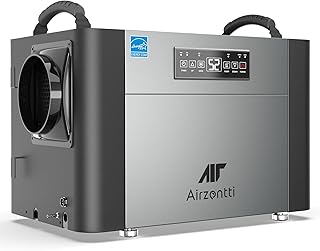
Intelligent humidity control and a bundled drain hose make this a strong fit for utility rooms and finished basements where you can route the line to a floor drain. Compressor performance holds up in cooler conditions where small tank units simply stop pulling water.
ToLife 95 oz Dehumidifier with Sleep Mode
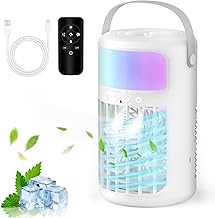
The most livable of the mid-size options: sleep mode dims the display and drops the fan, so it can sit on a bedroom floor without becoming the loudest thing in the room. Covers about 1,000 sq ft, and the white finish reads as a small appliance rather than equipment.
95 oz Dehumidifier with 7-Color Ambient Light (Black)
A quiet 1,000 sq ft performer with auto shut-off, and the black cabinet disappears against darker millwork and media consoles far better than typical white plastic. The color-cycling light is easy to disable if you’d rather it stay invisible.
35 oz Dehumidifier for Bedroom and RV
At 28 dB and roughly 280 sq ft of coverage, this is the closet, bathroom, and camper solution — small enough to sit on a shelf, quiet enough for a nightstand. Empty it daily during humid stretches, since the tank is deliberately compact.
Frequently Asked Questions
Where is the single best place to put a dehumidifier?
Near the moisture source, with clear space on all sides. In a basement, that usually means centrally located rather than pressed into a corner. On upper floors, place it close to the room’s doorway so it processes air moving between spaces.
Should a dehumidifier sit on the floor or be elevated?
Elevating it slightly helps, since humid air stratifies and units draw better with unobstructed intake. A low platform or sturdy shelf also protects hardwood and rugs from any condensation at the base.
Can I run one in a closed room with the door shut?
Yes, and for a single damp room that’s the fastest route to a lower reading. To dry a larger area, leave interior doors open so the unit can cycle air from adjacent rooms.
How far from a wall does it need to be?
Six to twelve inches minimum, and further if the unit exhausts from the rear. Check the exhaust direction before choosing a spot, since blocked output recirculates warm air straight back into the intake.
Final Thoughts
For basements and whole-floor coverage, the Waykar 80 Pint is the most complete package, with the 4500 Sq. Ft compressor unit close behind if drain-hose simplicity matters more than swing louvers. For bedrooms and everyday living spaces, the ToLife 95 oz is the one we’d put on the floor of a room we actually sleep in — quiet, appropriately sized, and unobtrusive enough to live with.