Key takeaways
- Find the best reloading press for long range shooting: rigid single-stage and coaxial presses built for concentric, precise long range handloads today.
Long range shooting rewards consistency above almost everything else. A handload that varies by a tiny amount in seating depth, neck tension, or shoulder position can open a group at distance in ways that are hard to diagnose at the bench. That is why the best reloading press for long range shooting is almost always a rigid single-stage or coaxial press, used one operation at a time, with careful attention to alignment and feel at every stroke.

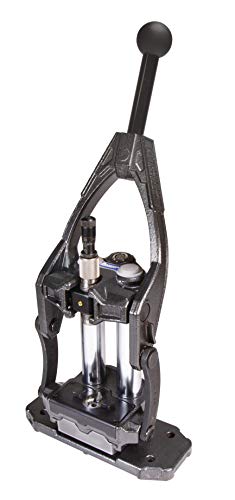
The quick answer is the RCBS Rock Chucker Supreme for most long range handloaders. It is a heavy cast iron single-stage press with a long record in precision rifle loading, a large frame opening for long cartridges, and an ambidextrous handle that suits a wide range of bench layouts. If concentricity is the top priority, the Frankford Arsenal M-Press is the coaxial alternative to look at first, while the Redding Big Boss II suits shooters who load large magnum cartridges. The Hornady Lock-N-Load Classic Deluxe Kit is the pick for a shooter starting from scratch, because it adds the powder measure, scale, and manual needed to begin loading.
This guide explains how to choose a press for long range work, what each of the four picks does well, where each one falls short, and what to check before buying. Every product below is a reloading press, or in the case of the Hornady pick, a kit built around a reloading press. No progressive press and no hand tool is included, because volume presses trade away the slow, controlled, one-case-at-a-time workflow that long range handloading depends on.
Quick Picks
Our Short List of 3
All 4 Picks at a Glance
| Product | Specs | Action |
|---|---|---|
| 1. RCBS Rock Chucker Supreme (B000N8LJ22) | Check price on Amazon | |
| 2. Frankford Arsenal M-Press (B07KT8K18H) | Check price on Amazon | |
 3. Redding Big Boss II (B000VNO36S) | Check price on Amazon | |
 4. Hornady Lock-N-Load Classic Deluxe Kit (B007LV2LO4) | Check price on Amazon |
How to Choose
Frame Rigidity and Alignment
A long range press must resist flex when a case is sized or a bullet is seated. Flex allows the die and the case to move out of line, and that movement shows up as runout, a measure of how far a loaded round deviates from perfect straightness. Cast iron O-frame presses and coaxial presses are the usual answers, because the frame surrounds the working area and the ram travels in a straight, well-supported path. Look for a heavy frame, a solid base, and a ram that moves without side play.
Single-Stage Versus Turret Versus Coaxial
A single-stage press holds one die at a time. That sounds slow, and it is, but the slowness is the point for long range work. Each operation gets full attention, each case is inspected between steps, and there is no turret head that can introduce play. A turret press keeps several dies mounted and rotates between them, which saves setup time but adds a moving head to the alignment chain. A coaxial press uses a floating jaw system and a die that slides in from the front, keeping the case and die centred on the same axis. For pure precision, single-stage and coaxial designs are the usual choices.
Ram Stroke, Frame Opening, and Cartridge Length
Long range cartridges are often long cartridges. A press needs enough frame opening and ram travel to accept a long case, a long die, and a long bullet without forcing the setup. Before buying, check the longest cartridge planned for the bench, including large magnums and long-action rounds such as 300 Winchester Magnum, 300 PRC, and 338 Lapua Magnum. A generous opening also makes it easier to place a case in the shell holder and to remove a loaded round without tipping it.
Die Compatibility and Shell Holder System
Almost every press in this guide accepts standard 7/8-14 threaded dies, which is the thread size used by the great majority of rifle reloading dies. That compatibility matters, because long range shooters often mix die brands, using a sizing die from one maker and a seating die from another. Some presses use conventional shell holders that slide into the ram, while coaxial presses use spring-loaded jaws that grip the case rim without a separate shell holder. The jaw system changes calibre quickly without a shell holder collection, but it must grip the rim sizes used. The conventional system is simple and familiar.
Priming, Spent Primer Handling, and Bench Feel
Priming on the press is convenient, but many long range handloaders prime by hand or with a separate bench tool so they can feel each primer seat. A press with a usable on-press priming arm is still useful, especially for a new loader, but it should not decide the purchase on its own. Spent primer handling matters more than it first appears. A press that drops spent primers into a tray or a tube keeps the bench clean and keeps abrasive primer residue away from the ram and linkage. A good long range press has a smooth stroke and a handle that can be positioned for comfortable leverage.
Build Quality, Weight, and Bench Mounting
Weight is a useful proxy for rigidity in a reloading press. A heavy cast iron or steel frame absorbs force instead of passing it into the bench, and it stays put during hard sizing. A light press can still load ammunition, but it will move, flex, or need a heavier mount to behave. Check the mounting footprint before ordering, and confirm that the bench has room for the press, the handle swing, and a loading block beside it. A press that cannot be bolted down securely will never feel stable.
The Best Reloading Press for Long Range Shooting Reviewed
1. RCBS Rock Chucker Supreme (B000N8LJ22)
The RCBS Rock Chucker Supreme is the standard against which other single-stage presses are often measured, and it earns that position through a heavy cast iron O-frame, a large frame opening, and a design that has stayed in production for decades. Model 9356 uses an ambidextrous handle, so the handle can be set up for right-handed or left-handed use, and it accepts standard 7/8-14 dies. The frame opening is generous enough for long rifle cartridges, and the ram travel suits full-length sizing of bottleneck rifle brass as well as bullet seating with long, high-ballistic-coefficient bullets.
For long range shooting, the Rock Chucker Supreme suits a handloader who wants one press for a wide range of rifle cartridges, from 223 Remington up through long-action magnums, and who values a simple, proven workflow. It suits batch loading, where cases are sized in one session, prepared in the next, and then charged and seated with full attention.
Who should skip it: a shooter who wants the fastest possible die changes, or who loads large volumes of pistol ammunition alongside rifle rounds, may prefer a turret or coaxial design. It also needs a solid bench and secure mounting, because its weight and leverage can move a light bench.
2. Frankford Arsenal M-Press (B07KT8K18H)
The Frankford Arsenal M-Press is a coaxial reloading press built around alignment. Its 21-pound steel frame uses dual guide rods for stability, and its adjustable alignment system is designed to keep the die and the case on the same axis through the stroke. Dies slide in from the front, and the press ships with die blocks, so a die can be set once and returned to the press without re-adjusting the lock ring each time. The coaxial jaw system grips the case rim without a conventional shell holder, which simplifies calibre changes and removes one variable from the setup.
For long range shooting, the M-Press suits a handloader whose main goal is low runout and repeatable seating depth. The coaxial layout is the feature that draws precision shooters to this design, and the die-block system helps a shooter who works with several cartridges keep each die setting intact. It also fits a shooter who loads a moderate number of rounds per session and wants to spend bench time on brass preparation and seating.
Who should skip it: a shooter who prefers a conventional shell holder system may prefer a traditional O-frame press. The coaxial design takes a short period of familiarisation, and a shooter who loads very large magnum cartridges should confirm frame clearance and jaw fit first.
3. Redding Big Boss II (B000VNO36S)
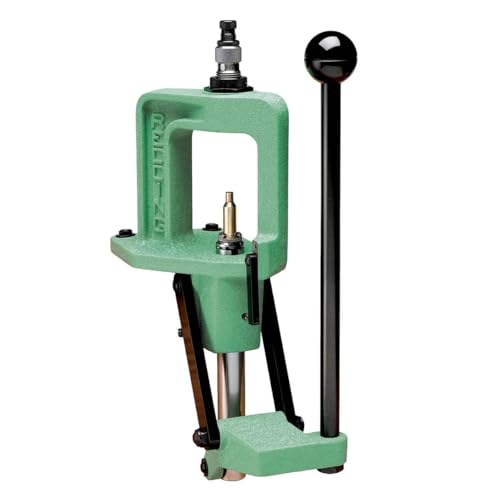
The Redding Big Boss II is a heavy cast iron O-frame single-stage press, model 97000, built for large cartridges and hard sizing work. Its frame and linkage are sized for cartridges up to the largest magnums, and its long ram stroke gives room for long cases and long bullets. The press uses standard 7/8-14 dies and conventional shell holders, so it fits into a normal rifle reloading setup without special adapters.
For long range shooting, the Big Boss II suits a handloader who loads large magnum rounds, such as 300 Winchester Magnum, 300 PRC, or 338 Lapua Magnum, and who wants a press that does not feel strained at the top of a full-length sizing stroke. The rigid frame helps keep sizing consistent, which is the foundation for consistent shoulder position and neck tension.
Who should skip it: a shooter who loads only short-action cartridges, or who has a small bench, may find the Big Boss II larger than needed. A shooter who wants quick die changes above all else should look at a coaxial design.
4. Hornady Lock-N-Load Classic Deluxe Kit (B007LV2LO4)
The Hornady Lock-N-Load Classic Deluxe Kit, model 085010, is a partial-fit pick in this roundup, and that limit should be stated plainly. This listing is a kit built around the Hornady Lock-N-Load Classic single-stage press, not a press-only listing. The kit adds a powder measure, a scale, a reloading manual, and other starting accessories around the Classic press, and Hornady describes it as the most complete single-stage reloading package it makes. The press itself uses the Lock-N-Load bushing system, which allows a die to be locked into a bushing once and then swapped in and out with a short twist, without re-adjusting the die each time.
For long range shooting, the kit suits a new handloader who is starting from scratch and wants the press plus the core accessories in one purchase. The Classic press is a single-stage design with an angled frame for cartridge access, and the bushing system is useful for a shooter who will change between a sizing die and a seating die often. A new loader can learn the full workflow on this press, from sizing and priming through charging and seating.
Who should skip it: a shooter who already owns a powder measure, a scale, and a manual should buy a press-only model instead, because the kit duplicates equipment already on the bench. The kit is the right pick only when the buyer genuinely needs the accessories as well as the press.
What to Check Before You Buy
Check the longest cartridge planned for the bench against the frame opening and ram stroke of the press. A press that handles 308 Winchester with ease may still feel cramped with a long magnum round, and cramped handling leads to tipped bullets and uneven seating. Measure the bench as well, including handle swing and room for a loading block beside the press.
Check die and shell holder compatibility. Confirm that the press accepts standard 7/8-14 dies, and confirm whether it uses conventional shell holders or a jaw system. If it uses shell holders, check that the sizes needed for the planned cartridges are available. If it uses jaws, check the rim sizes the jaws accept. A press that cannot hold the cases planned for it is not a good purchase at any level of build quality.
Check the mounting hardware and the bench itself. A reloading press needs a bench that is level, rigid, and bolted or weighted so it does not move during sizing. A press mounted on a thin or wobbly bench will flex the bench instead of the brass, and the shooter will feel that movement as inconsistency. Use through-bolts with washers where possible, and check that the mounting bolts do not interfere with the handle or the linkage.
Check what else is needed before the first loading session. A press, dies, and shell holders are the start, not the whole list. A reliable scale, a powder measure or trickler, a case trimmer, a deburring tool, case lubricant, a priming tool, and a current reloading manual are all part of a safe setup. Buying the press first and the measuring tools later leads to delays and to the temptation to load without proper measurement, which should always be avoided. Check the support position of the maker too: a press is a long-term bench tool, and a maker with a clear warranty and spare parts support is worth more than a press with no support.
FAQ
Is a single-stage press really better than a progressive press for long range shooting?
For long range work, a single-stage press is usually the better choice, because it loads one case at a time and gives the handloader full control over each operation. A progressive press loads several cases at once and is built for volume, but it makes it harder to inspect each case and to seat each bullet with the same care.
What is runout, and why does it matter at long range?
Runout is a measure of how far a loaded round deviates from perfect straightness, usually measured at the bullet or at the case neck. A round with high runout enters the chamber slightly out of line, and the bullet may start its flight with a small wobble that grows with distance. At long range it can open a group and make vertical dispersion harder to diagnose. A rigid press, a good seating die, and careful brass preparation all help keep runout low.
Do I need a coaxial press to load accurate long range ammunition?
No. Many accurate long range handloads are made on a conventional single-stage press such as the Rock Chucker Supreme or the Big Boss II. A coaxial press can help with alignment, and many precision shooters prefer it, but it is not a requirement. Good dies, consistent brass preparation, careful powder measurement, and a repeatable seating process matter more than the press type alone.
Can one press handle both short-action and magnum cartridges?
A press with a generous frame opening and a long ram stroke can handle both, and the RCBS Rock Chucker Supreme and the Redding Big Boss II are both built with that range in mind. The key is to check the longest cartridge planned for the bench, and to confirm that the shell holders and dies for each cartridge are available. A press comfortable with both is a better long-term purchase than a compact press that only suits one of them.
What should a new long range handloader buy first, a press or a kit?
A new handloader who owns no reloading equipment should consider a kit built around a single-stage press, such as the Hornady Lock-N-Load Classic Deluxe Kit in this guide, because it adds the powder measure, scale, and manual needed to start safely. A handloader who already owns those tools should buy a press-only model and spend the remaining budget on quality dies. Either way, a current reloading manual and published load data should be in hand before any powder is measured.
Bottom Line
The best reloading press for long range shooting for most handloaders is the RCBS Rock Chucker Supreme, because it combines a heavy cast iron frame, a large opening for long cartridges, and a simple single-stage workflow that suits careful batch loading. The Frankford Arsenal M-Press is the pick for a shooter who puts coaxial alignment and low runout first, and the Redding Big Boss II is the pick for large magnum cartridges and hard sizing work. The Hornady Lock-N-Load Classic Deluxe Kit is the pick for a shooter starting from scratch, with the clear limit that it is a kit, not a press-only purchase. Choose the press that fits the longest cartridge planned and the bench space available, then pair it with quality dies, a reliable scale, and a current reloading manual.
Disclosure: As an Amazon Associate, we may earn from qualifying purchases.
More from Amazon
Programs that pair well with the guide above. Offers and eligibility are set by Amazon and may change.
Collect the home and kitchen items you want in one registry that guests can shop from.
Create a wedding registrySet up recurring deliveries of everyday items on eligible products. Terms and savings are set by Amazon.
Explore Subscribe & SaveFree shipping on eligible items, Prime Video and more. Eligible new members can start with a free trial.
Start a Prime free trialAudiobooks and podcasts to listen to on the go. Eligible new members can start with a free trial.
Try Audible freeAs an Amazon Associate we earn from qualifying purchases.