
Key takeaways
- Best overall sealed in-ear: Sony’s WF-1000XM flagship line — the most complete package of size, isolation and codec support.
- Best for iPhone owners: Apple AirPods Pro (current generation) — the AAC path is simply better optimised there than any third-party codec.
- Best open-ear for awareness: Bose Ultra Open Earbuds or Huawei FreeClip, depending on whether you prefer a cuff that clips to the ear or a hook that rests behind it.
- Best for running: Beats Fit Pro or JBL Endurance Peak 3 — wing tips and IP ratings matter more than sound tuning when you are sweating.
- Best under $100: Soundcore Space A40 or Sony WF-C510.
- Best wired value: Moondrop Chu II at roughly $20–$25, or Shure SE215 if you want a replaceable cable.
Best Small Headphones for Music on the Go
The best small headphones for music on the go in 2026 come down to four shapes, and you should pick the shape before you compare anything else: a sealed true-wireless in-ear if you want isolation and the smallest possible charging case, an open-ear clip or ear-hook design if you need to hear traffic and hold conversations, a neckband if you want long battery life without carrying a case at all, and a light folding on-ear if you refuse to put anything inside your ear canal. Driver size, codec logos and microphone arrays are tiebreakers you apply after the shape is settled — not the other way round.
What follows is a comparison built on the numbers that actually predict whether you will still be wearing a pair six months from now: weight in grams, nozzle diameter in millimetres, case volume in cubic centimetres, isolation in decibels, battery hours with noise cancelling engaged, codec bitrate and latency, and what physically wears out first. Every pick below gets its own section with the specification band it sits in, the situation it suits, and the price range you should expect to see at retail.
Our top picks


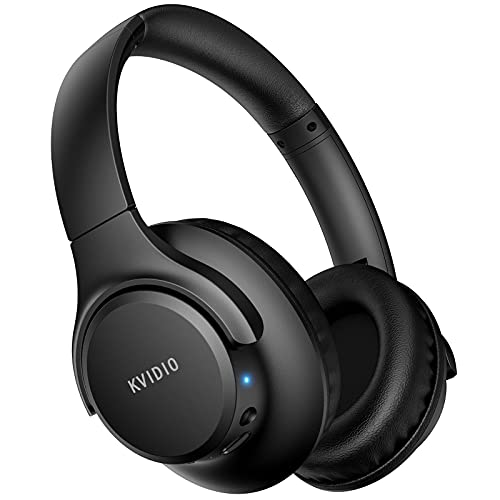
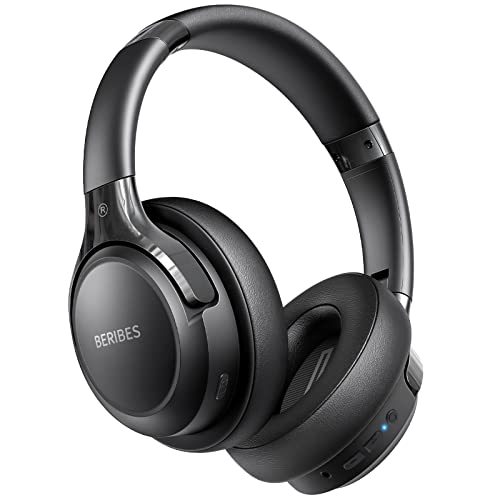
As an Amazon Associate we earn from qualifying purchases at no extra cost to you.
- Best overall sealed in-ear: Sony’s WF-1000XM flagship line — the most complete package of size, isolation and codec support.
- Best for iPhone owners: Apple AirPods Pro (current generation) — the AAC path is simply better optimised there than any third-party codec.
- Best open-ear for awareness: Bose Ultra Open Earbuds or Huawei FreeClip, depending on whether you prefer a cuff that clips to the ear or a hook that rests behind it.
- Best for running: Beats Fit Pro or JBL Endurance Peak 3 — wing tips and IP ratings matter more than sound tuning when you are sweating.
- Best under $100: Soundcore Space A40 or Sony WF-C510.
- Best wired value: Moondrop Chu II at roughly $20–$25, or Shure SE215 if you want a replaceable cable.
What “Small” Actually Means in Numbers
“Small” is a vague word in headphone marketing, so it helps to put it in units. A true-wireless charging case is typically 55–70 mm long, 40–55 mm wide and 22–30 mm thick, which works out to roughly 60–95 cm³ of volume. A front jeans pocket is about 85–95 mm deep and 65–75 mm wide, so almost every case fits — but a coin pocket, at roughly 60 × 60 mm, will only take the smallest cases, and the thickness is what makes a case feel like a lump when you sit down. If pocketability is your top priority, look for a case under 25 mm thick rather than one with the smallest footprint.
Individual earbud weight matters even more. Most sealed buds land between 4 g and 6 g each. Open-ear hooks and cuffs run 5–9 g each because they carry a battery and a bigger driver outside the ear canal. Neckbands sit at 20–35 g total, compact on-ears at 120–190 g, and light folding over-ears at 190–250 g. The practical threshold: above roughly 7 g per bud, buds start working loose during running; above 250 g for an on-ear, you will feel the headband within an hour.
| Form factor | Typical unit weight | Driver class | Battery | Isolation | Best for | Typical price |
|---|---|---|---|---|---|---|
| Sealed true wireless | 4–6 g per bud | 6–11 mm dynamic | 5–8 h ANC on; 20–40 h with case | 10–25 dB passive + 15–25 dB ANC | Commuting, flights, noisy offices | $50–$300 |
| Open-fit true wireless (no seal) | 4–5 g per bud | 10–16 mm | 6–8 h; 24–32 h with case | Effectively 0 dB | Cycling, walking, awareness | $100–$250 |
| Clip-on open-ear cuff | 5–7 g per bud | 10–16 mm | 6–9 h; 24–40 h with case | Effectively 0 dB | All-day wear, glasses wearers | $120–$300 |
| Bone conduction band | 25–35 g total | Vibration transducer | 8–12 h, no case | 0 dB | Running, wet weather, helmets | $80–$200 |
| Neckband | 20–35 g total | 6–12 mm | 10–25 h, no case | 10–20 dB passive | Long shifts, one-charge days | $30–$120 |
| Wired in-ear monitor | 4–8 g per bud | 6–10 mm | None — cable powered | 15–35 dB with foam tips | Sound quality per dollar | $20–$300 |
| Compact on-ear | 120–190 g | 30–40 mm | 30–60 h | 10–20 dB passive | Desk and home, long sessions | $50–$200 |
| Light folding over-ear | 190–250 g | 30–40 mm | 30–70 h | 20–30 dB ANC | Flights, trains, shared rooms | $100–$400 |
Fit: The Measurements That Decide Whether You Will Actually Wear Them
Fit is the single most under-rated specification in headphone buying, and it is entirely measurable. Ear tips are sold in sizes that step in roughly 1 mm increments: extra-small around 10–11 mm outer diameter, small 11–12 mm, medium 12–13 mm, large 13–14 mm. Most people assume they are a medium and are wrong about a third of the time. If a sealed bud feels like it is slowly pushing itself out of your ear over ten minutes, you need a larger tip, not a different headphone. If it aches at the entrance of the canal after twenty minutes, you need a smaller one.
Nozzle diameter is the second number worth checking. Slim nozzles, in the 4.5–5.5 mm range, suit narrow ear canals and are common on compact buds; wider nozzles, 6–6.5 mm, generally seal more easily and produce stronger bass but are more likely to feel intrusive. Wired in-ear monitors often use a slightly longer nozzle, which helps the tip reach a sealing point deeper in the canal — that is why a $25 wired pair can isolate better than a $200 wireless pair with the same tip size.
For on-ear and over-ear models, two measurements matter. Clamp force, usually quoted in newtons, sits around 3–5 N on most compact on-ears; anything above roughly 5 N will produce pressure above the ears and around the temples within 60–90 minutes. And headband padding width — 30–40 mm is common — determines whether the load spreads across the top of your skull or concentrates in one spot. If you wear glasses, the arms of the frame add roughly 1–2 mm of thickness at exactly the point where an on-ear presses hardest, which is why glasses wearers so often end up in open-ear designs.
Driver Size: What It Tells You and What It Doesn’t
Driver size is the most quoted and least useful specification in the category. Small sealed buds typically use 6–8 mm dynamic drivers, mainstream models 9–11 mm, and larger open-ear designs 12–16 mm because they have to move more air without a sealed chamber to help them. Compact on-ears and over-ears use 30–40 mm drivers, which is why they sound physically different from any in-ear.
What driver size does not tell you is how much bass you will hear. Low-frequency output in an in-ear is dominated by the seal. A 6 mm driver in a well-sealed canal will produce more usable bass than a 12 mm driver sitting loosely at the entrance of the ear. This is why open-ear designs, despite large drivers, sound light on sub-bass — they are not sealed, so the low frequencies escape. If deep bass is a priority, buy a sealed design and spend your effort on tip selection rather than driver diameter.
Driver count is a separate question. Dual-driver and hybrid designs — usually a dynamic driver for lows plus a balanced armature or planar element for mids and highs — can produce cleaner treble and better separation, but they add cost and often add size. For on-the-go listening, a well-tuned single dynamic driver at 10 mm is usually the better value than a hybrid at twice the price.
Sound Profiles: Matching Tuning to What You Listen To
Almost every mass-market headphone in 2026 is tuned to some variation of a research-backed target curve, which means a gentle bass lift, a fairly even midrange, and a treble peak somewhere between 3 kHz and 8 kHz that creates a sense of detail. Within that, three broad families exist:
- Neutral or reference-leaning: flat-ish bass, forward mids. Best for acoustic, jazz, classical, podcasts and long listening sessions without fatigue.
- V-shaped or consumer-tuned: boosted bass and boosted treble with a slightly recessed midrange. Best for pop, hip-hop, EDM and anything played at lower volume in noisy places, because the boosted extremes survive background noise better.
- Warm or bass-forward: elevated low bass with a smooth, rolled-off treble. Comfortable for hours, less revealing, and easy to like with modern production.
The practical advice is to buy for your environment rather than your favourite genre. On a train, a neutral tuning sounds thin because the noise floor masks bass and treble at the same time. In a quiet room, a bass-heavy tuning can sound muddy. If the model you are considering ships with an app-based equaliser and a hearing-profile test — a short tone sweep that adjusts the output to your own hearing — that feature is worth more than any single tuning choice, because it corrects for the one variable no spec sheet can capture.
Isolation: Passive Seals, Foam Tips and ANC in Decibels
Isolation is where small headphones either earn their place or fail. Silicone tips in a good seal typically block 10–15 dB of outside noise passively. Memory foam tips, which expand to fill the canal, add roughly 5–10 dB on top of that, with the biggest gains in the 1–4 kHz range where speech and train squeal live. That is why a cheap wired in-ear with foam tips can beat an expensive wireless bud with silicone tips on a noisy bus.
Active noise cancelling is additive and frequency-dependent. A good compact ANC system in 2026 reduces low-frequency rumble — engine drone, air conditioning, aircraft cabin noise — by roughly 20–30 dB below 1 kHz. Above 4 kHz, where baby cries and cutlery clatter live, ANC typically manages only 5–10 dB, and the passive seal does most of the work. Two consequences follow. First, ANC is most valuable on planes and trains, least valuable in offices and cafés. Second, if a manufacturer advertises a single “up to 98% noise reduction” figure, treat it as marketing — the number only applies in a narrow low-frequency band.
Open-ear designs deliberately provide no isolation at all. That is the point: they keep your ears open to traffic, announcements and colleagues. Do not buy them expecting quiet, and do not buy sealed buds expecting awareness.
Battery Life: The Real Numbers and How They Decay
Published battery figures are quoted with noise cancelling off unless stated otherwise, and the difference is large. A typical compact sealed bud manages 5–8 hours per charge with ANC on and 7–11 hours with it off, with the case adding another two to four full charges, for a total of 20–40 hours. Open-ear models run 6–9 hours per charge with 24–40 hours total. Neckbands run 10–25 hours because they carry a bigger cell and no case. Compact on-ears and over-ears run 30–70 hours.
The number nobody prints is degradation. Lithium cells in earbuds typically lose 20–30% of their capacity after 300–500 full charge cycles, which for a daily commuter arrives at roughly 18–24 months. After that, a pair advertised at 8 hours may deliver 5–6. This is the strongest argument for buying buds with a case that supports fast charging — five minutes in the case for one to two hours of playback means a degraded battery is far less disruptive — and it is also why paying a premium for a sealed, non-replaceable battery design has a real time limit attached to it.
Codecs and Latency: When LDAC or aptX Actually Matters
Codec support is a genuine differentiator, but only in specific conditions. If you stream from a service at 256 kbps, the codec ceiling is irrelevant because the source is already the bottleneck. If you play local lossless files from a phone that supports a high-bitrate codec, the difference becomes audible on good recordings.
| Codec | Typical bitrate | Latency | Where it works | Notes |
|---|---|---|---|---|
| SBC | 229–345 kbps | 150–250 ms | Every Bluetooth device | Universal fallback; weakest quality |
| AAC | ~256 kbps | 120–200 ms | iOS and most Android phones | Best optimised on Apple hardware |
| aptX / aptX Adaptive | 352 kbps / 279–420 kbps | 100–150 ms / 50–80 ms | Many Android phones | Adaptive version adjusts to signal quality |
| LDAC | 330 / 660 / 990 kbps | 150–250 ms | Sony and some Android phones | 990 kbps needs a strong, uncongested link |
| LC3 / LE Audio | 160–320 kbps | 20–40 ms | Newer phones and buds | Also enables multi-stream to both buds |
| Samsung Seamless Codec | Up to 24-bit / 48 kHz | 100–200 ms | Galaxy phone plus Galaxy buds | Vendor-locked pairing only |
Latency matters more than bitrate for most people. Above roughly 100 ms of delay, lip-sync in video becomes noticeable, and above 150 ms, mobile gaming feels disconnected. If you watch a lot of video or play games, prioritise a model with a low-latency mode or LE Audio support over one with a higher-bitrate codec. Multipoint — staying connected to two devices at once, like a laptop and a phone — is a more useful feature day to day than any codec upgrade.
Microphone Quality: Why Shape Decides Most Calls
Microphone performance is governed by physics before electronics. A bud with a stem places the microphone closer to your mouth and further from your ear canal, which is why stem designs consistently sound clearer on calls than stemless ones. Beamforming arrays — two to six microphones that compare arrival times and reject sound from behind and to the side — handle steady noise well but struggle with competing speech, which is why open-plan offices remain hard for every brand.
Wind is the other enemy. Most models handle wind up to about 20 km/h acceptably, and above that, everything except a boom-microphone headset degrades sharply. Bone-conduction bands have a structural advantage on calls because the microphone sits on the side of the head rather than in a bud, and they are also the most comfortable option for all-day voice work. If calls are your primary use, buy for microphone placement, not for sound quality, and consider a model with a dedicated voice-isolation mode you can toggle.
Portability: Cases, Pockets and What Survives a Bag
A true-wireless case is the thing you actually carry, so judge it as an object. Under 25 mm thick and around 50–60 g, it disappears into a pocket. Above 30 mm thick and 70 g, you will notice it. Flip-top lids are quicker one-handed than slide-open designs, and magnetic lids are less likely to pop open in a bag. Charging is worth checking too: USB-C is universal, wireless charging pads add convenience but also heat, and a few cases still use proprietary cables.
Ingress protection ratings are the other portability spec. IPX4 means splash resistance — fine for rain and sweat. IPX5 handles a direct jet of water. IPX7 survives immersion in 1 m of water for 30 minutes, which is the rating to look for if you swim or regularly drop things. IP6X adds dust protection, which matters more than water resistance for anyone who keeps buds loose in a bag with sand, chalk or crumbs. Note that ratings apply to the buds, not always to the case, and that salt water and chlorinated water are far more damaging than fresh water regardless of rating.
Decision Matrix: Match the Headphone to Your Situation
| Your situation | Priority order | Form factor | Spec thresholds to look for |
|---|---|---|---|
| Loud train or plane commute | Isolation > battery > fit | Sealed TWS with ANC | 25 dB+ low-frequency ANC, foam tip option, 6 h+ per charge |
| Running and gym | Retention > sweat rating > sound | Sealed TWS with wings, or bone conduction | Under 7 g per bud, IPX5 or better, low-latency mode |
| Cycling and road awareness | Awareness > everything | Open-ear clip, hook, or bone conduction | Zero occlusion, 6 h+ per charge, IPX4 minimum |
| Open-plan office and calls | Microphone > multipoint > comfort | Stemmed TWS or bone conduction | Stem mic, 2-device multipoint, under 6 g per bud |
| Small ear canals, tips always hurt | Fit > isolation > sound | Compact TWS with XS tips, or open-ear | 4.5–5.5 mm nozzle, XS tips included, under 5 g per bud |
| Glasses or hearing aids | Off-canal comfort | Open-ear cuff or hook | No nozzle, under 8 g per unit, soft silicone contact points |
| Flights over six hours | Battery > isolation > size | Light folding over-ear | Under 250 g, 30 h+ ANC, 3.5 mm wired fallback |
| One device, budget under $100 | Value > ANC > codecs | Sealed TWS or wired IEM | Decent seal, USB-C, 20 h+ total |
| Sleeping and side-sleeping | Profile thickness | Flat sleep buds or wired IEM | Under 20 mm case, low-profile shell, no hard edges |
| Best sound per dollar | Driver quality > wireless | Wired in-ear monitor | Replaceable cable, foam tips, $20–$150 |
Materials and Construction: Where the Money Goes
Two pairs can look identical in photos and feel completely different in use. The materials list below explains the trade-offs you are actually paying for.
| Material | Weight and feel | Durability | Sweat and water | Cost impact | What fails first |
|---|---|---|---|---|---|
| Silicone ear tips | Light, grippy when clean | 3–12 months of daily use | Good, but slips when wet | Low ($5–$15 a set) | Tears at the nozzle seam |
| Memory foam tips | Light, softer seal, more isolation | 4–8 weeks of daily use | Poor — degrades fast with sweat | Low to medium | Foam collapses and stops expanding |
| ABS polycarbonate housing | Very light, can feel hollow | Good, cracks under sharp impact | Fine with an IP rating | Low | Shell cracks near the nozzle |
| Aluminium housing | Noticeably heavier, cooler to touch | Very good, dents rather than cracks | Good, but paint can chip | Medium to high | Anodised finish wears at contact points |
| 3D-printed resin shells | Light, precise shapes | Good, brittle under pressure | Depends on coating | Medium | Faceplate adhesive separates |
| TPE cable | Light, tangles easily | Fair, stiffens over time | Poor at the connector | Very low | Strain relief at the 3.5 mm plug |
| Braided nylon cable | Slightly heavier, resists tangling | Very good | Good | Low to medium | Frays where it meets the earpiece |
| PU leather earpads | Soft, seals well | 12–24 months | Degrades with sweat | Low | Coating flakes off |
| Velour earpads | Breathable, less clamping feel | 18–36 months | Absorbs sweat, smells | Low to medium | Compresses flat and loses seal |
| Memory foam (25–50 kg/m³) | Higher density lasts longer | 2–4 years in earpads | Poor | Medium | Permanently compressed at the crown |
| Soft-touch silicone case | Grippy, quiet in a bag | Fair, picks up lint | Good | Low | Coating becomes tacky |
| Hard polycarbonate case | Slick, protects better | Very good | Good | Low | Hinge pin loosens |
Durability: What Wears Out First, and When
The wear order is predictable. Ear tips go first: silicone tips on daily-use buds typically need replacing every three to six months, and foam tips every month or two. Budget $5–$15 per set and treat tips as a consumable, because a hardened, shiny tip loses its seal and the headphone sounds worse than it did new.
Second is the wax mesh or filter inside the nozzle. It clogs gradually, dulling the treble by a few decibels before it blocks entirely. A dry soft brush once a week and a replacement filter every six to twelve months solves it; never use water or sharp tools on the mesh.
Third is the battery, at roughly 18–30 months for daily use, as described above. Fourth, on folding models, is the hinge — the pivot point where the headband folds takes the most mechanical stress and typically develops play after two to four years. Fifth is the charging interface: pogo pins in a case corrode from sweat and pocket lint, which is why buds should be wiped dry before they go back in the case, and why a case that charges slowly or intermittently is usually a dirty contact rather than a dead battery. On wired models, the strain relief at the plug is the classic failure point; a replaceable-cable design turns that from a replacement purchase into a $15 cable.
The Picks, by Category
Sony WF-1000XM flagship in-ear — best sealed all-rounder
Sony’s flagship true-wireless in-ear line remains the most complete compact package, and it is the default recommendation for anyone who wants one pair to do everything. The buds are among the lightest in the premium bracket at around 6 g each, the case is small enough for a coin pocket at roughly 60 × 40 × 25 mm, and the isolation is genuinely class-leading because Sony supports both silicone and foam-style tips.
- Form: sealed true wireless, ~6 g per bud
- Driver: 8 mm class dynamic
- Codecs: SBC, AAC, LDAC
- Battery: ~8 h ANC on, ~24 h total with case
- Extras: multipoint, app EQ, speak-to-chat
- Price: usually
Affiliate disclosure. As an Amazon Associate we earn from qualifying purchases at no extra cost to you. Prices accurate as of the date shown.Best Small Headphones for Music on the GoCheck price on Amazon






