Key takeaways
- Pros: Sensor-based dry cycle protects fabrics; accessories and protection plan included in price
- Cons: Top-load design limits cycle options compared to front-load alternatives
What's inside
Choosing a washer and dryer set in 2026 is less about brand loyalty and more about matching capacity, configuration, and features to your actual laundry routine. A full-size front-load pair might overwhelm a one-bedroom apartment, while a portable twin-tub unit will leave a family of four doing three loads a day. The core problem is spatial and logistical: do you have a vent duct, a dedicated 240V outlet, enough square footage for side-by-side units, and the budget to cover installation hardware that some bundles include and others leave as an afterthought.
What separates the good options from the mediocre comes down to three things. First, sensor-driven drying versus timer-based cycles — the former protects fabrics and saves energy, while the latter either under-dries or bakes clothes into shapelessness. Second, vibration and noise management matters enormously in shared-wall buildings. Third, included accessories like water jet systems, power cords, hoses, and vent ducts reduce hidden costs that add up after purchase.
As an Amazon Associate we earn from qualifying purchases at no extra cost to you. Product prices and availability are accurate as of the date shown and are subject to change.




Quick Picks
| Product | Best for | Price |
|---|---|---|
| Samsung Smart Top Load Bundle | Full-size families wanting quiet operation | $1,588 |
| ROVSUN 25LBS Portable | Small-space apartment dwellers | $299.99 |
| Midea 2.7 Cu.ft Combo | Compact all-in-one laundry | $863.37 |
| Samsung WF45T6000WPR Package | Premium front-load performance | $1,567 |
| Auertech Portable Twin Tub | Dorms and RVs on a tight budget | $179.99 |
| Hamilton Beach Combo | Space-conscious renters | $899 |
| ROVSUN 17.8LBS + Dryer Set | Separate units in limited footprints | $339.99 |
| Midea Top Load Pair Bundle | Large households needing top-load ease | $1,399.99 |
How We Picked
We narrowed this list by weighing published capacity figures against real-world owner feedback on cycle time, noise level, and long-term reliability. Four criteria drove every ranking decision: whether the unit actually fits the space it is marketed for, whether drying results protect fabric or over-expose it to heat, how well the bundle accounts for installation extras, and whether the price reflects included features or just the appliance itself. Products that looked impressive on spec sheets but generated consistent complaints about vibration or inconsistent spin were filtered out.
The 8 Best Washer And Dryer 2026 in 2026
Samsung Smart Top Load Bundle
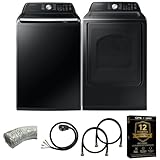
This pair targets households that do four or more loads weekly and want minimal babysitting during cycles. The 4.7 cubic foot washer handles bulk items like king-size comforters without overloading, while the 7.4 cubic foot dryer pairs generous capacity with a sensor that stops the cycle when moisture readings drop, preventing the overdrying that damages elastic and shortens garment life. The low-vibration quiet wash is the standout feature for anyone in an upstairs unit or a laundry-adjacent bedroom. Included water jet system, power cords, hoses, and vent duct mean the bundle arrives ready to connect, and one-year CPS protection covers early defects without a service call.
- Pros: Sensor-based dry cycle protects fabrics; accessories and protection plan included in price
- Cons: Top-load design limits cycle options compared to front-load alternatives
Skip it if you need the most compact footprint possible — this is full-size equipment that demands dedicated laundry-room space.
ROVSUN 25LBS Portable Washing Machine
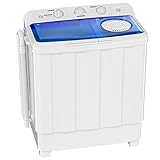
Owner feedback highlights how well this machine handles the laundry volume of a single person or couple in a studio or one-bedroom unit. The stainless steel drum resists the odor buildup that plagues cheaper plastic drums, and the integrated drain pump eliminates the gravity-drain setup that frustrates apartment dwellers without a floor drain nearby. Spin dry function gets clothes damp-dry rather than soaking, which means air-drying finishes the job faster than a line alone.
- Pros: Stainless steel drum reduces mildew risk; built-in drain pump works without plumbing access
- Cons: Spin dry is not a true dryer — heavy items still need line drying
Skip it if your household exceeds two people or regularly washes bulky bedding, as the 25-pound cap gets restrictive quickly.
Midea 2.7 Cu.ft All-in-One Combo
This front-load combo fits a 24-inch closet opening and handles washer and dryer duties without requiring two separate machines. The 1400 RPM spin speed is notably high for a compact unit, pulling more moisture out before the drying phase and reducing total cycle time. Owners in small apartments appreciate that it eliminates the need for a vent duct, since condensation drying recirculates air internally.
- Pros: High spin speed shortens drying time; ventless design works in tight spaces
- Cons: Single-drum design means sequential washing and drying, not simultaneous
Skip it if you need to wash and dry in one continuous run without waiting for the washer to finish before the dryer starts.
Samsung WF45T6000WPR Front Load Package
For buyers who prioritize fabric care and cycle variety over top-load convenience, this package delivers a full front-load experience with Samsung’s signal-cycle intelligence and stain-treatment options. Front-load washers generally use less water per cycle and spin at higher speeds, which shortens drying time. The paired dryer complements the washer with capacity matched to the load size, and the white finish coordinates with modern cabinetry.
- Pros: Water-efficient front-load wash with high-spin extraction; matched capacity pair
- Cons: Requires adequate ventilation clearance behind and below per front-load design
Skip it if your laundry nook lacks the clearance or floor support that front-load machines need.
Auertech Portable Twin Tub
This is the most budget-accessible option on the list at under $180, designed explicitly for dorm rooms, RVs, and apartments where full-size appliances simply do not fit or connect. The semi-automatic twin-tub layout separates an 18-pound washer from a 10-pound spinner, requiring you to move wet clothes between tubs. Drain pump included means no need to lug the unit to a shower or sink.
- Pros: Extremely low price point; separate spin tub accelerates drying of small loads
- Cons: Semi-automatic operation means manual transfer between wash and spin cycles
Skip it if you want a set-and-forget experience — this unit requires active involvement at each cycle phase.
Hamilton Beach 2.7 Cu ft Combo
Like the Midea combo, this unit consolidates washing and drying into a single drum within a compact 2.7 cubic foot capacity. Owner reviews note consistent results for everyday loads of one to two people, with the combo format eliminating the need to plan around two separate machines. The white finish is neutral enough for most laundry closets.
- Pros: Single-appliance footprint saves space; straightforward controls reduce learning curve
- Cons: Smaller drum capacity limits load size compared to full-size pairs
Skip it if you frequently wash bulky items or need to run multiple loads back-to-back, as the sequential cycle demands patience.
ROVSUN 17.8LBS Washer + Dryer Set
This two-piece compact set appeals to renters who want a dedicated washer and dryer without committing to full-size units. The stainless steel inner tub in the washer resists wear, and the separate 1.5 cubic foot portable dryer provides actual heated drying rather than just spin extraction. At under $340 for both pieces, it undercuts combo units while offering more functional separation.
- Pros: Separate dryer provides true heated drying; stainless steel tub durability
- Cons: Dryer capacity is modest, requiring multiple dry cycles for a full wash load
Skip it if you regularly wash more than 15-18 pounds at a time and want everything done in one pass.
Midea MLTW41A1BGK1 Top Load Pair Bundle
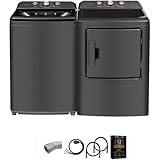
This bundle pairs a 4.1 cubic foot top-load washer with a 7 cubic foot electric dryer, aimed at families who want volume without a front-load clearance requirement. The vent kit included in the bundle reduces the after-market accessory cost that often catches first-time buyers off guard. Owner feedback highlights the washer’s ability to handle large mixed loads without the imbalance issues that plague cheaper top-load designs.
- Pros: Vent kit included reduces total setup cost; high-capacity pair suits large households
- Cons: Top-load agitation may be gentler on fabrics compared to front-load tumbling
Skip it if you have a tight closet opening that favors a compact footprint over raw capacity.
Buying Guide
Capacity Matching Your Household Size
Measure your average load before choosing. A single person or couple typically handles 15-25 pounds per cycle, making portable units or 2.7 cubic foot combos sufficient. Families of three or more will find that 4.1 cubic feet and above reduces the number of loads per week. The key mistake is buying a combo for convenience and discovering the drum is too small for a comforter, forcing a laundromat trip anyway.
Drying Method: Sensor, Ventless, or Timer
Sensor dry stops the cycle at a moisture threshold, protecting elastic and reducing energy use. Ventless condensation drying eliminates ductwork requirements but extends cycle time. Timer-based dry cycles are the least refined approach — they either under-dry or over-expose depending on load composition. If your space lacks a vent, a ventless combo or sensor dryer paired with a portable unit is the practical path.
Installation Requirements and Hidden Costs
Check whether the bundle includes hoses, power cords, and vent ducts. Some packages at higher price points include them; budget sets often do not, adding $50-$100 in hardware. Also verify your electrical setup: full-size electric dryers need a 240V outlet, while portable units and some combos run on standard 120V. Water supply and drain access matter most for portable washers with drain pumps.
Our Verdict
The Samsung Smart Top Load Bundle is the strongest overall pick for households wanting full-size capacity, fabric-safe sensor drying, quiet operation, and included installation accessories without surprises. For budget-conscious shoppers in small spaces, the ROVSUN 17.8LBS Washer and Dryer Set delivers a true two-piece laundry setup under $340 that outperforms most combo alternatives on drying capability. If your priority is fitting laundry into a 24-inch closet with zero vent requirements, the Midea 2.7 Cu.ft All-in-One Combo wins on spatial efficiency and high-spin extraction.
FAQ
Do I need a professional to install a bundled washer and dryer?
Full-size pairs with 240V dryers typically require an electrician if your space lacks the proper outlet. Top-load and compact bundles with included hoses and vent kits are generally DIY-friendly for anyone comfortable with basic plumbing connections.
Is a combo unit better than separate washer and dryer?
Combo units save floor space and eliminate vent requirements, but they wash and dry sequentially, so total turnaround is longer. Separate pairs let you start drying the first load while the second washes, which matters for larger households with frequent laundry.
What size is enough for a family of four?
A washer with 4.0 cubic feet or more and a dryer with 7.0 cubic feet or more will handle family loads without splitting most washes into multiple cycles. Below that threshold, expect two or three loads per wash day.
Can portable washing machines work without dedicated plumbing?
Yes, most portable units connect to a standard faucet via included adapters and drain via pump into a sink or tub. The drain pump eliminates the need for a floor drain, which is why they suit apartments and dorms without laundry hookups.