Key takeaways
- Scale: Measure both the wall and the chair clearance, then allow room for drawers to open and for comfortable movement behind the desk.
- Storage: Choose open legroom for a lighter look, or built-in drawers and cabinets when supplies, files, and electronics need to disappear.
- Construction: Solid wood brings warmth and longevity, while steel frames and engineered materials can offer excellent stability at a lower weight or price.
- Work surface: A deeper top suits monitors and notebooks, while a streamlined surface is often better for handwriting, reading, and compact rooms.
- Style: Match the desk to the room’s visual language, but prioritize a timeless silhouette that can move easily between workspaces as your needs change.
What's inside
Choosing a writing desk is rarely just a matter of finding an attractive tabletop. The wrong model can overwhelm a small room, leave cables exposed, or provide too little storage for the way you actually work. Finish, proportions, ergonomics, and flexibility all matter—especially when a desk shares space with a living room, bedroom, or guest room.
This guide approaches the category through a modern home-design lens, highlighting desks that balance practical performance with a considered visual presence. We compare storage, footprint, construction, adjustability, and style to help you find the right fit for focused writing, remote work, study, or a polished multipurpose workspace.
As an Amazon Associate we earn from qualifying purchases.



How to Choose a Writing Desk (2026)
- Scale: Measure both the wall and the chair clearance, then allow room for drawers to open and for comfortable movement behind the desk.
- Storage: Choose open legroom for a lighter look, or built-in drawers and cabinets when supplies, files, and electronics need to disappear.
- Construction: Solid wood brings warmth and longevity, while steel frames and engineered materials can offer excellent stability at a lower weight or price.
- Work surface: A deeper top suits monitors and notebooks, while a streamlined surface is often better for handwriting, reading, and compact rooms.
- Style: Match the desk to the room’s visual language, but prioritize a timeless silhouette that can move easily between workspaces as your needs change.
The Best Writing Desks (2026) Reviewed
SEDETA Farmhouse Executive Desk
At nearly 71 inches wide, the SEDETA Farmhouse desk is the strongest choice for a substantial home office setup. Its file drawers, storage cabinet, and integrated power outlet make it especially practical for users who want one commanding piece to organize paperwork and everyday technology. The black-and-brown finish adds contrast and a distinctly grounded farmhouse character.
Need Folding Computer Desk
The 47-inch Need desk is a smart solution for flexible rooms, dorms, and apartments where furniture may need to disappear between uses. Its folding design and no-assembly setup are the main attractions, while the rustic brown surface gives the otherwise utilitarian format a warmer, more residential feel.
Solid Wood Vintage Writing Table
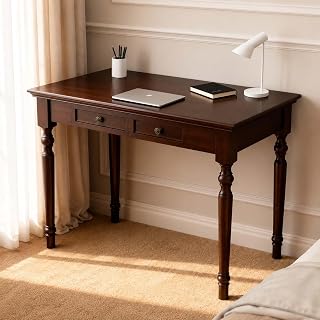
This 45-inch walnut desk offers the most traditional furniture presence in the group. A solid-wood construction, vintage styling, and drawers create a welcoming setting for writing or study, while the moderate width keeps it suitable for bedrooms and smaller offices. It is a particularly good fit for buyers who want a desk that feels like permanent furniture rather than office equipment.
Global Industrial Steel Teacher’s Desk
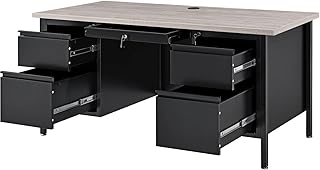
Built with a gray top, black frame, center drawer, and four locking box/box drawers, this 60-inch desk takes a deliberately functional approach. Its steel construction and generous storage favor durability, document-heavy work, and high-traffic environments. The industrial profile is bold, but it can look refined when paired with wood accessories, an upholstered chair, and soft lighting.
Lufeiya Reversible Computer Desk
The Lufeiya combines a 47-inch workspace with a reversible file-drawer cabinet, making it adaptable to left- or right-handed room layouts. That flexibility is valuable in small spaces, particularly when a desk must fit around a window, bed, or existing storage. Its black finish gives the compact design a clean, contemporary edge.
Frequently Asked Questions
What is the best desk size for writing?
For most people, a width between 45 and 60 inches provides enough room for notebooks, a lamp, and a laptop without dominating the room. Depth is equally important: around 24 to 30 inches generally feels comfortable for writing and computer work.
Are drawers important on a writing desk?
Drawers are useful when you want a visually calm workspace, since they can conceal stationery, paperwork, and chargers. If you prefer an airy look or already have nearby storage, an uncluttered desk with open legroom may be the better design choice.
Is solid wood worth choosing?
Solid wood offers natural variation, a substantial feel, and the possibility of refinishing minor wear over time. It can be heavier and more expensive than other materials, so consider whether long-term durability or easy relocation matters more for your space.
Can a writing desk work as a computer desk?
Yes, provided the surface is deep enough for your monitor or laptop and the desk offers suitable cable access. For multiple monitors or large peripherals, choose a wider, deeper model with integrated power management or open space beneath the top.
Final Thoughts
The SEDETA Farmhouse Executive Desk is the most capable all-in-one option, while the Solid Wood Vintage Writing Table brings the greatest sense of crafted, lasting furniture to a room. For compact or changing layouts, the Need Folding Computer Desk and Lufeiya Reversible Computer Desk offer the most useful flexibility without sacrificing style.