Key takeaways
- Minimum clearance for sitting and pushing back: 36 inches from table edge to wall or other furniture.
- Comfortable clearance with a walkway behind: 42 to 48 inches. Without this, someone has to ask others to move their stool to pass.
- For stools that swivel or have arms: Add 6 inches to those numbers.
A counter height dining set is the right choice if you want a more casual, standing-friendly dining height, better sightlines in an open-plan kitchen, and built-in foot support from stools, but it is less comfortable for long dinners, small children, and anyone who has trouble climbing onto a higher seat.
Our top picks
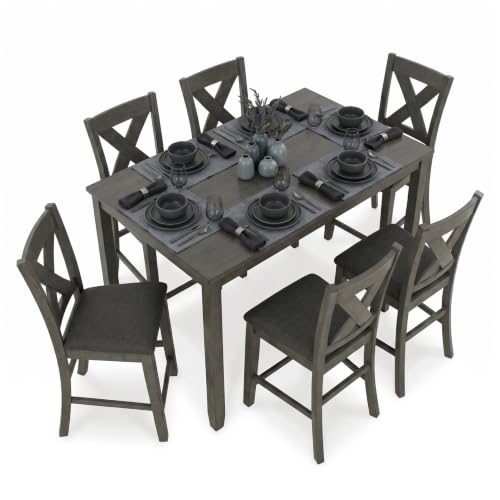
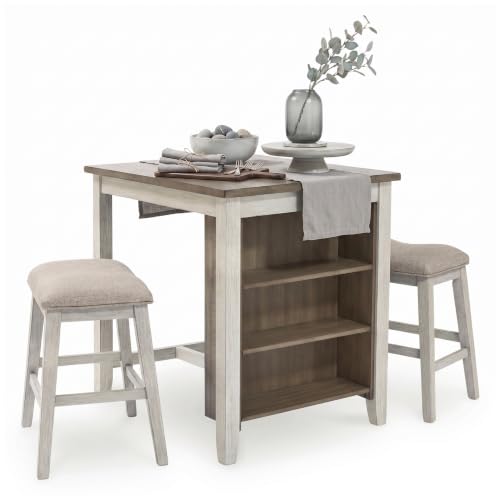


As an Amazon Associate we earn from qualifying purchases at no extra cost to you. Ratings are shown as listed on Amazon.
Counter vs. Standard vs. Bar Height: Real Measurements
The difference is not just visual. It changes your posture, how easily you get in and out, and what kind of chairs will work. Manufacturers list these heights inconsistently, so measure the actual pieces, not just the label.
| Set Type | Table Height | Seat Height Needed | Space Between Seat and Tabletop | Best For |
|---|---|---|---|---|
| Standard Height | 28 to 30 inches | 17 to 19 inches | 10 to 12 inches | Long meals, traditional dining rooms, families with young kids, elderly guests |
| Counter Height | 34 to 36 inches | 24 to 26 inches | 10 to 12 inches | Kitchen islands, open floor plans, casual daily dining, standing or perching |
| Bar Height (Pub Height) | 40 to 42 inches | 28 to 30 inches | 10 to 12 inches | Home bars, very tall users, cocktail-style seating, not ideal for daily family meals |
For comfortable leg clearance, you need 10 to 12 inches between the top of the stool seat and the underside of the table. If that gap is less than 9 inches, your thighs will hit the apron. If it is more than 13 inches, you will be shrugging your shoulders to eat. Counter height dining sets usually have a 24-inch seat paired with a 34-inch table or a 26-inch seat with a 36-inch table. Mismatched sets are a common buying mistake, especially when you buy a table and stools separately.
Weight limits also differ by height. Because counter stools are taller and narrower, leverage is greater. Most wood counter stools are rated for 225 to 275 pounds, metal-frame stools for 300 to 350 pounds. If anyone in the household is over 250 pounds, prioritize a metal frame with a reinforced stretcher and a four-leg base over a pedestal or single-post base.
Will a Counter-Height Set Fit Your Room?
Counter-height tables look smaller in photos but they need the same or more clearance than standard tables because stools stick out further and people need room to climb on.
Use this clearance rule when you measure:
- Minimum clearance for sitting and pushing back: 36 inches from table edge to wall or other furniture.
- Comfortable clearance with a walkway behind: 42 to 48 inches. Without this, someone has to ask others to move their stool to pass.
- For stools that swivel or have arms: Add 6 inches to those numbers.
Here is how common set sizes translate to room size:
- 36-inch round or square (2-4 people): Needs at least an 8 x 8 ft area (108 x 108 inches total with clearance). Works in a small apartment breakfast nook or a galley kitchen end. You will still need 44 inches of width for two stools pushed out at the same time.
- 42 x 42-inch square or 48-inch round (4 people): Needs a 9 x 9 ft to 10 x 10 ft area. This is the most versatile size for counter height. A 48-inch round is easier to navigate around than a rectangular table.
- 48 to 54-inch rectangular (4-6 people): Needs 10 x 12 ft minimum. A 54 x 36-inch table with four stools is about 54 inches long, but requires 126 to 132 inches of total length once you add 36 inches behind each end.
- 60 to 72-inch rectangular (6 people): Needs 11 x 14 ft or larger. At this size, a counter-height table starts to feel bulky and can visually close off a room. Consider whether standard height would feel less dominant.
If your dining area is inside a kitchen with an island, keep at least 42 inches between the island counter and the dining table edge. Counter-height tables next to counter-height islands create a wall of same-height surfaces that blocks light and makes the room feel crowded if that gap drops to 36 inches.
Measure Before You Buy
Measure doorway width, stairwell clearance, and elevator depth before ordering. Most counter-height tables ship in two boxes, with the tabletop as a single 48 to 72-inch slab. Boxed tabletops for 5-piece sets usually weigh 70 to 110 pounds. Solid wood versions can be 120 to 160 pounds total shipped in two boxes. If your doorway is less than 30 inches wide or you have a tight 90-degree turn in a hallway, a table with a one-piece trestle base may not fit through. Look for removable legs or a two-piece pedestal if access is tight.
Stool Comfort: Footrests, Backs, and Ergonomics
Comfort in a counter height dining set comes almost entirely from the stool, not the table. A cheap table with good stools will feel better than an expensive table with bad stools.
Footrest height and position matter more than cushion thickness. Without proper foot support, your legs dangle, pressure builds under your thighs, and you slide forward. Look for these specifics:
- Footrest height: 10 to 12 inches below the seat surface. For a 24-inch seat, the footrest should be about 12 to 14 inches off the floor. For a 26-inch seat, 14 to 16 inches off the floor.
- Footrest shape: A full footrest bar across the front and sides is far better than a single front rung. A single rung forces your feet into one narrow position. A wraparound or double-rung stretcher lets you shift weight and change posture.
- Footrest depth: If the footrest is recessed more than 3 inches inside the leg frame, short users will have to point their toes to reach it, causing calf fatigue.
Back vs. backless vs. low-back:
- Full back (12-16 inches above seat): Best for meals longer than 30 minutes, back pain, or for anyone who leans back while eating. Takes more visual space and needs 2-4 inches more clearance to push in.
- Low back / half back (6-10 inches): Good compromise for comfort without bulk. Supports the lower back while keeping the look open. Most popular for daily use in 2026.
- Backless: Best for small spaces because stools tuck completely under the table, saving 18 to 22 inches of floor space per stool. Uncomfortable after about 20-30 minutes and no place to rest your back. Consider only if the set is for quick breakfasts or occasional extra seating.
Cushion and ergonomics: A 2 to 2.5-inch foam seat with medium-firm density (1.8 to 2.5 lbs per cubic foot) holds its shape for daily use. Thin 1-inch padded vinyl seats feel hard after a week. Down-blend or very soft low-density foam compresses and creates a hammock effect that hurts hips. The seat pan should be 16 to 18 inches wide and 16 to 17 inches deep. Anything narrower than 15 inches feels tippy at counter height. A slight waterfall edge on the front prevents pressure behind the knees.
Swivel: Swivel stools make it much easier to get on and off a counter-height seat, especially for kids and older adults. They add 2 to 3 inches of height for the mechanism and usually have a heavier base. Avoid swivels if you have very tight clearance, as people swivel out instead of pushing straight back, needing a wider arc.
Material and Construction Trade-Offs
Counter-height sets take more stress than standard sets because users often lean on the table, boost themselves up by pushing on the tabletop, and put sideways force on stool legs. Construction matters more at this height.
| Material / Construction | Durability at Counter Height | Weight and Stability | Maintenance | Typical Price Range for 5-Piece Set |
|---|---|---|---|---|
| Solid Wood (rubberwood, acacia, oak, maple) | Very good. Handles racking force. Repairable. Can be refinished. Shows dents over time. | Heavy (90-140 lbs). Most stable, least likely to wobble. Harder to move. | Wipe clean. Needs coasters and occasional oiling. Avoid direct heat. | Usually $600–$1200 |
| Engineered Wood (MDF / veneer / particleboard) | Fair. Susceptible to swelling if moisture gets into edges. Joints loosen faster under climb-on stress. | Moderate (60-90 lbs). Can feel hollow. Wobble develops after 1-2 years of daily use. | Easy to clean but cannot repair chips. Keep away from water. | Usually $300–$700 |
| Metal Frame with Wood Top | Excellent. Welded stretchers prevent leg splay. Best weight capacity (300+ lbs). | Heavy and very stable. Industrial look may not suit all decor. | Very low. Check welds and floor glides annually. | Usually $400–$900 |
| Upholstered Stools (fabric / faux leather) | Comfort is high, durability depends on fabric. Pilling and staining are the first failures. | Varies. Adds softness but requires more cleaning. | Vacuum weekly. Performance fabric or faux leather lasts far longer than linen or velvet with kids/pets. | Adds $50–$150 per stool vs. wood |
For the tabletop, look for corner blocks, metal brackets, or a stretcher beam between the legs. Four legs screwed directly into a particleboard top without corner blocks will loosen within months at counter height. For stools, four-leg designs with a full stretcher that connects all four legs in a rectangle are more durable than a single footring connecting only two legs.
Which Counter Height Set Should You Choose? Decision Matrix by Situation
Match your situation to the set configuration, not just the style you like online.
| Your Situation | Best Counter Height Configuration | Why It Works |
|---|---|---|
| Small apartment or studio (under 700 sq ft) | 36-inch round table + 2 backless stools that tuck under, or 42-inch drop-leaf rectangular | Saves 18-24 inches when stools are stored. Round shape improves flow. Avoid 6-piece rectangles. |
| Open-plan kitchen with island | 42 to 48-inch square counter-height table with low-back stools | Square aligns with island lines. Low backs keep sightlines open to living room. |
| Kids under 10 or pets | Metal-frame or solid wood with low-back stools in performance fabric or faux leather, full footrest stretcher | Metal resists climbing damage, wipeable seats handle spills, full footrest prevents dangling and tipping. |
| Renters who move often | Metal + wood top or engineered wood with bolt-together base, stools under 20 lbs each | Disassembles and reassembles without stripping. Light enough for stairs. Replaceable parts. |
| Back pain or long dinners (45+ minutes) | Consider standard height instead. If you prefer counter height, choose 24-inch seat + full-back stools with 2.5-inch foam and footrests on 3 sides | Reduces leg dangle and provides lumbar support. Counter height is inherently harder on the lower back for long sitting. |
| Tall users (over 6 ft) or casual bar use | 36-inch high table with 26-inch seat, footrest 14-16 inches off floor | Provides proper knee angle (90-100 degrees) for taller legs. Standard 24-inch stools will feel too low. |
| Small dining area that must host 4-6 people occasionally | 48-inch rectangular counter-height table with 4 stools + 2 backless stools stored elsewhere | Use four daily, add backless overflow when guests come. Keeps daily footprint small. |
Assembly, Moving, and What Wears Out First
Expect 45 to 90 minutes of assembly for a 5-piece counter height set, usually requiring two people. Tools are included but a power drill with a hex bit speeds it up. The heaviest step is flipping the assembled table upright. Do not drag the table across the floor after assembly, most leg bolts will loosen and strip.
What actually wears first on counter-height sets is not the tabletop but the stool joints. Side-to-side leaning while sitting puts torque on the footrest and leg joints. After 6 to 12 months, check and retighten all bolts. Add felt pads under every leg to reduce wobble and floor scratches. If the set will sit on uneven tile or older wood floors, look for adjustable leveling feet, which are usually only on metal frames.
For longevity, choose stools with replaceable seats or covers. The foam compresses before the frame fails. A stool with a screwed-on seat pad can be reupholstered for $20 to $40 per stool, extending its life by years. Upholstered stools with integrated, non-removable seats require full replacement when the fabric stains or foam flattens.
Finally, consider how you actually eat. If most meals are quick breakfasts, coffee, or laptops at the table, counter height feels active and convenient. If you host hour-long family dinners, game nights, or have older guests who need support getting seated, a standard 29-inch dining set will be comfortable for more people, more often. Use counter height to match the height you already live at if your kitchen counters are your main prep and social spot, not just because it looks more modern in photos.