Key takeaways
- 36 inches from table edge to wall or cabinet — allows a chair to slide out and someone to sit down.
- 44 to 48 inches if that side is a main walkway, behind a chair where people pass frequently, or near an appliance like a dishwasher or refrigerator door.
- 24 inches wide per place setting at the table, and at least 12 to 15 inches deep for a plate and glass.
- 18 to 24 inches between the seat and the underside of the table for legroom. Standard tables have 25 to 27 inches of knee clearance.
The right kitchen table and chairs should leave 36 to 48 inches of clearance on all sides for chairs to pull out and people to walk behind them, measure 28 to 30 inches high for standard dining, and seat two people per 24 inches of table perimeter — pick a shape and material based on your room dimensions and how you live day to day.
Our top picks
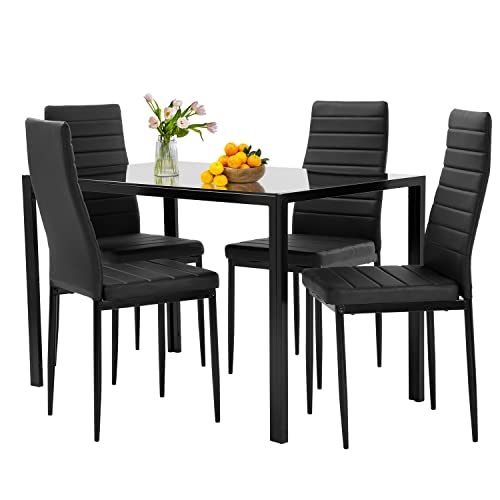


As an Amazon Associate we earn from qualifying purchases at no extra cost to you. Ratings are shown as listed on Amazon.
How Much Space Do You Actually Need?
A kitchen table and chairs set that looks right online can overwhelm a small kitchen or leave a large dining area feeling empty. Measure your room first, then work backward to the table.
Use these minimum clearances:
- 36 inches from table edge to wall or cabinet — allows a chair to slide out and someone to sit down.
- 44 to 48 inches if that side is a main walkway, behind a chair where people pass frequently, or near an appliance like a dishwasher or refrigerator door.
- 24 inches wide per place setting at the table, and at least 12 to 15 inches deep for a plate and glass.
- 18 to 24 inches between the seat and the underside of the table for legroom. Standard tables have 25 to 27 inches of knee clearance.
A 10×12 ft room (120 x 144 inches) is a common reference. If you subtract 36 inches of clearance on each side (72 inches total), you have about 48 x 72 inches left for the table and chairs themselves. That fits a 36 x 60 inch rectangular table with four chairs, or a 42 to 48 inch round table with four chairs, but not a 40 x 72 inch six-seater without blocking traffic.
| Table Size and Shape | Seats Comfortably | Footprint With Chairs Pushed In | Footprint With Chairs Pulled Out (add 18″ per side) | Minimum Room Size Needed (with 36″ clearance) |
|---|---|---|---|---|
| 36″ round | 2-3 | 48″ x 48″ | 72″ x 72″ | 9′ x 9′ |
| 42″-48″ round | 4 | 58″ x 58″ | 84″ x 84″ | 10′ x 10′ |
| 36″ x 48″ rectangular | 4 | 48″ x 60″ | 84″ x 84″ | 10′ x 10′ |
| 36″ x 60″ rectangular | 4-6 | 48″ x 72″ | 84″ x 96″ | 10′ x 12′ |
| 38″ x 72″ rectangular | 6 | 50″ x 84″ | 86″ x 108″ | 11′ x 13′ |
| 36″ x 36″ square | 4 | 48″ x 48″ | 84″ x 84″ | 10′ x 10′ |
Seating Capacity by Shape: What Fits Best Where
Shape affects traffic flow and how many people you can actually seat without elbows bumping.
Rectangular
The most efficient for seating per inch. A 60-inch long table seats four daily and six when you squeeze one on each end. Best for long, narrow kitchens and galley layouts. Leaves a clear aisle on the long side if you place the long edge parallel to the counter.
Round
Best for small kitchens and corners. No corners to catch hips in tight spaces, and everyone faces each other. A 36-inch round works for two daily with a third chair occasionally. A 48-inch round seats four comfortably — beyond 60 inches, it becomes hard to pass dishes and conversation breaks down. Pedestal bases give more legroom than four legs.
Square
Works in square eat-in kitchens or studios. A 36-inch square seats four, but place settings are corner-to-corner. Over 42 inches square, the center becomes unreachable for serving dishes.
Oval
A rounded rectangle that softens a rectangular footprint. Same seating as rectangular but easier to move around in tight kitchens because the clipped ends improve flow. Good compromise if you need six seats but have a doorway near one end.
Drop-Leaf and Extendable
For kitchens that double as workspaces. A 36 x 24 inch drop-leaf seats two folded and four extended. An extendable rectangular with an 18-inch leaf goes from four to six without owning a larger table year-round. Check the stored leaf size and where you will keep it.
Standard Heights and Why They Matter
Most kitchen table and chairs sets are standard dining height. Kitchen islands and counters are taller — mixing them causes mismatched posture.
- Standard dining table: 28-30 inches high. Pairs with chairs that have a 17-19 inch seat height. Leaves 10-12 inches between seat and tabletop.
- Counter height: 34-36 inches high. Pairs with stools 24-26 inches high. Often used for kitchen islands that serve as tables.
- Bar height: 40-42 inches high. Pairs with stools 28-30 inches high. Less comfortable for long meals and harder for kids and older adults to climb.
- Seat depth: 16-18 inches for side chairs, 19-20 inches for armchairs. Deeper seats need more pull-out room.
- Seat width: 16-18 inches between armrests or legs is the minimum for adults. Armchairs need at least 22-24 inches of table length per seat vs. 18-20 inches for armless.
- Weight limits: Most wood and metal side chairs are rated for 225-300 lbs per chair. Check the spec sheet for upholstered and cross-back designs, which can be lower at 200-250 lbs. Benches often list a total limit of 400-500 lbs.
Material and Construction Trade-Offs
Durability and cleaning matter more than finish color for everyday use. Here is how common options compare for a kitchen that gets daily cooking, spills, and chair dragging.
| Material / Construction | Durability and Lifespan | Cleaning and Stain Resistance | Weight and Stability | General Market Range (table + 4 chairs) |
|---|---|---|---|---|
| Solid wood (oak, ash, rubberwood) | Very durable, can be sanded and refinished. Dents and scratches can be repaired. Sensitive to humidity changes. | Needs wiping quickly; sealed wood resists water rings. Oil finishes need re-oiling. | Heavy (table 80-150 lbs). Very stable, less likely to wobble. | Usually $600-$1,400 |
| Engineered wood (MDF/particleboard with veneer or laminate) | Resists warping, but chips on edges are not repairable. Swells if water gets into seams. | Laminate is wipe-clean and resists stains. Veneer needs coasters and quick cleanup. | Moderate (table 60-100 lbs). Can wobble if hardware loosens. | Usually $300-$700 |
| Metal frame (powder-coated steel) | Strongest for legs and bases. Powder coating resists rust; bare metal can scratch floors if glides wear. | Wipe clean. Crumbs collect in weld joints. Touch-up paint for chips. | Heavy base, light top if paired with wood. Very stable. | Usually $400-$900 |
| Solid wood top with metal base | Compromise: durable top that can be refinished, stable base that won’t rack. | Same as solid wood for top; base needs dusting. | Heavy, stable, harder to move. | Usually $500-$1,200 |
| Glass top with wood or metal base | Glass resists heat and scratches but shows fingerprints. Tempered glass is required for safety. | Easy to clean, requires daily wipe to look clean. No staining. | Heavy glass (40-70 lbs alone). Needs careful moving. | Usually $450-$1,000 |
| Upholstered seat (fabric, faux leather, vinyl) | Fabric absorbs stains; performance fabric resists better. Vinyl wipes clean but cracks over 3-5 years in sun. | Fabric needs vacuuming and spot cleaning; look for removable, washable covers or 50,000+ double rub count. Vinyl/faux leather wipes clean. | Adds comfort, traps crumbs in seams. Foam softens. | Adds $20-$60 per chair vs. wood seat |
Construction details to check beyond material: corner blocks and metal brackets on chairs, mortise-and-tenon or dowel joints vs. only screws, and threaded inserts vs. wood screws for legs. Chairs assembled with only cam locks and wood screws loosen within a year under daily scooting.
Foam density matters for upholstered chairs. High-density foam of 1.8 lbs/cu ft or higher holds shape for 3-5 years of daily use; low-density foam under 1.5 lbs/cu ft compresses in months. For fabric, tightly woven polyester blends and microfiber clean easier than cotton, linen, or velvet in a kitchen.
Pick by Your Situation: Decision Matrix
Use your constraints to narrow the shape and material instead of starting with a look.
| Your Situation | Best Shape and Size | Best Material Choice | Why It Works |
|---|---|---|---|
| Small apartment or galley kitchen under 100 sq ft | 36″ round pedestal or 36 x 48″ rectangular with 2-4 armless chairs | Metal base with laminate or veneer top, vinyl or wood seats | Pedestal frees leg space, light visual frame, wipe-clean surfaces. |
| Family with young kids and pets | 38 x 60″ or 38 x 72″ rectangular with rounded corners, bench on one side | Solid wood with catalyzed lacquer or laminate top; vinyl or performance fabric (washable covers); 1.8+ density foam | Rounded corners reduce injury, hard surfaces resist stains, bench tucks under for play space. |
| Renter who moves often | 36″ square or 42″ round, 4 lightweight chairs | Engineered wood top with metal legs, chairs under 15 lbs each | Knock-down hardware, lighter boxes, survives disassembly better than solid wood dowel joints. |
| Host who seats 6 often | 36 x 72″ rectangular extendable to 90″ | Solid wood top with metal base, wood-seat chairs | Seats 6-8 when extended, refinishing extends life, wood seats don’t trap food. |
| Back pain or long sit times (work-from-table) | Rectangular with armchairs at ends, seat height 18-19″ | Upholstered seat with high-density foam, curved back, solid wood or metal frame | Arm support, correct seat height keeps knees at 90 degrees, foam supports longer. |
| Narrow kitchen with island traffic | Oval 36 x 60″ or round 48″ centered with 44″+ clearance on walkway side | Glass or light wood top on pedestal | No sharp corners blocking flow, pedestal lets chairs tuck fully. |
Assembly, Moving and What Wears Out First
Product listings rarely mention the logistics that decide whether a set is actually livable.
- Box weight and delivery: A solid wood table in one box often ships at 90-140 lbs; flat-pack MDF sets split into 2-3 boxes at 45-70 lbs each. Measure stairwell and elevator clearance before ordering. Freight delivery may be curbside only.
- Doorway width: Most interior doors are 28-30 inches wide, exterior 32-36 inches. A fully assembled 42-inch round table will not pass through. Look for tables with removable legs or two-piece tops.
- Assembly time: Four chairs with 8-12 bolts each typically take 60-90 minutes total. Tables with a pedestal base need two people to hold the top while securing the base to avoid stripping inserts. Keep a hex key and wood glue on hand; add a drop of thread-lock on metal-to-metal bolts.
- What loosens first: Chair leg stretchers and the joint where the back meets the seat. Retighten hardware after the first two weeks of use, then every six months. Add felt pads under legs to reduce racking from dragging.
- What shows wear first: Seat edges and table edges near where chairs tuck in, and the finish where plates and mugs sit daily. A table pad or placemats prevent ring marks on veneer and solid wood. Vinyl seats crack first at the front edge from sliding in and out.
- Floor protection: Chairs used on hardwood or luxury vinyl need felt glides rated for the chair weight; replace them every 6-12 months. Metal legs without glides will scratch in a single move.
If you expect to move within two years, avoid chairs that require wood glue for structural strength — they rarely survive a second disassembly. Choose bolt-together metal frames or solid wood chairs with replaceable hardware instead.
Quick Checklist Before You Buy
- Tape the table dimensions on the floor and place existing chairs or boxes to test pull-out space with 36-inch clearance.
- Check seat height against your table height — subtract seat height from table height and confirm at least 10 inches of clearance.
- Confirm total chair weight and per-chair weight limit if anyone over 250 lbs will use them daily.
- For upholstered chairs, ask about double rub count, foam density, and whether covers are removable and washable.
- Read the assembly instructions PDF if available — count bolts per chair and see if legs attach with threaded inserts.