Key takeaways
- Pro: Lowest price in this roundup while still offering both ducted and ductless modes.
- Pro: Under-cabinet profile keeps the kitchen visually uncluttered.
- Con: At 200 CFM, it struggles to clear smoke from high-heat searing or frying.
A range hood vent is the most overlooked component in a kitchen upgrade. Too many homeowners install a good stove, a solid countertop, and then slap on the cheapest hood they can find—or worse, skip the hood entirely and rely on a ceiling fan that moves grease-laden air across the room instead of out of it. The result is yellowed cabinets, a film of residue on appliances, and lingering cooking odors that never fully clear.
What separates a worthwhile range hood vent from a disappointing one comes down to three measurable things: extraction power (CFM), ducting compatibility, and filter accessibility. The eight products compared here span from under $70 to just under $300, covering under-cabinet mounts, wall-mount chimneys, and insert-style units. Each entry below reflects published specifications and aggregated owner feedback so you can match the right hood to your kitchen layout without guessing.
As an Amazon Associate we earn from qualifying purchases at no extra cost to you. Product prices and availability are accurate as of the date shown and are subject to change.





![[Upgraded] Hon&Guan 6 Inch Hooded Wall Vent with Magnetic Seal Flap and Removable Mesh, Arc-Shaped 6'' Exhaust Vent Cover Cap for Kitchen Range Hood/Dryer/Bathroom Exhaust(Galvanized Steel, Black)](https://m.media-amazon.com/images/I/416shSMJlgL._SL160_.jpg)
Quick Picks
| Product | Best for | Price |
|---|---|---|
| COMFEE’ 30″ Under Cabinet | Budget ducted/ductless flexibility | $69.94 |
| SNDOAS 30″ Under Cabinet | Tactile rocker controls at low cost | $78.99 |
| Broan-NuTone 413001 | Ductless-only kitchen layouts | $89 |
| Stainless Steel 30″ Under Cabinet | Highest CFM under $70 | $68.35 |
| Tieasy 30″ Wall Mount | Chimney-style visual presence | $110.48 |
| Zomagas 30″ Insert | Powerful extraction on a mid-range budget | $141.25 |
| IKTCH 30″ Insert | Maximum CFM for serious cooking | $299 |
| Hon&Guan 6″ Hooded Wall Vent | Exterior vent cover upgrade | $59.99 |
How We Picked
Extraction capacity (CFM rating), ducting versatility (ducted, ductless, or convertible), build material and filter type, and real-world noise and maintenance feedback from owners form the four criteria we weighed. A hood that looks good in a product photo but frustrates people during filter cleaning or fails to clear smoke on the lower speed setting drops quickly in our rankings.
The 8 Best Range Hood Vent in 2026
COMFEE’ 30″ Under Cabinet
This is the entry point for anyone who needs a functioning range hood vent without committing over $70. The 200 CFM rating suits light-to-moderate cooking—think sautéed vegetables and quick pan dinners rather than wok-fried meals. The convertible duct system means it works in homes without exterior venting by switching to a recirculating mode with charcoal filters.
- Pro: Lowest price in this roundup while still offering both ducted and ductless modes.
- Pro: Under-cabinet profile keeps the kitchen visually uncluttered.
- Con: At 200 CFM, it struggles to clear smoke from high-heat searing or frying.
Skip it if your household cooks with a wok, griddle, or deep fryer more than a few times per week.
SNDOAS 30″ Under Cabinet
For renters or DIY homeowners who want mechanical simplicity, the rocker-button control panel is a genuine advantage—no touch interfaces to troubleshoot and no small buttons lost behind grease buildup. The stainless steel body resists fingerprint smudges better than painted alternatives at this price. Two-speed exhaust gives basic control over noise and draw.
- Pro: Rocker switches are easier to operate with greasy hands than push-button or touch controls.
- Pro: Stainless steel finish at under $80 is uncommon in this tier.
- Con: Owners note the LED light strip casts a narrow beam that leaves the back burners dimmer.
Pass on this if your cooktop sits deep under a cabinet and rear-burner visibility matters to you.
Broan-NuTone 413001
Broan-NuTone has decades of brand recognition behind this ductless model, which is a meaningful factor for buyers who prioritize long-term parts availability. The white finish suits traditional or farmhouse kitchen aesthetics where stainless steel feels out of place. Built-in lights are integrated rather than an added LED strip, which some owners report is easier to replace.
- Pro: Established brand with widely available replacement charcoal filters.
- Pro: Ductless design eliminates any need for exterior wall modification.
- Con: Recirculating-only operation means grease and moisture stay in your kitchen air.
Choose this only when exterior venting is genuinely impossible—apartment kitchens, interior walls, or historic homes where drilling is restricted.
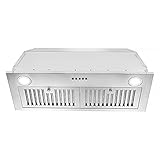
Stainless Steel 30″ Under Cabinet
At $68.35, this unit delivers 280 CFM—the highest extraction figure among under-cabinet hoods priced under $80. For budget-conscious buyers who still want to clear visible smoke during stir-frying, the extra 40 CFM over the COMFEE’ model is a tangible difference. Rocker controls and a two-speed fan keep the interface simple.
- Pro: Best CFM-to-dollar ratio in the under-cabinet category here.
- Pro: Convertible ducting covers both vented and recirculating setups.
- Con: Unbranded, which means replacement filters and parts depend on generic sizing.
Skip it if you want a recognized brand with dedicated customer support for future repairs.
Tieasy 30″ Wall Mount
The chimney-style design makes a visual statement, and at 450 CFM this wall-mount hood handles moderate high-heat cooking without the back-of-kitchen haze that plagues under-cabinet models. Three exhaust speeds offer finer noise control than the two-speed units above. Stainless steel construction suits modern kitchens.
- Pro: Chimney profile adds design weight without custom carpentry costs.
- Pro: Three-speed fan provides graduated control for simmering through frying.
- Con: Wall mounting requires stud anchoring; not a drop-in swap for an existing under-cabinet hood.
Not ideal for small kitchens where the protruding chimney body restricts movement around the cooktop.
Zomagas 30″ Insert
Insert-style hoods hide the mechanical body inside cabinetry, showing only a slim front panel. This Zomagas model pushes 600 CFM—enough for serious searing and wok work—while baffle filters trap grease before it reaches the motor. Front-mounted buttons and LED lights are accessible without removing the unit.
- Pro: Baffle filters are dishwasher-safe and maintain airflow better than mesh alternatives over time.
- Pro: 600 CFM is among the highest ratings available under $150.
- Con: Requires a pre-existing cabinet cutout sized for 30″ inserts; retrofitting costs add up.
Not the right choice if your current hood is an under-cabinet or wall-mount style with no built-in box housing.
IKTCH 30″ Insert
At 900 CFM, this is the most powerful range hood vent in the roundup, built for households where the stove runs hot and hard. The IKTCH brand carries a reputation among owners for quieter operation relative to its extraction class, though at maximum speed noise is still a factor. Ducted and ductless conversion is supported.
- Pro: Highest CFM here, capable of clearing heavy smoke from a gas range quickly.
- Pro: IKTCH offers a longer parts and warranty track record than most brands in this price range.
- Con: At $299, it demands a dedicated circuit and possibly a makeup-air damper in tightly sealed homes.
Overkill if you cook mostly at low to medium heat on an electric or induction range.
Hon&Guan 6″ Hooded Wall Vent
This is not a range hood itself but a wall-mounted exhaust vent cover that protects your range hood vent’s terminal end outdoors. The magnetic seal flap resists wind gusts from pushing cold air back in, and the removable mesh catches lint and debris before they enter the duct. Galvanized steel with a black powder coat handles weather better than plastic alternatives.
- Pro: Magnetic seal eliminates the gap and rattling common in spring-loaded flaps.
- Pro: Removable mesh makes cleaning a thirty-second task rather than a full panel removal.
- Con: Fits only 6-inch round duct openings; verify your existing vent size before purchasing.
Not a replacement for a range hood—this is a finishing accessory that improves an existing ducted system’s efficiency and weather resistance.
Buying Guide
Match CFM to Your Cooking Style
CFM (cubic feet per minute) is the single most important spec. Under 250 CFM suits light cooking on electric ranges. The 280 to 450 CFM band covers most home cooks with a gas range. Above 600 CFM, you are handling wok cooking, frequent high-heat searing, or a restaurant-style kitchen at home. A mismatch in either direction wastes money or leaves grease film on your cabinets.
Decide Between Ducted and Ductless Early
Ducted hoods exhaust air outside; ductless hoods recirculate through charcoal filters. Convertible models offer both options, which protects resale flexibility and simplifies apartment moves. However, even convertible hoods perform meaningfully better in ducted mode because charcoal filters add airflow resistance and require replacement every few months. Check your wall or ceiling for a vent opening before you commit to ductless.
Filter Type Affects Long-Term Maintenance
Mesh filters are cheap and effective at trapping grease initially but clog unevenly and lose airflow faster. Baffle filters channel grease into a collection tray and maintain consistent suction for longer, though they cost more upfront. If you cook with oil frequently, baffle filters justify their premium through reduced cleaning frequency and sustained extraction performance over years of use.
Our Verdict
Top pick: The Zomagas 30″ Insert delivers the best balance of extraction power (600 CFM), practical baffle filters, and a price point that undercuts most competing inserts. For anyone with a cabinet ready to accept it, this is the most capable range hood vent under $150.
Budget pick: The Stainless Steel 30″ Under Cabinet at $68.35 gives you 280 CFM and convertible ducting for less than any comparable unit in this group. It is the best value for straightforward under-cabinet replacement.
Special case: If your kitchen wall lacks a duct opening and you cannot add one, the Broan-NuTone 413001 is the most reliable ductless-only option here because of its established filter-supply chain, even though it will not clear grease from your air the way a ducted unit would.
FAQ
Can a range hood vent work without a duct?
Yes, in ductless or recirculating mode, air passes through charcoal filters and returns to the room. This reduces odors somewhat but does not remove grease or moisture, so expect more surface buildup on cabinets and appliances over time.
How often should I replace charcoal filters?
Most manufacturers recommend every three to six months depending on cooking frequency. If you fry or grill indoors regularly, lean toward the shorter interval. A saturated filter noticeably reduces suction and can leave a stale smell near the hood.
Do I need a makeup air damper for a high-CFM hood?
In tightly sealed modern homes, hoods above 400 CFM can create negative pressure that back-drafts combustion appliances like water heaters or furnaces. Check your local building code; many jurisdictions require a makeup air device for hoods exceeding 400 CFM.
Is stainless steel worth it over painted metal?
Stainless resists corrosion, hides fingerprints, and tolerates frequent wiping without chipping. Painted hoods look fine initially but chip near edges after a year of cleaning, especially in humid kitchens. The few dollars extra for stainless typically pays off in appearance retention.