Home break-ins remain one of the most common property crimes, and the anxiety that follows an attempted intrusion can outlast the physical damage by a wide margin. The core problem a buyer faces when shopping for a house alarm system is not a lack of options but a surplus of them, with prices ranging from under sixty dollars to well over three hundred and features that sound similar on paper but behave very differently in practice. Some kits offer robust professional monitoring that dispatches emergency responders within minutes of a triggered sensor, while others provide nothing more than a loud local siren and a push notification you may or may not see before the intruder is gone.
What separates a good system from a mediocre one in 2026 comes down to a handful of practical factors: whether the included sensors cover the entry points that matter most to your layout, whether expansion is possible without replacing the base unit, whether ongoing subscription costs are transparent and justified, and whether the mobile app delivers reliable, timely alerts. The eight products reviewed below span the full spectrum from ultra-budget self-monitored kits to professionally monitored smart home ecosystems, and each one serves a distinct buyer profile. We compared published specifications, current prices, and aggregated owner feedback to identify where each system excels and where it falls short.
Our top picks
 Ring Alarm 8-Piece Kit
- A great fit for 1-2 bedroom homes, this…
- Includes an intuitive Keypad that can arm and…
- Choose the Ring Alarm Kit that fits your…
 15-Piece WiFi Home Security System
- Control your home security system with ease using…
- DIY installation made simple, no need for professional…
- Stay informed and receive real-time alerts directly to…
 PGST Alarm System for Home Security
- Mobile APP Control & Automation:You can choose to…
- Wi-Fi+GSM/4G Dual Network:The alarm system supports Wi-Fi (2.4GHz)…
- Flexible DIY Security System:You can add or remove…
| Product | Key specs | |
|---|---|---|
| Ring Alarm 8-Piece Kit | A great fit for 1-2 bedroom homes, this… Includes an intuitive Keypad that can arm and… Choose the Ring Alarm Kit that fits your… | Check price |
| 15-Piece WiFi Home Security System | Control your home security system with ease using… DIY installation made simple, no need for professional… Stay informed and receive real-time alerts directly to… | Check price |
| PGST Alarm System for Home Security | Mobile APP Control & Automation:You can choose to… Wi-Fi+GSM/4G Dual Network:The alarm system supports Wi-Fi (2.4GHz)… Flexible DIY Security System:You can add or remove… | Check price |
 Ring Alarm 14-Piece Kit Ring Alarm 14-Piece Kit | A great fit for 2-4 bedroom homes, this… Includes an intuitive Keypad that can arm and… Choose the Ring Alarm Kit that fits your… | Check price |
 WiFi Door Alarm System WiFi Door Alarm System | WIFI Network: WIFI connection, Only works on 2.4GHz… SMART ALARM SYSTEM for Home: tolviviov Alarm Security… You can add extra door and window sensors,… | Check price |
 WiFi Home Security Alarm System WiFi Home Security Alarm System | No Monthly Fees, No Hidden Subscription: Get complete… Password Keypad & Back‑Mounted Tamper‑Resistant Design: Practical security… 48‑Hour Battery Backup for Power Outage: Built‑in rechargeable… | Check price |
 SimpliSafe 8 Piece Wireless Home Security System SimpliSafe 8 Piece Wireless Home Security System | Simple to set up 1 FREE month of professional monitoring for fast… Complete control of your system with the SimpliSafe… | Check price |
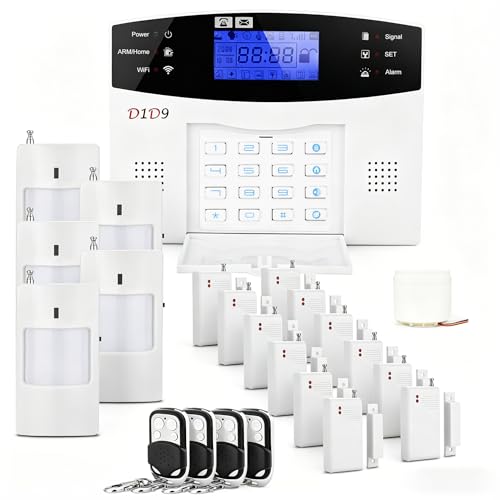 D1D9 24pcs Wireless DIY Home Burglar Alarm D1D9 24pcs Wireless DIY Home Burglar Alarm | 24PCS Complete Kit & Full Coverage Wireless DIY Installation & No Monthly Fee 4G & WiFi Connectivity | Check price |
As an Amazon Associate we earn from qualifying purchases at no extra cost to you.
Quick Picks
| Product | Best for | Price |
|---|---|---|
| Ring Alarm 8-Piece Kit | First-time buyers wanting professional monitoring | $249.99 |
| 15-Piece WiFi Home Security System | Budget-conscious DIYers who refuse subscriptions | $109.24 |
| PGST 24-Piece Alarm System | Larger apartments needing broad sensor coverage | $111.70 |
| Ring Alarm 14-Piece Kit | Expanding an existing Ring security ecosystem | $329.99 |
| WiFi Door Alarm System 8-Piece | Renter-grade door and window monitoring on a tight budget | $59.99 |
| WiFi Home Security Alarm System 4X | Minimalists who want zero monthly fees | $59.99 |
| SimpliSafe 8-Piece | Contract-free professional monitoring | $209.00 |
| D1D9 24-Piece Alarm System | Remote-area homes needing GSM backup | $109.89 |
How We Picked
We evaluated every product on four criteria that consistently determine long-term satisfaction with a security system. The first is monitoring flexibility: the best kits let you choose between self-monitoring and professional dispatch without forcing a lock-in. The second is sensor coverage and expandability, because a kit that cannot grow with your home becomes obsolete quickly. The third is total cost of ownership, which means looking past the sticker price to subscription fees, equipment replacement costs, and whether the system functions during power or internet outages. The fourth is setup complexity relative to the included guidance, since most buyers install these systems themselves and a confusing app or poorly documented pairing process drives negative feedback more reliably than any hardware flaw.
The 8 Best House Alarm Systems in 2026
Ring Alarm 8-Piece Kit
This is the most sensible entry point into professionally monitored security for a buyer who wants proven infrastructure without committing to a large sensor footprint. The eight pieces typically cover a small to mid-size apartment or starter home, and the optional 24/7 monitoring plan means an actual agent responds to alarms rather than relying solely on your phone notifications. Integration with Ring cameras and doorbells is seamless, which matters if you already own any of those devices.
- Professional monitoring available with no long-term contract required.
- Reliable mobile app with instant push alerts and easy sensor management.
- Monitoring subscription adds ongoing cost beyond the initial purchase price.
Skip it if you have a large property with many entry points, because you will need the 14-piece kit or extensive add-on purchases to cover adequate ground.
15-Piece WiFi Home Security System
For buyers who have explicitly decided they will never pay a monthly monitoring fee, this kit delivers the largest sensor count per dollar in this roundup. Fifteen pieces typically include a control panel, motion detectors, door and window sensors, and a remote, giving a single-family home reasonable coverage out of the box. The WiFi connectivity enables app-based control and alerts without any subscription.
- No subscription required at any tier, keeping long-term costs at zero.
- Generous sensor count makes it easy to cover multiple entry points immediately.
- App interface and pairing process feel less polished than premium alternatives.
Skip it if you want professional dispatch on alarms or if you already use Ring or SimpliSafe cameras and want unified control.
PGST Alarm System for Home Security, 24-Piece
This system targets apartment dwellers and homeowners who need maximum sensor density from a single purchase. Twenty-four pieces provide coverage for a multi-room layout without requiring add-on kits, and the dual WiFi and 4G connectivity means alerts can still reach your phone even if broadband drops. The no-subscription model keeps operating costs minimal.
- Extensive included sensor set covers large or multi-entry layouts from the start.
- Dual 4G and WiFi connectivity provides redundancy against internet outages.
- Brand recognition is lower, meaning fewer third-party accessories and community troubleshooting resources.
Skip it if you value a mature ecosystem of cameras, smart locks, and integration options from a well-known platform.
Ring Alarm 14-Piece Kit
The 14-piece Ring kit is designed for buyers who already own or plan to add Ring cameras, smart locks, or flood sensors and want a single app to manage everything. The expanded sensor count covers a two- or three-bedroom home without add-on purchases, and the same optional professional monitoring is available. Setup via the Ring app remains straightforward, guided step by step through pairing.
- Full ecosystem integration with cameras, locks, and smart home automations.
- Expandable beyond fourteen pieces without replacing the base station.
- Highest upfront cost in this roundup, and monitoring still requires a paid plan.
Skip it if you want zero ongoing costs or if your home is small enough that the 8-piece kit already provides sufficient coverage.
WiFi Door Alarm System, 8-Piece
At under sixty dollars, this kit is the most affordable way to add WiFi-connected door and window sensors to a home. Eight pieces cover a small apartment or a single floor of a larger house. The local siren deters casual intruders, and app alerts let you know if a sensor trips even when you are away. No subscription is required.
- Lowest entry price among WiFi-enabled systems in this list.
- Simple enough for a renter to install without damaging walls or wiring.
- Limited sensor count means most homes will need add-on purchases quickly.
Skip it if you need motion detection or coverage beyond a single entry area, because the included pieces focus almost entirely on door and window contact.
WiFi Home Security Alarm System, 4X Door Window Sensors
This system serves the buyer who wants the absolute minimum viable alarm for a small space, such as a studio apartment, a home office, or a rental where only two or three entry points matter. With no monthly fees and a siren loud enough to draw neighbor attention, it fulfills a basic deterrent role. The WiFi connection enables remote arming and disarming from the app.
- Zero subscription cost and a low one-time purchase price.
- Compact footprint means it occupies minimal space on a shelf or wall.
- Only four door or window sensors are included, leaving no motion coverage.
Skip it if your home has more than two entry points or if you want any form of professional monitoring.
SimpliSafe 8-Piece Wireless Home Security System
SimpliSafe has built its reputation on the promise of professional monitoring with no long-term contract, and the 8-piece kit delivers exactly that. The system includes a base station, keypad, motion sensor, door sensor, and window sensor, providing starter coverage for a small to mid-size home. Alexa and Google Assistant compatibility lets you arm or disarm by voice, which adds convenience for smart-home households.
- Professional monitoring available without any contract commitment.
- Clean, modern hardware design that is less conspicuous than typical alarm panels.
- Monitoring fees are higher than some competitors over multi-year ownership.
Skip it if you want deep integration with existing smart home brands beyond voice assistant control, as SimpliSafe’s third-party compatibility is narrower than Ring’s.
D1D9 24-Piece Wireless DIY Home Burglar Alarm System
This kit earns its place for buyers in areas with unreliable broadband, because the GSM module sends alerts via cellular text or call even when WiFi is down. Twenty-four included pieces provide strong coverage out of the box, and the no-monthly-fee model keeps long-term costs near zero. The app handles arming, disarming, and alert history for users who prefer self-monitoring.
- GSM cellular backup ensures alerts reach you even during internet outages.
- High sensor count with no subscription requirement.
- User interface and app experience lag behind mainstream competitors in polish and responsiveness.
Skip it if you already have reliable internet and want a refined app experience or smart home integrations from a major platform.
Buying Guide
Monitoring: Self, Professional, or Both
The single most consequential decision is whether you want someone else watching your alarm events. Professional monitoring means a central station receives the signal, verifies it, and dispatches police or fire services. Self-monitoring means the alert goes only to your phone, and you must assess the situation and call authorities yourself. The gap in response time between these two modes can be several minutes. Look for systems that offer both options so you can start self-monitored and upgrade later. Also check whether professional monitoring requires a contract or works on a month-to-month basis, as flexibility matters if you move.
Sensor Coverage and Expandability
Count your actual entry points before selecting a kit. A typical single-family home has exterior doors, garage access, ground-floor windows, and sliding doors, easily totaling ten to fifteen contact points before you add motion sensors for hallways and common areas. Buy a kit whose included count meets your baseline, and verify that the manufacturer sells compatible expansion sensors as individual items. A system that cannot grow forces a full replacement when you add a room or move to a larger property.
Connectivity and Failure Modes
Every alarm system depends on a communication path between the panel and your phone or the monitoring center. WiFi-only systems go silent during an internet outage, which is the exact scenario an intruder might exploit. Systems with cellular backup or dual-path communication, like the D1D9 or PGST kits, maintain alert delivery when broadband fails. Check whether the base station includes a battery backup that sustains local siren operation during a power cut, and verify how long that battery typically lasts before replacement.
Our Verdict
The Ring Alarm 14-Piece Kit is our top pick for most homeowners because it balances professional monitoring availability, a large sensor set, and a mature smart home ecosystem under one app. For buyers who refuse any recurring cost, the 15-Piece WiFi Home Security System at $109.24 is the strongest budget pick, offering the best sensor count without a subscription. If you live in an area with unreliable broadband, the D1D9 24-Piece wins on its cellular GSM backup capability, a feature most competitors at this price point simply do not offer.
FAQ
Do house alarm systems actually prevent break-ins?
A visible alarm system acts as a deterrent because most burglars prefer low-effort targets. Studies consistently show that signs, stickers, and visible sensors influence an intruder’s decision to move on. Once a break-in is underway, the system’s value shifts from deterrence to response speed, which is where professional monitoring clearly outperforms self-monitoring.
Can I install a house alarm system myself?
Every product in this roundup is designed for DIY installation. Door and window sensors typically use adhesive or screws, and the control panel pairs via the companion app in a guided process. If you have basic tool skills and can follow step-by-step instructions, no professional installer is needed.
What happens if my internet goes down?
WiFi-only systems will still trigger the local siren and log events to the panel, but push notifications to your phone will stop until connectivity resumes. Systems with cellular or GSM backup, such as the D1D9 and PGST kits, continue sending alerts through the mobile network. If you choose a professionally monitored plan, confirm whether the monitoring center uses cellular communication or relies on your home internet.
Are these systems compatible with smart home devices?
Ring and SimpliSafe integrate with Alexa, and SimpliSafe also supports Google Assistant, enabling voice arming and scene-based automations. The WiFi-based budget kits generally offer app control but lack native smart home platform integration, meaning you cannot trigger them from a smart home routine without third-party workarounds.