Key takeaways
- 36 inches minimum from table edge to wall or other furniture to pull out a chair and sit down
- 42 to 48 inches if that edge is a main walkway or behind a chair that faces a doorway or appliance
- 24 to 30 inches of table width per person and at least 12 inches of chair-to-chair space when pushed in
The right kitchen tables and chairs sets for your space comes down to three decisions: allow 36 to 48 inches of clearance around the table, match the table shape to your room layout, and choose the frame material based on how much durability and maintenance you want to handle.
Our top picks



As an Amazon Associate we earn from qualifying purchases at no extra cost to you. Ratings are shown as listed on Amazon.
What Size Set Fits Your Room?
A set looks right in a showroom but feels cramped at home when there is not enough pull-out and walk-around space. Use clearance, not just table dimensions, to decide between 2, 4, and 6 seats.
Clearance Rules That Matter More Than Table Size
Standard kitchen table height is 28 to 30 inches, with chair seat height at 17 to 19 inches, leaving 10 to 12 inches between seat and tabletop for comfortable leg room. For movement, you need:
- 36 inches minimum from table edge to wall or other furniture to pull out a chair and sit down
- 42 to 48 inches if that edge is a main walkway or behind a chair that faces a doorway or appliance
- 24 to 30 inches of table width per person and at least 12 inches of chair-to-chair space when pushed in
Doorways are typically 30 to 32 inches wide and apartment hallways are 36 inches, so a fully assembled 60-inch table will not turn a tight corner. If access is narrow, look for sets that ship in two boxes or have removable legs.
2, 4, and 6-Seat Sets by Room Dimensions
| Set Size | Typical Table Footprint | Minimum Room Area Needed (with 36″ clearance) | Best For |
|---|---|---|---|
| 2-Seat (Bistro) | 30″ round or 42″ x 24″ rectangular | 7 x 7 ft (49 sq ft) | Studio, 1-bedroom, kitchen nook, or as secondary dining spot |
| 4-Seat | 36″ to 48″ round/square or 48″ x 30″ rectangular | 9 x 9 ft to 10 x 10 ft (81-100 sq ft) | Most common for apartments and small homes, seats 2 daily with room for guests |
| 6-Seat | 60″ to 72″ x 36″ to 40″ rectangular or 54″ to 60″ round | 11 x 12 ft to 12 x 14 ft (132-168 sq ft) | Dedicated dining area, open-plan kitchen, family of 4+ who host often |
Example: A 10 x 12 ft kitchen (120 sq ft) can comfortably handle a 4-seat rectangular set around 48 x 30 inches with 36 inches of clearance on three sides and 42 inches on the side used as a passage. A 6-seat 72-inch table in the same room leaves only 24 to 30 inches behind chairs, which blocks traffic when someone is seated.
If your room is between sizes, a 4-seat set with an 18-inch leaf is more flexible than committing to a full 6-seat footprint year-round. Round tables also save visual space in square rooms, while rectangular tables use long, narrow rooms more efficiently.
Choosing the Shape: Round, Square, or Rectangular?
Shape affects how many people you can seat, how you move, and how the set feels in the room.
- Round (36″ to 60″ diameter): No corners, so flow is better in tight or square rooms. Everyone faces each other, which suits conversation. A 36-inch round seats 2 to 3, 48-inch seats 4, 60-inch seats 5 to 6. Pedestal bases give more legroom than four legs, but check for wobble on uneven floors.
- Square (36″ to 48″): Efficient for 4 in a square nook and easy to push against a wall to save space. Can feel tight for 4 adults at 36 inches because elbow room is limited to 18 inches per side.
- Rectangular (48″ to 72″ long): Best for seating 4 to 6 without crowding and for placing against a wall or island. A 60-inch rectangular table seats 6 only if width is at least 36 inches; narrower than 32 inches and place settings overlap.
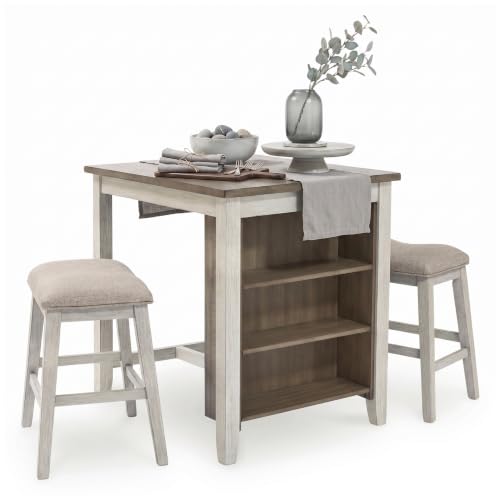
- Counter-height (34″ to 36″ table height): Creates a casual, bar-like feel and can double as prep space, but chairs are taller, heavier, and harder for kids or older adults to climb into. Standard height is more versatile for resale and chair replacement.
Material and Construction: What Holds Up and What Wears First
For kitchen tables and chairs sets, durability is not just about the tabletop. Chair joints, finish, and hardware fail before the wood itself does.
| Material | Durability and Maintenance | Weight and Assembly Reality | Typical Market Range for 4-Seat Set |
|---|---|---|---|
| Solid Wood (rubberwood, acacia, oak, pine) | Most repairable, can be sanded and refinished. Resists heat better than engineered wood. Needs coasters and seasonal tightening of bolts. Pine dents easier than oak or acacia. | Heaviest, often 80 to 130 lbs total shipped in 2 boxes. Sturdy but harder to move. Weight capacity usually 250 to 300 lbs per chair. | Usually $500–$1,200 |
| Engineered Wood (MDF/particleboard with veneer or laminate) | Smooth, consistent finish and lower cost. Vulnerable to moisture swelling at edges and peeling veneer if chipped. Cannot be sanded deeply. Wipe spills quickly. | Lighter than solid wood (60 to 90 lbs total) but bulkier boxes. Cam-lock assembly is common, plan 45 to 90 minutes with two people. Weight capacity usually 200 to 250 lbs per chair. | Usually $250–$600 |
| Metal Frame (powder-coated steel) with Wood or MDF Top | Strongest joints, best for daily heavy use and rentals. Powder coating resists scratches and wipes clean. Can feel cold or industrial, may need felt pads to protect floors. | Mid-weight, often flat-packed. Chairs may arrive fully welded with only legs to attach (15 to 30 minutes). Weight capacity often 300 lbs per chair. Check weld points for sharp edges. | Usually $300–$700 |
Fabric and Foam Details Retail Listings Skip
- Solid wood chairs with wood seats: Easiest to clean, no staining, but add a cushion for long meals. Look for corner-blocked joints and metal brackets under the seat.
- Upholstered seats (linen, polyester, velvet): More comfortable and quieter. Choose polyester or polyester-blend for kitchens because it resists stains and fading better than linen or velvet. Removable covers extend life.
- Faux leather/vinyl: Wipes clean from spills and pet hair, good for families, but can crack after 3 to 5 years near heat or direct sun.
- Foam density: Seat foam around 1.8 to 2.0 lbs per cubic foot holds shape for daily use. Thinner foam under 1.5 lbs per cubic foot flattens within a year on frequently used chairs.
Decision Matrix: Match Your Situation to the Set
| Your Situation | Recommended Set | Why It Works |
|---|---|---|
| Small apartment or galley kitchen under 80 sq ft | 2-seat 30″ round metal frame or small rectangular drop-leaf | Needs only 7 x 7 ft, leaves walkway clear, metal tolerates frequent moving |
| Renter who moves often | 4-seat metal frame with laminate top, chairs under 15 lbs each | Disassembles and reassembles without stripping cam locks, lighter to carry through 30″ doorways |
| Family with kids and pets | 4 or 6-seat solid wood or metal with vinyl/wipedown seats, rounded corners | Withstands spills, chair weight limits of 250+ lbs, repairable surfaces, no fabric staining |
| Host often but space is tight | 4-seat rectangular 48″ with 18″ leaf or 48″ round with leaf | Daily footprint stays small, expands to 6 when needed without permanent 72″ table |
| Back pain or need longer sitting comfort | Standard height (29″) with upholstered high-back chairs, seat 18″ high, lumbar support | 10 to 12 inches of knee clearance reduces pressure, counter-height forces more leg dangling |
| Open-plan kitchen with island | 6-seat 60″ to 72″ rectangular, bench on one side | Bench tucks fully under to open floor space, long shape echoes island line |
Assembly, Moving, and What Wears Out First
Product photos hide the logistics. Before you buy, check these realities:
- Box weight and delivery: A solid wood 6-seat set can ship at 120 to 180 lbs across two or three boxes. Measure elevator and stairwell clearance if you live above ground floor. Many carriers leave boxes at the door.
- Assembly time: Metal frames with pre-welded chairs: 30 to 60 minutes. Engineered wood with cam locks and dowels: 60 to 120 minutes for a 4-seat set. You will need a Phillips screwdriver and included Allen keys; a power drill can strip MDF if over-torqued.
- First failure points: Loose chair stretchers, wobbly pedestal bases, chipped veneer edges near chairs, and felt pads falling off. Tighten all bolts after two weeks of use as wood compresses and bolts settle.
- Floor protection: Chairs drag, not lift. Add screw-in felt glides for wood frames or stick-on pads for metal legs. On tile, look for chairs with nylon glides to prevent scratching.
- Replacement parts: Solid wood and metal sets often sell replacement chairs individually. Many engineered wood sets do not, so damage to one chair means mismatched replacement. Check if the seller offers single chairs in the same finish.
For long-term value, prioritize construction over style trends: corner blocks, metal-on-metal bolts instead of wood screws into MDF, and a tabletop with at least 1-inch thickness or a reinforced apron. Those details determine whether a set lasts 3 years or 10.
Final Checklist Before You Buy
- Tape out the table footprint plus 36 inches on all sides in your kitchen and walk through daily paths
- Confirm table height (28 to 30 inches standard) and chair seat height (17 to 19 inches) will work with any existing benches or stools
- Verify weight limit per chair, especially for larger adults and when kids stand on chairs
- Check doorway, hallway, and elevator dimensions against box sizes if you have tight access
- Choose a top finish that matches your maintenance willingness: laminate or sealed wood for low upkeep, oiled wood if you are willing to reseal annually