Key takeaways
- Stacking height: Measure the complete stack, not just one glass. Leave at least 1 inch of clearance inside the cabinet.
- Separation: Small molded ridges or a flared rim can prevent glasses from sticking together.
- Base fit: A narrow foot or raised base may make the stack unstable, even when the bowls nest.
Best Drinking Glass Sets for Everyday Use and Entertaining
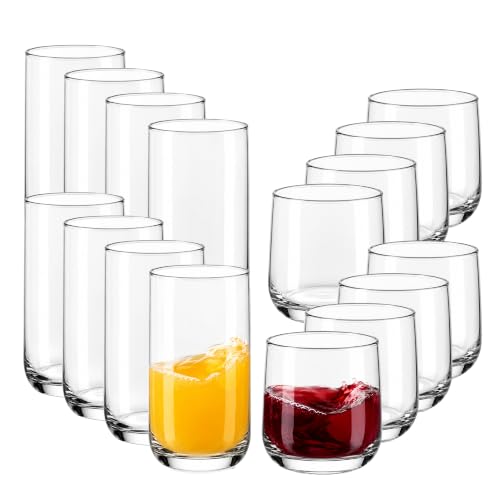
The best drinking glasses sets for most homes are 16- to 20-ounce tumblers made from tempered soda-lime glass, with a 2.5- to 3.25-inch base, dishwasher-safe construction, and at least eight glasses per set.
That general specification balances water, iced tea, juice, and mixed drinks without making the glass unnecessarily tall or difficult to store. The right choice changes, however, if you have limited cabinet space, young children, frequent guests, or a preference for large restaurant-style pours.
Our top picks



As an Amazon Associate we earn from qualifying purchases at no extra cost to you. Ratings are shown as listed on Amazon.
Quick picks by household and serving situation
| Household situation | Best glass specification | Recommended set size | Why it fits |
|---|---|---|---|
| Small apartment or two-person household | 12–16 oz, straight-sided, stackable tumbler | 4–6 glasses | Uses less shelf space and covers daily drinks without overbuying. |
| Family with children | 10–14 oz, thick-rimmed tempered glass or break-resistant copolyester | 8–12 glasses | Smaller capacity is easier for children to hold and refill. |
| Frequent entertainers | 16–20 oz, medium-weight tumblers with a stable base | 12–16 glasses | Provides extras for guests, refills, and accidental breakage. |
| Large household or holiday hosting | 20–24 oz, durable restaurant-style tumblers | 16–24 glasses | Reduces the need to wash glasses between courses or gatherings. |
| Maximum break resistance | 10–16 oz tempered glass or BPA-free copolyester | 8–12 glasses | Better suited to patios, children, pets, and busy kitchens. |
Capacity: 12, 16, or 20 ounces?
12–14-ounce tumblers
Small tumblers work well for juice, milk, children’s drinks, and compact cabinets. They are also easier to grip because a typical 12-ounce glass is about 3 inches wide or less. The limitation is frequent refilling: a glass filled with ice may hold only 7–9 ounces of liquid.
16–18-ounce tumblers
This is the most versatile range for everyday use. It accommodates a full glass of water with ice, a generous soft drink, or a standard iced coffee. For many households, a set of eight 16-ounce glasses is a better all-purpose purchase than mixing several specialized sizes.
20–24-ounce tumblers
Large glasses are useful for iced tea, lemonade, smoothies, and long drinks, but they are not automatically more practical. Filled with ice and liquid, one can weigh roughly 1.5–2.5 pounds, making it awkward for children and anyone with reduced hand strength. Tall 24-ounce glasses may also require 11-inch or taller clearance in a cabinet or dishwasher rack.
Glass thickness and break resistance compared
| Construction | Typical feel | Strength and weakness | Best use |
|---|---|---|---|
| Thin soda-lime glass | Light, refined rim; often under 0.1 inch at the rim | Elegant but less tolerant of knocks and thermal shock | Formal dining and careful everyday use |
| Medium-weight tempered glass | Noticeably substantial; commonly 0.1–0.15 inch rim thickness | Better resistance to impact and temperature changes, though not unbreakable | Most kitchens and frequent dishwasher use |
| Heavy restaurant-style glass | Thick base and walls; often 0.15 inch or more at the rim | Stable and durable, but heavier and less comfortable for small hands | Parties, outdoor-adjacent use, and busy households |
| Copolyester or similar break-resistant material | Lightweight, sometimes slightly less glass-like | Highly resistant to shattering; may scratch or cloud over time | Children, patios, pets, and poolside serving |
Thicker glass is not simply “better.” A thick base helps a tumbler remain stable, while an overly thick rim can feel clumsy when drinking. Look for a reinforced or rounded rim rather than maximum thickness everywhere. Tempered glass is designed to handle more abuse than ordinary glass, but it can still break if dropped on tile or struck at the edge.
Stackable versus non-stackable tumblers
Stackability matters more than decorative styling when cabinet space is limited. A stackable set may reduce the vertical space required for six glasses from approximately 15 inches to 8–10 inches, depending on the shape. Straight-sided glasses with a slightly tapered upper section usually stack more reliably than heavily curved or faceted designs.
Check three details before buying:
- Stacking height: Measure the complete stack, not just one glass. Leave at least 1 inch of clearance inside the cabinet.
- Separation: Small molded ridges or a flared rim can prevent glasses from sticking together.
- Base fit: A narrow foot or raised base may make the stack unstable, even when the bowls nest.
Non-stackable tumblers are often easier to dry and may have a more comfortable shape. They are the better choice if you have open shelving, deep drawers, or enough cabinet room to store each glass separately.
Dishwasher safety and everyday maintenance
For regular use, choose glasses explicitly labeled dishwasher-safe. Tempered glass generally performs well in a dishwasher, but placement still matters: put glasses securely between tines rather than over a tine, avoid crowding, and use a normal cycle when possible. Repeated contact with metal utensils can chip rims, even when the glass itself is dishwasher-rated.
Hand washing is preferable for very thin glass, painted details, gold rims, etched decoration, and some plastic-like break-resistant materials. If a glass develops a chip, hairline crack, or rough rim, retire it. A small edge defect can worsen during washing and create a sharp surface.
How many glasses should you buy?
For a two-person home, four glasses are the minimum practical set, but six gives you room for water, coffee, and guests without immediately running the dishwasher. Four-person households generally benefit from eight glasses. If you host monthly or more often, 12 is a useful baseline; 16 is more comfortable for dinner parties, especially when guests may use separate glasses for water and cocktails.
A simple calculation is:
Number of glasses = regular drinkers × 2, plus 2–4 guest glasses.
For example, four residents multiplied by two equals eight everyday glasses. Add four for visitors, and a 12-piece set becomes the practical choice. Buy a few extra if the design is likely to be discontinued or if individual replacement glasses are unavailable.
What to inspect before choosing a set
- Base diameter: Around 2.5–3.25 inches offers useful stability without consuming excessive cabinet width.
- Height: Measure your shelf and dishwasher rack. Many tall tumblers are 6.5–8.5 inches high.
- Opening: A 2.75–3.25-inch opening is easier to clean and more comfortable for ice.
- Weight: Lightweight glasses are easier to carry, while medium-weight glasses usually feel more stable and durable.
- Shape: Slight tapering helps stacking and makes the glass less likely to slip from a wet hand.
- Replacement availability: A common cylindrical shape is easier to replace than a distinctive discontinued design.
Best overall choice for most homes
Choose an eight-piece set of 16- to 18-ounce, medium-weight tempered glass tumblers with a slightly tapered shape, a stable base, and dishwasher-safe construction. This combination handles daily water, iced beverages, and casual entertaining while fitting ordinary cabinets and dishwasher racks.
Choose 12-ounce glasses instead if children or limited storage are the priority. Move up to 20–24 ounces for frequent iced tea or smoothie drinkers, but confirm cabinet and dishwasher clearance first. For outdoor meals, pets, or a high risk of drops, a break-resistant copolyester set may be more practical than glass, provided you accept the possibility of scratches and gradual clouding.
Frequently asked questions
Are thicker drinking glasses better?
Medium-thick or tempered glasses are usually the best compromise. Extremely thin glasses feel refined but can chip more easily, while very thick glasses add weight and may feel uncomfortable for children.
Is tempered glass shatterproof?
No. Tempered glass is more resistant to ordinary impacts and temperature changes, but a hard hit on an edge or corner can still cause breakage. Break-resistant plastic materials offer greater protection against shattering.
Is a 16-ounce glass large enough for everyday use?
Yes. A 16-ounce tumbler is large enough for water and ice without becoming unwieldy. Remember that ice occupies part of the stated capacity, so the actual liquid volume will be lower when the glass is filled.
Should every glass in a set be the same size?
For most households, yes. Matching tumblers simplify storage and make replacements easier. Add smaller juice glasses or larger iced-drink glasses only when those uses occur often enough to justify the extra cabinet space.