Key takeaways
- Peak watts on a box are a marketing number. Blade stack design, jar shape and how much liquid you add decide whether ice turns to snow or stays as chunks.
- For frozen drinks every day, pick a 1,000 to 1,500 watt jug with stacked blades and a 48 to 72 oz pitcher.
- A 700 watt glass-jar blender can still crush ice for occasional use if you work in small batches and pulse.
- Glass pitchers resist scratching and odor but are heavier; plastic is lighter and safer to drop.
- Check the maker page for current model numbers. Listings change often, and similar-looking names can ship with different motors.
The best ice crusher blender for most kitchens is a full-size jug blender with a motor of roughly 1,000 watts or more, blades stacked up the center post so they reach ice at every height, and a pitcher large enough to hold the ice and the liquid together. Below are six ice crusher blenders chosen on those three traits, plus four more to consider, with plain notes on who each one suits and where it falls short.
Our top picks



As an Amazon Associate we earn from qualifying purchases at no extra cost to you.
Key takeaways
- Peak watts on a box are a marketing number. Blade stack design, jar shape and how much liquid you add decide whether ice turns to snow or stays as chunks.
- For frozen drinks every day, pick a 1,000 to 1,500 watt jug with stacked blades and a 48 to 72 oz pitcher.
- A 700 watt glass-jar blender can still crush ice for occasional use if you work in small batches and pulse.
- Glass pitchers resist scratching and odor but are heavier; plastic is lighter and safer to drop.
- Check the maker page for current model numbers. Listings change often, and similar-looking names can ship with different motors.
What “ice crusher” actually means on a blender
Almost every countertop blender claims it can crush ice. The claim is true in the narrow sense that the blades will break cubes. The question is the result: fine, even snow for a frozen margarita or slushie, or a mix of powder and unbroken chunks that jams the drink. Three design choices explain most of the gap between machines.
- Blade design. A tall stack of blades at several heights pulls ice into the cut zone from the top of the pitcher. A single flat blade at the base only chews what happens to fall onto it.
- Motor torque, not just watts. Brands quote either running watts or “peak” watts. A 1,400 peak-watt motor and a 1,000 watt motor are not directly comparable, so read the wording on the listing and treat the number as a rough ranking, not a precise one.
- Pitcher shape and size. A narrow-bottomed pitcher keeps ice near the blades. A very wide, shallow jar lets cubes sit on the outside and spin.
Ice also behaves differently depending on its form. Fresh-from-the-freezer cubes are very hard and cold, while ice that has sat on the counter for a few minutes cracks more easily. Small crescent cubes from a fridge dispenser break faster than big square cubes from a tray. When a blender seems weak, the ice is often the cause.
How We Chose
This is a research-based roundup. We did not personally use these blenders. We compared maker descriptions and retail listing specifications: motor rating as stated, blade type, pitcher capacity and material, speed controls, and whether the pitcher is listed as dishwasher safe. We then grouped the models by how a household would actually use them. We kept to a maximum of two models per brand and left out renewed units, bundles padded with accessories and single-serve cups whose main job is not ice.
Where a spec was not shown on the listing we say “check the listing” instead of guessing. Product models change often, so confirm the exact model code on the maker page before you order.
Ice crusher blenders compared at a glance
| Model | Motor as listed | Pitcher | Controls | Best for |
|---|---|---|---|---|
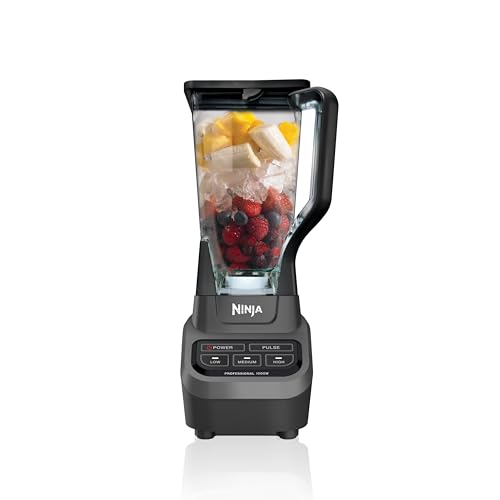
| Ninja Professional Plus BN701 | 1400 peak watts | 72 oz | 3 Auto-iQ presets | Family batches, hands-off programs |
| Ninja UltraCrush Pro Kitchen System BP401 | 1500 W | 72 oz, plus 8-cup processor and 18 oz cup | See listing | One machine for ice and chopping |
| Chefman Obliterator | 1380 W | 48 oz | Auto blend, tamper | Frozen fruit and thick drinks |
| Hamilton Beach Power Elite 58148AG | 700 W | 40 oz glass | 12 functions | Budget, occasional ice |
| DUMOS 850 peak-watt blender | 850 peak watts | 54 oz glass | 4 speeds and pulse | Glass-jar value |
| BLACK+DECKER Crush Master BL2010BP | See listing | See listing | 10 speeds | Entry-level, small households |
1. Ninja Professional Plus BN701: Best for family-size frozen drinks
- 1400 peak-watt motor · 72 oz pitcher · 3 Auto-iQ presets
- Stacked “Total Crushing” blade design per the listing
- Presets cover smoothies, frozen drinks and ice cream
- Pitcher listed as dishwasher safe
- Tier: mid-range
Best for: households that blend four or more servings at a time and want a preset that handles the timing. Skip if: you only ever make one drink, since a 72 oz pitcher is a lot of jar for a small portion and the blades can miss small amounts.
Pros:
- The Auto-iQ presets pause and pulse on their own, which takes the guesswork out of a first batch of slush.
- Big pitcher handles a full tray of ice with liquid.
- Pitcher cleans in the dishwasher.
Cons:
- Tall and wide, so it may not fit under low cabinets.
- Loud at full speed, like every machine in this class.
2. Ninja UltraCrush Pro Kitchen System BP401: Best if you want a blender and a processor in one
- 1500 W · 72 oz blender pitcher · 8-cup food processor bowl · 18 oz to-go cup
- Total Crushing technology for smoothies, ice crushing and chopping, per the listing
- Tier: upper mid-range
Best for: a kitchen with limited counter and cabinet space that wants one motor base for slushies and for chopping onions or mixing dough. Skip if: you already own a food processor, since the extra bowl then adds bulk instead of value.
Pros:
- Highest motor figure in this list, which helps with large, dense loads of ice.
- The to-go cup is convenient for single servings.
- Replaces two appliances.
Cons:
- More parts to wash and store.
- Priced above the single-jug blenders.
3. Chefman Obliterator: Best for frozen fruit and thick drinks
- 1380 W motor · 48 oz pitcher · stainless steel blade
- Auto blend function · includes tamper and scraper
- Listed as built to crush ice, nuts and frozen fruit
- Tier: mid-range
Best for: smoothie bowls and frozen fruit blends that need a tamper to push thick mixtures into the blades. Skip if: you regularly make drinks for a crowd, because 48 oz is smaller than the Ninja pitchers.
Pros:
- A tamper and scraper come in the box, which matters for thick blends.
- Strong motor for the pitcher size.
- Auto function for hands-off blending.
Cons:
- Smaller capacity.
- Check the maker page for how the blade assembly is described; the listing names a stainless steel blade but not the stack layout.
4. Hamilton Beach Power Elite 58148AG: Best budget glass-jar blender
- 700 W · 40 oz glass jar · Wave Action system
- 12 functions including puree and crush ice
- Tier: budget
Best for: occasional ice crushing for a couple of drinks, in a household that wants a glass jar and a low price. Skip if: you plan to crush ice every day or need more than about two servings per run.
Pros:
- Glass jar does not scratch, hold odors or stain the way some plastics do.
- The Wave Action design is described as keeping contents moving toward the blades.
- Budget price tier.
Cons:
- Lower motor figure than the rest, so work in small batches with enough liquid.
- Glass is heavier and breakable.
5. DUMOS 850 peak-watt blender: Best glass pitcher for the money
- 850 peak watts · 54 oz glass pitcher · 4 speeds and pulse
- Pitcher listed as dishwasher safe
- Listed for smoothies, frozen fruit and ice crushing
- Tier: budget
Best for: shoppers who want a larger glass pitcher than the Hamilton Beach offers without stepping up to a premium motor. Skip if: you want presets or a long track record; DUMOS is a newer name, so read the maker page and warranty terms before buying.
Pros:
- Large glass pitcher at a low price tier.
- Simple dial, pulse and four speeds.
- Dishwasher-safe pitcher.
Cons:
- A peak-watt rating is not directly comparable with a running rating.
- Less brand history to judge long-term parts availability.
6. BLACK+DECKER Crush Master BL2010BP: Best entry-level pick
- 10 speeds · stainless steel blades
- Pitcher size and motor rating: check the listing for the current version
- Tier: budget
Best for: small households, dorms or first apartments that want a name-brand blender without spending much. Skip if: you want a heavy-duty ice machine; this is a light-duty blender, best used with small amounts of ice plus liquid.
Pros:
- Low price tier from a familiar appliance brand.
- Many speed steps for control.
- Compact enough for small counters.
Cons:
- Not aimed at frequent, heavy ice crushing.
- Specs vary between listings, so confirm the model code before ordering.
Also consider
- Breville BBL620SIL Fresh and Furious: described on the listing as a high-torque motor with multiple speed settings and easy auto-clean. Priced above most of the picks, so choose it if build quality and cleaning convenience matter more than cost.
- nutribullet Power Core NBF70100: a full-size jug listed at 1400 peak watts. A reasonable alternative to the Ninja family if you prefer this brand.
- Bear 700W blender with 40 oz cup: a low-cost option for shakes and smoothies; the listing mentions crushing ice, so treat it as light-duty.
- Ninja UltraCrush Professional BP201: a 1000 W, 72 oz jug with 3 manual speeds plus pulse. Good if you want full control and no presets.
Which ice crusher blender fits your kitchen?
| Your situation | Choose | Why |
|---|---|---|
| Frozen drinks for four or more people | 1,000 to 1,500 W jug, 72 oz | One batch covers everyone; stacked blades pull ice down |
| Daily smoothie for one or two | 48 oz jug or a to-go cup system | Small loads blend more evenly in a smaller pitcher |
| Hates plastic taste or stains | Glass pitcher (40 to 54 oz) | No odor retention, scratch resistant |
| Small counter or low cabinets | Compact jug, under about 17 in. tall | Measure the gap before ordering; 72 oz jugs are tall |
| Rare slushies, summer only | Budget 700 to 850 W | Pulse in small batches; do not overspend |
| Wants one appliance for chopping and ice | Kitchen system with processor bowl | Saves cabinet space |
Buying guide: how to pick the best ice crusher blender
Motor: use ranges, not a single number
Under 800 watts, expect to work in small batches. From about 1,000 to 1,500 watts the machine can handle a full tray of ice. Above 1,500 watts the gains for home use are small. Always read whether the maker says “peak” or “running”; a peak figure can sit well above what the motor sustains for a full minute. A heavier motor base also stays put on the counter, while a light base can walk across a slippery surface during a hard run.
Blade design
Stacked blades, sometimes sold under names like Total Crushing, reach ice from the bottom to the upper part of the pitcher. This design is the biggest single reason that Ninja-style jugs make snow where cheaper single-blade blenders leave chunks. A single blade works fine for liquid-heavy drinks but needs a tamper or a lot of pulsing for dense ice.
Pitcher size and what you actually make
A good rule is to fill the pitcher no more than about two thirds. A 40 oz jar handles two drinks. A 48 oz pitcher handles three to four. A 72 oz pitcher is meant for four or more servings, or batch freezing. If you usually make one smoothie, a to-go cup or a smaller pitcher is the better fit.
Glass or plastic
Glass does not scratch and is easy to deodorize, but it weighs more and can break if dropped. Plastic pitchers are lighter and tougher. Most pitchers in this class are listed as dishwasher safe, but check the maker’s instructions for rack position and temperature.
Controls
Presets such as Auto-iQ save time and give a consistent result. Manual speeds with a pulse give you more control when making thick frozen desserts. Pulse is the most useful single control for ice because it lets you break big cubes before running continuously.
Noise and counter fit
Full-size ice-crushing blenders are loud. If you live in an apartment, check the decibel figure if the maker publishes one, and measure the height under your cabinets before you buy a tall 72 oz pitcher. Many tall jugs stand well over a foot high once the lid is on, which is more than some under-cabinet gaps allow.
Cleaning and parts
Check that replacement blade assemblies and pitchers are sold separately. The blade assembly is the part that wears, and a model with spare parts available will last longer. A quick rinse with warm water and a drop of dish soap, run for 20 to 30 seconds, cleans most jars between uses.
How to get the best result from any ice crusher
- Add liquid first, then soft ingredients, then ice on top.
- Use smaller or slightly softened ice cubes for the first run. Fresh-from-freezer ice is hardest.
- Pulse four to six times before running continuously to pull ice to the blades.
- If the blades spin without pulling in ice, stop, add a splash of liquid and stir with a tamper or a spoon.
- Do not exceed the maximum fill line.
- Rinse right away; frozen sugar mixtures dry hard on the blades.
Ice type, load size and the result you can expect
The same blender gives very different results depending on what you feed it. The table below shows the general pattern for a full-size jug in the 1,000 to 1,500 watt range. Smaller or glass-jar models follow the same trend but need smaller loads and more pulsing.
| Ice and load | What happens | Technique |
|---|---|---|
| Small fridge-dispenser cubes, half a pitcher | Breaks to snow quickly | Pulse a few times, then run on high for 10 to 20 seconds |
| Large square tray cubes, half a pitcher | Needs more pulsing before it pulls in evenly | Add liquid first and pulse six or more times |
| Ice only, no liquid | Can pack on the walls and stall the blades | Add a small splash of water or work in short bursts |
| Ice with frozen fruit | Thick mixture that needs pushing down | Use the tamper, or stop and stir between runs |
| Full pitcher of ice | Uneven result, risk of overheating the motor | Split into two batches |
If the motor base smells hot or the machine shuts off, let it cool for the time the manual states. Most home blenders have thermal protection, and repeated overheating shortens the life of the motor.
Care and longevity for an ice-crushing blender
Ice is hard on the parts that touch it. The blade assembly, the coupling between the pitcher and the motor and the gasket under the blades take the most wear. These habits reduce that wear and keep the blender working for years.
- Do not run it empty. Dry blades and coupling heat up and wear quickly.
- Check the gasket. If the pitcher drips from the base, the gasket or blade assembly needs replacing; do not keep using it.
- Let hot liquids cool. Only use hot contents if the maker says the pitcher allows it, and vent the lid as instructed.
- Wash the blade assembly by hand if the manual says so. Some assemblies are not meant for the dishwasher even when the pitcher is.
- Dry the underside. Water trapped between the blade and the pitcher base can cause odor.
Before you buy, look at the warranty period on the maker page and see whether replacement pitchers and blade assemblies are sold directly. A model with parts support usually costs less over five years than a cheaper machine that you replace whole.
Ice crusher blender versus other options
If crushed ice is your main goal and you rarely make smoothies, a dedicated ice crusher or ice shaver could be a simpler tool, and a heavy bag with a mallet costs almost nothing. A blender earns its place when the same machine also needs to handle frozen fruit, sauces and soups. For households that want both, a full-size jug with stacked blades is still the best single machine.
Frequently asked questions
How many watts does a blender need to crush ice?
Around 1,000 watts is a practical lower mark for regular ice crushing. Smaller motors can still do it in small batches with pulsing.
Is a glass or plastic pitcher better for ice?
Both work. Glass resists scratching and odors. Plastic is lighter and less likely to break. The blade design matters more than the pitcher material.
Can I crush ice in a personal blender?
Some personal cups are rated for ice, but the small cup limits the amount. Check the maker’s instructions and avoid overfilling.
Why does my blender leave big chunks of ice?
Usually there is not enough liquid, too much ice at once or a blade that sits too low. Add liquid, reduce the load and pulse.
Does crushing ice dull the blades?
Blender blades are blunt by design, so ice does not dull them the way it would a knife. They can wear over years, so look for replaceable assemblies.
Are these blenders dishwasher safe?
Several listings say the pitcher is dishwasher safe. Check each maker page for which parts can go on the top rack.
Is a pricier blender worth it for ice?
If you make frozen drinks several times a week, a stronger motor and a sturdier blade assembly are worth it. For a few drinks a month, a budget model is enough.
Which one should you buy?
- Frequent family batches: Ninja Professional Plus BN701.
- Counter space is tight and you want a processor too: Ninja UltraCrush Pro Kitchen System BP401.
- Thick smoothies and frozen fruit: Chefman Obliterator.
- Glass jar on a low budget: Hamilton Beach Power Elite or DUMOS.
- Dorm, first apartment, light use: BLACK+DECKER Crush Master.
Sources
- Ninja product pages and listing specifications
- Chefman product page and listing specifications
- Hamilton Beach product page
- DUMOS, BLACK+DECKER and Breville listing specifications
Last updated: November 2026
More from Amazon
Programs that pair well with the guide above. Offers and eligibility are set by Amazon and may change.
Collect the home and kitchen items you want in one registry that guests can shop from.
Create a wedding registrySet up recurring deliveries of everyday items on eligible products. Terms and savings are set by Amazon.
Explore Subscribe & SaveFree shipping on eligible items, Prime Video and more. Eligible new members can start with a free trial.
Start a Prime free trialAudiobooks and podcasts to listen to on the go. Eligible new members can start with a free trial.
Try Audible freeAs an Amazon Associate we earn from qualifying purchases.