Key takeaways
- Pressure range: Paint-safe washing lives between 1,200 and 1,900 PSI at the nozzle. Buy a machine rated 2,000 to 2,500 PSI and use a wider fan tip — headroom lets you tackle wheel wells and pavers without buying a second unit.
- Flow over force: GPM does the rinsing. Anything at or above 1.7 GPM sheets water off panels quickly, which means fewer water spots and less chasing drips with a towel.
- Foam delivery: A detachable foam cannon produces the thick, clinging lather that loosens grime before contact. Onboard soap tanks are tidier but yield a thinner mix — worth knowing before you commit.
- Nozzle set: You want 40-degree and 25-degree tips for bodywork and a soap tip for foam. Zero-degree pencil jets have no place near a car; treat them as concrete-only.
- Footprint and stability: Hose length determines how often you reposition the unit mid-wash. Look for 20 feet or more, a real carry handle, and a base that won’t tip when you tug the line around a bumper.
What's inside
A car sitting in the driveway is part of your home’s exterior composition, whether you think of it that way or not. It’s the largest object in the frame, and a film of road grime dulls the whole approach — the same way a scuffed entry door undercuts a well-considered facade. Most people reach for a bucket and a sponge, then spend forty minutes dragging grit across clearcoat and wondering why the finish looks tired by year three.
A pressure washer solves the mechanical problem: it lifts dirt off the surface before anything touches the paint. The catch is that most units are built for stripping decks, not for treating a clearcoat with care. This guide narrows the field to electric washers with the pressure range, foam delivery, and nozzle control that detailing actually requires, plus the storage footprint that matters when your garage is doing double duty as workshop and mudroom.
As an Amazon Associate we earn from qualifying purchases.


How to Choose a Car Detailing Pressure Washer (2026)
- Pressure range: Paint-safe washing lives between 1,200 and 1,900 PSI at the nozzle. Buy a machine rated 2,000 to 2,500 PSI and use a wider fan tip — headroom lets you tackle wheel wells and pavers without buying a second unit.
- Flow over force: GPM does the rinsing. Anything at or above 1.7 GPM sheets water off panels quickly, which means fewer water spots and less chasing drips with a towel.
- Foam delivery: A detachable foam cannon produces the thick, clinging lather that loosens grime before contact. Onboard soap tanks are tidier but yield a thinner mix — worth knowing before you commit.
- Nozzle set: You want 40-degree and 25-degree tips for bodywork and a soap tip for foam. Zero-degree pencil jets have no place near a car; treat them as concrete-only.
- Footprint and stability: Hose length determines how often you reposition the unit mid-wash. Look for 20 feet or more, a real carry handle, and a base that won’t tip when you tug the line around a bumper.
The Best Car Detailing Pressure Washers Reviewed (2026)
Hiclean 2100 PSI Electric Pressure Washer
The most space-conscious option here, with a genuinely compact body and a green colorway that reads more appliance than power tool. The included foam cannon plus turbo and fan nozzles cover a full detail cycle, making this the sensible pick for apartment garages and first-time buyers.
Sun Joe SPX3000
Two onboard detergent tanks let you keep wheel cleaner and body soap loaded simultaneously, which sounds minor until you’ve swapped bottles mid-wash with wet hands. The 2,030 PWMA-rated pressure is the honest number to plan around, and it’s plenty for paint.
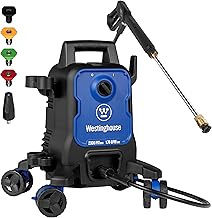
Westinghouse ePX3100v
A well-balanced machine built around a pro-style steel wand that feels substantially better in hand than the plastic triggers on budget units. The detachable foam cannon and built-in carry handle make it easy to move between the drive and the patio without a second thought.
Westinghouse WPX3400e
The brushless motor is the headline: quieter operation, longer service life, and 3,400 max PSI on tap. Overkill for weekly maintenance washes, but the right call if you also handle siding, fencing, and outdoor furniture and want one machine to do all of it.
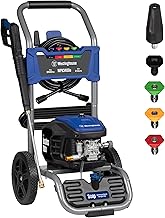
Westinghouse ePX3100
Anti-tipping geometry addresses the small daily irritation of a washer that topples every time you pull the hose taut. With five nozzles and an onboard soap tank, it’s the most self-contained unit in the lineup and the easiest to store upright.
Frequently Asked Questions
Will a pressure washer damage my paint?
Not at sensible settings. Keep pressure under roughly 1,900 PSI at the surface, hold the wand 12 to 18 inches back, use a 40-degree tip on panels, and never linger on a single spot. Damage almost always comes from narrow tips held too close.
Do I need a gas model?
For car detailing, no. Electric units deliver the pressure range paint tolerates, start instantly, run quietly enough for early mornings in a shared driveway, and require no fuel or oil maintenance.
Is a foam cannon worth the extra step?
Yes. Pre-soaking with clinging foam lifts contaminants so your mitt glides rather than grinds. It’s the single biggest factor in keeping swirl marks out of a dark finish.
Can I use these for household cleaning too?
All of them handle patios, fences, siding, and outdoor furniture. Swap to a narrower tip for hardscape, and always spot-test painted or aged surfaces first.
Final Thoughts
For most homes, the Westinghouse ePX3100 hits the cleanest balance of paint-safe pressure, stability, and storable form. Step up to the WPX3400e if one machine has to cover the car and the whole exterior, or choose the Hiclean 2100 PSI if garage space is the constraint you’re actually designing around.