Key takeaways
- Motor Power & RPM: Anything under 14 amps will bog down on hardwood. Aim for 15 amps and at least 4,800 RPM so dense species like walnut and oak don’t stall mid-pass.
- Rip Capacity: A narrow rip fence (under 25 inches) limits sheet-good work. For breaking down plywood for furniture projects, look for at least 30 inches of rip capacity.
- Stand Stability & Portability: A folding rolling stand is a game-changer if your shop doubles as a garage. Rigid, vibration-dampening legs keep cuts straight without bolting the saw to the floor.
- Blade Guard & Dust Collection: Integrated blade guards and dust ports aren’t luxuries—they protect your lungs and your workpiece. Saws without them force you to buy aftermarket solutions that never fit quite right.
- Fence Accuracy: The fence is arguably more important than the motor. A fence that slides smooth and locks parallel to the blade eliminates the tear-out and drift that ruin clean furniture joinery.
What's inside
Shopping for a table saw under $500 can feel like navigating a wall of near-identical specs and brand promises. Every listing boasts high RPMs, adjustable bevels, and “professional-grade” cuts—but the differences that actually matter for your home workshop are buried in the fine print. Whether you’re building floating shelves, crafting a live-edge dining table, or tackling a weekend built-in, the wrong pick means burned edges, wobbling fence rails, and a machine you outgrow in months.
We narrowed the field to six solid contenders and pressure-tested the five that deliver the best balance of cut accuracy, build quality, and real-world usability for the home woodworker who refuses to overspend. This guide walks you through what to look for and which saw deserves space on your shop floor in 2026.
As an Amazon Associate we earn from qualifying purchases.


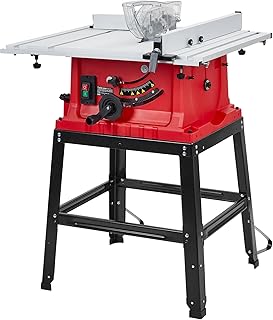

How to Choose a Table Saw For Under 500 in 2026
- Motor Power & RPM: Anything under 14 amps will bog down on hardwood. Aim for 15 amps and at least 4,800 RPM so dense species like walnut and oak don’t stall mid-pass.
- Rip Capacity: A narrow rip fence (under 25 inches) limits sheet-good work. For breaking down plywood for furniture projects, look for at least 30 inches of rip capacity.
- Stand Stability & Portability: A folding rolling stand is a game-changer if your shop doubles as a garage. Rigid, vibration-dampening legs keep cuts straight without bolting the saw to the floor.
- Blade Guard & Dust Collection: Integrated blade guards and dust ports aren’t luxuries—they protect your lungs and your workpiece. Saws without them force you to buy aftermarket solutions that never fit quite right.
- Fence Accuracy: The fence is arguably more important than the motor. A fence that slides smooth and locks parallel to the blade eliminates the tear-out and drift that ruin clean furniture joinery.
The Best Table Saw For Under 500 in 2026
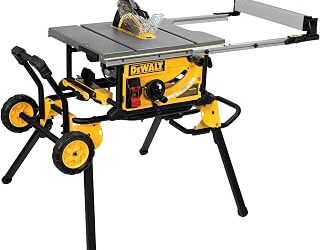
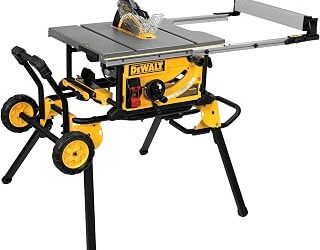
DEWALT DWE7491RS 10-Inch with Rolling Stand
The DWE7491RS remains the gold standard for home shops in this price range. Its 32½-inch rip capacity comfortably handles full plywood sheets, and the telescoping rolling stand collapses into a surprisingly compact footprint. The rack-and-pinion fence locks down accurately every time—no micro-adjustments or second-guessing required. If you build furniture regularly, this is the saw that grows with you.
DOVAMAN DTS10A 10″ Table Saw with Stand
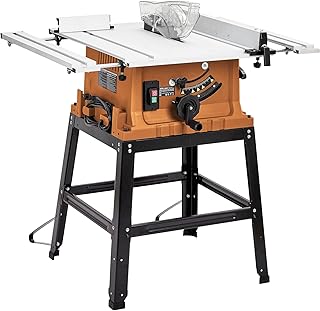
DOVAMAN’s 5,300 RPM copper motor outpaces most competitors on raw speed, and the one-side extendable table adds welcome work surface for long boards. Cut height maxes out at 3.35 inches at 90 degrees, which handles dimensional lumber with room to spare. It’s an intriguing value pick for woodworkers who prioritize motor performance and don’t need the massive rip capacity of pricier models.
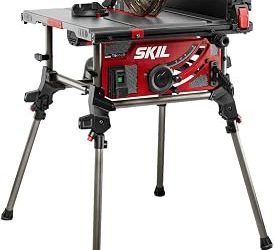
SKIL TS6307-00 10-Inch Portable Jobsite Table Saw
SKIL’s portable jobsite model punches above its weight with a solid folding stand and reliable 15-amp motor. The setup is fast, the fence tracks true for the price, and the overall build feels sturdier than most sub-$500 imports. It’s a practical choice for anyone who needs a dependable saw they can stow between projects without sacrificing cut quality.
10-Inch 15A Table Saw with Protective Cover
This model stands out for shipping with a built-in protective cover—a feature most competitors omit entirely. The 5,000 RPM motor and 36-by-25-inch tabletop provide generous workspace, and the adjustable depth of cut handles everything from thin veneers to thick stock. For builders who value safety features out of the box, it earns its spot.
15Amp Portable 10-Inch Benchtop Saw
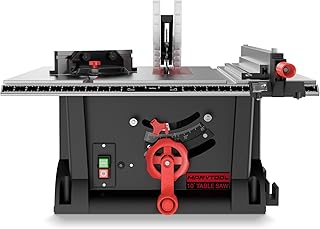
At 4,600 RPM with a 36-tooth blade, this compact benchtop unit keeps things simple for DIY furniture makers who don’t need full jobsite features. The smaller footprint fits tighter workshops, and the straightforward bevel and height adjustments make it approachable for beginners. It won’t compete with the DEWALT on capacity, but for occasional furniture builds and home repairs, it delivers clean cuts without the learning curve.
Frequently Asked Questions
What size blade does a standard table saw use?
Nearly all portable and benchtop table saws in this category use a 10-inch blade. Replacement blades are widely available in configurations for rip cuts, crosscuts, and combination work, making it easy to match the blade to your project.
Can a sub-$500 table saw handle hardwood?
Yes, as long as the motor is rated at 15 amps and the blade is sharp. A quality 40-tooth or 50-tooth carbide blade makes a dramatic difference—often more than the saw itself—when cutting maple, walnut, or cherry.
Do I need a table saw if I already have a miter saw?
A table saw excels at ripping long boards and breaking down sheet goods, tasks a miter saw simply can’t replicate. If you’re building furniture with panels or wide planks, a table saw fills a gap that no other tool covers.
Final Thoughts
The DEWALT DWE7491RS earns the top recommendation for most home woodworkers thanks to its unmatched rip capacity, accurate fence, and rolling stand. The DOVAMAN DTS10A offers surprising motor power at a lower price point, and the SKIL TS6307-00 strikes a smart balance between portability and build quality. Any of these three will serve a furniture-focused workshop well without breaking the budget.