Key takeaways
- Read PSI skeptically: Handheld cordless units realistically produce 300–800 PSI at the nozzle. Listed figures of 1,100 to 5,000 PSI are peak or theoretical ratings, so treat them as a rough tier indicator rather than a measurement, and compare flow rate instead where it is published.
- Two batteries, not one: Runtime lands somewhere between 12 and 30 minutes per pack. A second 4.0Ah battery is the difference between finishing a six-seat dining set and stopping halfway through the table.
- Hose and intake length: A 23–27 foot supply hose lets the bucket stay put while you circle a sectional. Short intakes force you to reposition constantly, which is where most spills happen on finished surfaces.
- Brushless motors last: They run cooler, draw less current, and hold pressure better as the battery depletes. On a tool used in short bursts across a season, this is the specification most tied to longevity.
- Foam capability: A separate soap bottle or cannon is what makes these viable for cars, cushion covers, and greasy grill surrounds. Rinsing alone will not lift sunscreen residue or pollen bound in oil.
What's inside
Outdoor furniture has quietly become the most-used seating in the house, and it shows. Powder-coated aluminum picks up a chalky film, teak greys unevenly where the rain hits, woven resin traps pollen in every strand, and the porcelain pavers underneath develop that faint grey halo around each planter. A full-size gas or corded washer is overkill for this kind of work, and dragging a hose reel plus an extension cord across a finished patio defeats the point of a space designed to feel effortless.
Cordless pressure washers occupy a more useful middle ground: enough force to lift grime off stone, composite decking, and cushion piping, gentle enough that you are not blasting the finish off a dining set. They draw from a bucket, a rain barrel, or a lake, which matters on balconies and rooftop terraces with no spigot. Below are six of the strongest handheld options for 2026, followed by the specs that actually predict performance and the marketing numbers worth ignoring.
As an Amazon Associate we earn from qualifying purchases.


How to Choose a Cordless Pressure Washer (2026)
- Read PSI skeptically: Handheld cordless units realistically produce 300–800 PSI at the nozzle. Listed figures of 1,100 to 5,000 PSI are peak or theoretical ratings, so treat them as a rough tier indicator rather than a measurement, and compare flow rate instead where it is published.
- Two batteries, not one: Runtime lands somewhere between 12 and 30 minutes per pack. A second 4.0Ah battery is the difference between finishing a six-seat dining set and stopping halfway through the table.
- Hose and intake length: A 23–27 foot supply hose lets the bucket stay put while you circle a sectional. Short intakes force you to reposition constantly, which is where most spills happen on finished surfaces.
- Brushless motors last: They run cooler, draw less current, and hold pressure better as the battery depletes. On a tool used in short bursts across a season, this is the specification most tied to longevity.
- Foam capability: A separate soap bottle or cannon is what makes these viable for cars, cushion covers, and greasy grill surrounds. Rinsing alone will not lift sunscreen residue or pollen bound in oil.
The Best Cordless Pressure Washers of 2026, Reviewed
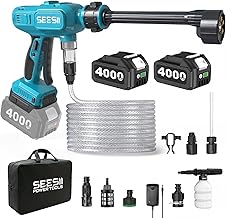
SEESII Cordless Pressure Washer 1250 PSI
The brushless motor and 27-foot hose make this the most composed performer here, holding steady pressure deep into each of its two 4,000mAh packs instead of tapering off early. It is the pick for anyone cleaning a full patio set, fence run, and driveway in one session.
Cordless Pressure Washer with 2× 4.5Ah 21V Batteries
Two selectable power levels are more useful than they sound: the low setting is appropriate for teak, powder-coated frames, and cushion piping, while high handles pavers and wheel wells. The 4.5Ah packs are the largest in this group, and the physical on/off switch spares your trigger finger during long jobs.
6-in-1 Portable Cordless Pressure Washer, 1300 PSI
A straightforward dual-battery kit that covers car washing and garden cleanup without complication, and the nozzle set spans a wide fan for glass through a concentrated jet for grout lines. A sensible default if you want capability without paying for a brushless motor.
Cordless Power Washer with 23FT Hose and Foam Pot
The generous hose length and included foam pot make this the friendliest option for balconies and courtyards where you are drawing from a bucket and working around planters. Single-battery runtime is the tradeoff, so plan on shorter sessions.
5000 PSI Cordless Pressure Washer with Foam Cannon
Ignore the headline number, which is not achievable from a 4.0Ah handheld, and judge this on the foam cannon and nozzle set, which are genuinely good for cars and painted deck boards. Solid hardware, oversold spec sheet.
Frequently Asked Questions
Will a cordless washer damage teak or powder-coated furniture?
Not at these pressures, provided you stay 12 inches back and use a fan spray rather than the pencil jet. Avoid the concentrated setting on softwoods, wicker, and any surface with flaking finish.
Can it run from a bucket?
Yes, and that is the main appeal. Every model here self-primes from a bucket, barrel, or pool, which makes them workable on terraces and balconies with no outdoor tap.
How does this compare to a corded electric washer?
A corded unit produces roughly three to five times the pressure and unlimited runtime. Cordless models trade that for portability and gentleness, which suits furniture, cars, and mid-size patios rather than stripping paint or deep-cleaning concrete.
Are extra batteries worth buying?
If your outdoor area exceeds about 200 square feet, yes. Confirm voltage and platform compatibility first, since most of these use proprietary 21V packs.
Final Thoughts
For most homes, the SEESII 1250 PSI is the safest investment: brushless internals, two batteries, and the longest hose in the group. The dual 4.5Ah model with selectable power levels is the better fit if you are working around delicate finishes, and the 6-in-1 1300 PSI kit covers car and garden duty at a lower entry point.