Key takeaways
- Measure the room, not the table: Leave 36 inches between the table edge and the nearest wall or cabinet, 42 to 48 if that path is a walkway. A 63-inch table needs roughly an 11-by-8-foot footprint to feel comfortable.
- Read the construction language closely: “Solid wood” should specify a species — rubberwood, acacia, pine, oak. If the listing only says “wood” or “engineered wood,” expect a veneered core, which is fine at a lower price but will not survive refinishing.
- Check leg placement against your chairs: Four-corner legs are stable but limit where people sit; pedestal and trestle bases free up the ends. Sculpted or fluted legs look better in person but eat into knee room, so confirm the apron height clears your chair arms.
- Prioritize top thickness over width: A 1-inch top on a 63-inch span will telegraph every dropped pan. Look for 1.5 inches or more, or a listing that mentions cross-bracing underneath.
- Match the finish to your tolerance: Matte and oiled finishes hide scratches and take repairs well. High-gloss lacquer resists spills but shows every ring and cannot be spot-fixed.
What's inside
A dining table is the one piece of furniture in a home that gets asked to do everything: hold a laptop at 9am, homework at 4pm, and eight plates at 7pm. That workload is exactly why the shopping process goes sideways. Listings blur together, “solid wood” gets stretched to cover veneered particleboard, and the dimension that actually matters — how much clearance you have to pull a chair out — never appears in the photos. Buyers end up choosing on finish color and discover the problem six months later, when a joint loosens or the leaves no longer sit flush.
This guide takes the opposite approach. Below are wood dining tables worth living with, evaluated on the things that determine whether a table lasts a decade: species and construction, leg geometry and how it interacts with seating, top thickness, and how honestly each listing describes itself. You’ll find a compact 47-inch option for apartments, two 63-inch workhorses for families of six, and an extendable design that scales from an intimate two-seater to a twelve-person holiday setup.
As an Amazon Associate we earn from qualifying purchases.


🛒 Best Price Today on Amazon
Prime members get fast, free shipping on everything above, plus member-only deals. New members get a 30-day free trial — cancel anytime.
How to Choose a Wood Dining Room Table (2026)
- Measure the room, not the table: Leave 36 inches between the table edge and the nearest wall or cabinet, 42 to 48 if that path is a walkway. A 63-inch table needs roughly an 11-by-8-foot footprint to feel comfortable.
- Read the construction language closely: “Solid wood” should specify a species — rubberwood, acacia, pine, oak. If the listing only says “wood” or “engineered wood,” expect a veneered core, which is fine at a lower price but will not survive refinishing.
- Check leg placement against your chairs: Four-corner legs are stable but limit where people sit; pedestal and trestle bases free up the ends. Sculpted or fluted legs look better in person but eat into knee room, so confirm the apron height clears your chair arms.
- Prioritize top thickness over width: A 1-inch top on a 63-inch span will telegraph every dropped pan. Look for 1.5 inches or more, or a listing that mentions cross-bracing underneath.
- Match the finish to your tolerance: Matte and oiled finishes hide scratches and take repairs well. High-gloss lacquer resists spills but shows every ring and cannot be spot-fixed.
The Best Wood Dining Room Tables (2026) Reviewed
Transformer Table Solid Wood Extendable Dining Table
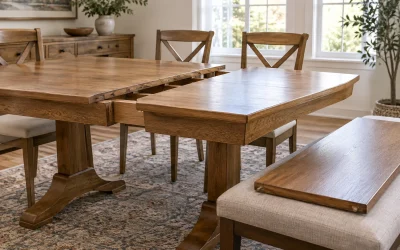
The most genuinely clever piece in this roundup: a solid wood table that runs from a two-person console to a twelve-seat banquet using integrated leaves rather than a separate storage problem. It costs more than anything else here, but for a household that entertains occasionally and lives small the rest of the year, it replaces two pieces of furniture.
55″ Solid Wood Rectangular Table, Walnut
The fluted mid-century leg detailing on this one is the standout — it reads as a considered design object rather than a mass-market rectangle, and the walnut tone stays warm under both daylight and low lamplight. At 55 inches it seats four comfortably and six when pressed, making it the right scale for apartments and open-plan corners.
Solid Wood Dining Table for 6, 63-Inch Farmhouse
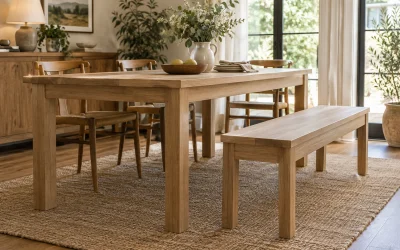
A straightforward, heavy-legged farmhouse rectangle in a natural brown that sidesteps the orange cast a lot of budget pine finishes take on. This is the pick if you want capacity and durability without paying for styling, and the sturdy base handles being leaned on, sat against, and shoved around.
Merrick Lane Finnley 47″ Solid Wood Dining Table
The sculpted legs give a small table real presence, and the matte walnut finish forgives fingerprints and minor scuffing better than any glossy top in this price range. At 47 inches it is honestly a four-seater — treat the listed capacity as accurate rather than optimistic.
Farmhouse Dining Table for 6, Oak
Oak brings a tighter, more linear grain than the pine and rubberwood tables here, which suits rooms leaning contemporary rather than rustic. It doubles convincingly as a home office desk, and the wide top handles a monitor and paperwork without feeling repurposed.
Frequently Asked Questions
How many people can a 63-inch table actually seat?
Six, with 24 inches of elbow room each and no one straddling a leg. You can add two at the ends for a holiday meal, but plan on armless chairs and a narrow centerpiece.
Is an extendable table worth the premium?
If your guest count swings by more than four people, yes. If you host the same six people every week, a fixed table with a thicker top is the better use of the same budget.
What maintenance does a solid wood top need?
Wipe spills promptly, use felt pads under anything ceramic, and re-oil an oiled finish once or twice a year. Keep the table out of direct afternoon sun, which fades and eventually checks the surface.
Do these tables include chairs?
Several of these listings are explicitly table-only, including the Transformer Table and both 63-inch farmhouse options. Confirm before checkout, since seating is often sold as a separate add-on.
Final Thoughts
For flexible households, the Transformer Table Extendable Dining Table is the only piece here that genuinely grows and shrinks with your week. If you want design character in a smaller footprint, the 55-inch fluted walnut table is the more interesting object, while the 63-inch farmhouse table for six remains the sensible, durable default for a busy family room.