Key takeaways
- PSI headroom: Choose a hose rated above your washer’s maximum output, not equal to it. A 2,000 PSI electric unit pairs comfortably with a 3,100–3,200 PSI hose; gas machines pushing 3,000+ PSI want a 4,000 PSI steel-braided line.
- Diameter matters: 1/4″ suits most consumer electric and mid-range gas washers. Step up to 3/8″ for higher-flow gas units or runs beyond 50 feet, where the wider bore protects pressure at the nozzle.
- Fittings first: Confirm whether your machine uses M22-14mm or M22-15mm threads, or 3/8″ quick connect. Brass fittings resist cross-threading and rounding far better than plated steel, and swivel ends stop the hose from twisting as you work.
- Jacket material: PVC is light and affordable but stiffens in cold weather. Rubber and polyurethane stay pliable near freezing and are gentler on stone, timber decking, and finished furniture legs.
- Length with intent: Fifty feet handles most homes. Go to 100 feet for long driveways, boundary fencing, or second-storey work, and accept a small pressure trade-off in exchange for leaving the machine parked.
What's inside
A pressure washer is only as good as the line feeding it. Most machines ship with a short, stiff hose that holds its coil memory like a spring, drags across bluestone and painted decking, and kinks the moment you round a corner of the house. You end up fighting the hose instead of cleaning, and the pulsing at the wand is often the hose choking flow rather than a failing pump. For anyone maintaining a considered exterior, entry steps, cedar cladding, limestone patio, powder-coated furniture, that friction shows up as scuffs and wasted afternoons.
This guide looks at replacement and extension hoses through a practical lens: burst rating versus your machine’s actual output, fitting compatibility, cold-weather flexibility, and how a hose behaves when it’s dragged around planters and furniture. Below are six options worth considering in 2026, from a US-made flexible line to a 100-foot commercial-grade run for long driveways and detached garages.
As an Amazon Associate we earn from qualifying purchases.


How to Choose a Hose Pipe For Pressure Washer (2026)
- PSI headroom: Choose a hose rated above your washer’s maximum output, not equal to it. A 2,000 PSI electric unit pairs comfortably with a 3,100–3,200 PSI hose; gas machines pushing 3,000+ PSI want a 4,000 PSI steel-braided line.
- Diameter matters: 1/4″ suits most consumer electric and mid-range gas washers. Step up to 3/8″ for higher-flow gas units or runs beyond 50 feet, where the wider bore protects pressure at the nozzle.
- Fittings first: Confirm whether your machine uses M22-14mm or M22-15mm threads, or 3/8″ quick connect. Brass fittings resist cross-threading and rounding far better than plated steel, and swivel ends stop the hose from twisting as you work.
- Jacket material: PVC is light and affordable but stiffens in cold weather. Rubber and polyurethane stay pliable near freezing and are gentler on stone, timber decking, and finished furniture legs.
- Length with intent: Fifty feet handles most homes. Go to 100 feet for long driveways, boundary fencing, or second-storey work, and accept a small pressure trade-off in exchange for leaving the machine parked.
The Best Hose Pipe For Pressure Washer (2026)s Reviewed
UBERFLEX Kink Resistant Hose, 1/4″, 50 ft
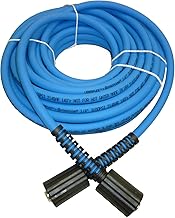
The most genuinely flexible hose here, it lies flat almost immediately and trails behind you rather than fighting back, which matters when you’re working around outdoor seating and planted beds. Rated to 3,100 PSI with two 22mm fittings included and made in the USA, it’s the one to buy if handling quality is your priority.
YAMATIC 3/8″ Hose, 4000 PSI, 50 ft
Steel-braided rubber construction and a 4,000 PSI rating make this the sensible upgrade for prosumer gas machines, and the 3/8″ bore keeps flow honest across the full run. The 360° swivel quick connect is the detail you’ll appreciate most, and it tolerates water from 15°F to 212°F.
100 ft Steel Braid Hose, 4200 PSI
Built for reach: 100 feet of commercial-grade, kink-resistant hose with a 3/8″ quick connect and 1/4″ adapter set, so you can cover a long drive or detached garage without repositioning the washer. Expect slightly softer pressure at the far end, an easy trade for the mobility.
Westinghouse 50 ft PVC Hose, 3400 PSI
A clean, no-drama replacement for gas or electric washers, rated to 3,400 max PSI at a fair price. The PVC jacket is light to carry and coil, though it firms up noticeably in cold conditions, so it suits milder climates or warm-season use.
YAMATIC Flexible 50 ft Hose, 1/4″, 3200 PSI (Green)
With M22-14mm female ends plus 3/8″ quick-connect adapters, this covers the widest range of consumer machines out of the box. It stays supple in cool weather and resists kinking well, making it a reliable everyday choice for patios, siding, and vehicles. The black variant with solid brass fittings is the pick if you run a Ryobi, Greenworks, Troy-Bilt, or Craftsman unit.
Frequently Asked Questions
Will a longer hose reduce my pressure?
Slightly. Every added length creates friction loss, typically a few percent per 50 feet. Using 3/8″ instead of 1/4″ on longer runs offsets most of it.
Can I join two hoses together?
Yes, with a quick-connect coupler, provided the combined length stays within your washer’s recommended limit and both hoses meet or exceed its PSI rating.
How do I stop a hose from kinking?
Store it loosely coiled rather than folded, avoid dragging it around sharp corners, and let a stiff hose warm in the sun before its first use of the day.
Do I need a hose reel?
Not essential, but a wall-mounted reel keeps coil memory at bay, protects the jacket from UV, and keeps the equipment corner of a garage or utility wall looking deliberate.
Final Thoughts
For most homeowners, the UBERFLEX 50-foot hose is the easiest to live with day to day, thanks to its flexibility and US-made build. Step up to the YAMATIC 3/8″ 4,000 PSI hose if you’re running a powerful gas machine, and choose the 100-foot steel-braided option when reach matters more than the last few PSI.