Key takeaways
- Turn off power at the breaker, verify the circuit is de-energized with an appropriate tester, and use a qualified electrician for uncertain or high-risk work.
- Keep the ladder at least well clear of overhead electrical lines; never assume insulation or a plastic component makes contact safe.
- Set an extension ladder on firm, level ground, secure the base, and maintain the manufacturer’s recommended angle and overlap.
- Face the ladder while climbing, keep three points of contact, and avoid leaning sideways or carrying bulky tools in your hands.
What's inside
Choosing a ladder for electrical work is not the same as choosing one for painting a bedroom. The right model must provide reliable reach while reducing the chance that the ladder itself becomes part of an electrical path. Material, stability, load rating, working height, and the condition of the job site all matter—especially when you are working near outlets, fixtures, panels, or overhead wiring.
This guide explains how to choose a ladder with a modern homeowner’s priorities in mind: dependable safety, sensible storage, comfortable footing, and a finish you will not mind keeping in view. You will learn when fiberglass is the better choice, how to match ladder style to the task, and which details deserve attention before you buy.
As an Amazon Associate we earn from qualifying purchases.


Start With a Non-Conductive Material
For electrical work, fiberglass is generally the preferred ladder material because it does not conduct electricity like aluminum or steel. That does not make a fiberglass ladder safe to use against live wires, however. Keep the ladder and your body well away from energized equipment, follow local electrical codes, and shut off power at the appropriate breaker before beginning work. If you cannot verify that a circuit is de-energized, stop and call a qualified electrician.
Fiberglass is heavier than aluminum, but that extra weight can make a step ladder feel planted. It is also less likely to flex or shift during ordinary household tasks. Look for clearly labeled non-conductive fiberglass rails and inspect them for cracks, chips, splits, or damaged surfaces before every use. A damaged fiberglass ladder should be removed from service rather than patched casually.
Match the Ladder Style to the Job
A-frame step ladders are usually the most convenient choice for indoor electrical jobs such as changing a ceiling fixture, installing a smoke detector, or reaching a high cabinet. They stand independently, so you do not need to lean them against a wall. The Louisville Ladder FS1508 Ladder, 8-Foot, Orange is a straightforward example for homeowners who want useful indoor reach without the complexity of a multi-position design.
For lower tasks, a compact five-foot model may be easier to carry and position. The Fiberglass Ladder, 500 lbs Load Capacity, Non-Conductive, Heavy-Duty Step Ladder with Non-Slip Rubber Feet & Wide Steps, Industrial Grade for Electrical Work & Construction, Red (5-Foot) suits jobs where a taller ladder would be unnecessary. An eight-foot model such as the 8-FT Fiberglass Step Ladder, 500 lb Capacity Non-Conductive Ladder for Electrical Work, A-Frame Design with Wide Steps and Non-Slip Rubber Feet, Heavy-Duty Professional Grade, Green (7 Steps 8ft) provides more reach, but also requires more clearance and storage space.
Extension ladders are for exterior work and tall, unobstructed surfaces—not for standing freely in the middle of a room. The Louisville Ladder 16-foot Fiberglass Extension Ladder, 300-Pound Load Capacity, Type IA, FE3216 is designed for higher-reach applications. A multi-position ladder can switch between step, extension, and other configurations; the Little Giant Ladder Systems Dark Horse 2.0, M17, 17ft, Multi-Position Ladder, Fiberglass, Type 1A, 300 lbs Weight Rating is an adaptable option when one ladder needs to cover several tasks.
Understand Load Capacity and Reach
Never choose a ladder by height alone. Its duty rating must support your body weight, clothing, tools, and any materials you carry. A Type IA rating commonly indicates a 300-pound maximum load, while some heavy-duty models list a 500-pound capacity. Treat that figure as a total limit, not a target. Staying comfortably below the maximum can improve stability and reduce strain on the ladder.
For step ladders, the highest standing level is lower than the ladder’s advertised length. Do not stand on the top cap or on the highest prohibited step. With extension ladders, the usable reach depends on the setup angle, the height of the landing, and the requirement to extend the rails above a roof or platform. Read the manufacturer’s reach guidance instead of estimating from the ladder’s nominal length.
Prioritize Stability and Everyday Ergonomics
Wide steps, textured treads, secure hinges, and non-slip feet are more valuable than flashy accessories. A stable ladder should sit level on a clean, firm surface without rocking. Multi-position models should lock positively in every configuration, and extension sections should move smoothly while the rung locks engage fully.
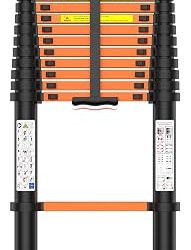
Weight matters in real homes. A ladder that is technically capable but awkward to move may be positioned carelessly. Consider where you will store it, whether you can carry it safely, and how much room you have to open it. The Soctone Ladder, A Frame Extension Ladder, 14 Ft Multi Position Ladder with Stabilizer Bar offers flexible positioning and added support features, but its larger format may be more ladder than a small apartment needs.
Check Standards, Labels, and Condition
Buy from a reputable manufacturer and look for a permanent label showing the ladder’s material, duty rating, size, and safety instructions. A professional-looking design is welcome, but certification information and clear operating limits matter more than color. Keep the manufacturer’s instructions available, particularly for multi-position and extension ladders.
Before use, check that the feet are intact, the rails are straight, the steps are clean, and all locks or spreaders work correctly. Do not use a ladder with loose hardware, bent rails, missing caps, paint contamination, or worn treads. Store fiberglass ladders away from excessive heat, moisture, and impact. Even a high-capacity ladder is not a substitute for correct setup.
Tips
- Turn off power at the breaker, verify the circuit is de-energized with an appropriate tester, and use a qualified electrician for uncertain or high-risk work.
- Keep the ladder at least well clear of overhead electrical lines; never assume insulation or a plastic component makes contact safe.
- Set an extension ladder on firm, level ground, secure the base, and maintain the manufacturer’s recommended angle and overlap.
- Face the ladder while climbing, keep three points of contact, and avoid leaning sideways or carrying bulky tools in your hands.
Frequently Asked Questions
Is fiberglass always the safest ladder for electrical work?
Fiberglass is usually the preferred material because it is non-conductive under normal conditions, but no ladder should contact live electricity. Power isolation, distance, inspection, and correct setup remain essential.
What ladder height is best for indoor electrical repairs?
For many homes, a five- to eight-foot A-frame ladder covers light fixtures, detectors, and high shelves. Choose the shortest model that gives you safe working reach without standing on a prohibited step or stretching.
Is a 500-pound ladder better than a 300-pound ladder?
Not automatically. A higher rating can provide useful capacity and robust construction, but it may also mean a heavier ladder. Select a rating that comfortably supports the combined load of the user, clothing, tools, and materials.
Can I use a multi-position ladder indoors?
Yes, provided the configuration is approved for the task and there is adequate floor and ceiling clearance. Confirm that every hinge and lock is engaged, and avoid improvised positions not shown in the instructions.
Conclusion
For most household electrical tasks, a well-maintained fiberglass A-frame ladder is the simplest and most practical choice. Move to a multi-position or extension model when the job genuinely requires additional reach or configurations. Whichever style you choose, prioritize non-conductive construction, a suitable duty rating, secure footing, and disciplined setup over appearance or maximum height. A thoughtfully chosen ladder should make careful work easier—not encourage you to work beyond safe limits.