Key takeaways
- CFM at 90 PSI, not max PSI: This single number tells you which tools the unit can actually run. Brad nailers sip roughly 0.3 CFM, framing nailers want 2 or more, and spray guns or sanders can demand 6 to 12. Match the number to your loudest ambition, then add a small margin.
- Tank size versus recovery: A large tank buys you quiet stretches between motor cycles, which matters when you are nailing trim in a finished room. A small tank with fast recovery is fine for intermittent work and far easier to carry up a flight of stairs.
- Oil-free or oil-lubricated: Oil-free pumps are the sensible default for occasional indoor use with no draining or top-ups, though they run louder and wear faster. Oil-lubricated cast-iron pumps are quieter and last decades, but they ask for a maintenance habit.
- Noise, honestly assessed: Most portable units land between 75 and 90 decibels, which is genuinely disruptive in an open-plan home. Check the rating, plan on hearing protection, and consider a longer hose so the compressor can live in the garage while you work inside.
- Power and portability reality: Anything above 2 HP typically wants a dedicated circuit, and 5 HP two-stage units often require 230V. Cordless inflators sidestep this entirely for tire and inflatable duty, so be clear about whether you need a tool or a tank.
What's inside
Anyone who has assembled a walnut sideboard at 9pm, only to discover the cam bolts need more torque than a hex key can deliver, understands the gap between owning furniture and truly finishing a room. Air tools close that gap. A compressor drives brad nails into shoe molding without splitting it, seats upholstery staples flush under a bench seat, tops off the tires on the van hauling your flea-market armoire, and blows sawdust out of a router table before finishing. The trouble is that compressor listings read like industrial catalogs, and the specs that matter for a home studio are buried under jargon about duty cycles and two-stage pumps.
This guide translates. We looked at what actually gets used in residential workshops, styling projects, and garage-adjacent build spaces, then sorted the brands by the job they genuinely serve. Below you will find cordless inflators for the trunk, pancake tanks sized for trim carpentry, wheeled units for weekend cabinetry, and one stationary workhorse for people who have stopped pretending this is a hobby. Each pick is judged on delivered air, noise in a lived-in space, and whether the maintenance schedule is realistic for someone who builds in bursts.
As an Amazon Associate we earn from qualifying purchases.



How to Choose a/an Air Compressor Brands (2026)
- CFM at 90 PSI, not max PSI: This single number tells you which tools the unit can actually run. Brad nailers sip roughly 0.3 CFM, framing nailers want 2 or more, and spray guns or sanders can demand 6 to 12. Match the number to your loudest ambition, then add a small margin.
- Tank size versus recovery: A large tank buys you quiet stretches between motor cycles, which matters when you are nailing trim in a finished room. A small tank with fast recovery is fine for intermittent work and far easier to carry up a flight of stairs.
- Oil-free or oil-lubricated: Oil-free pumps are the sensible default for occasional indoor use with no draining or top-ups, though they run louder and wear faster. Oil-lubricated cast-iron pumps are quieter and last decades, but they ask for a maintenance habit.
- Noise, honestly assessed: Most portable units land between 75 and 90 decibels, which is genuinely disruptive in an open-plan home. Check the rating, plan on hearing protection, and consider a longer hose so the compressor can live in the garage while you work inside.
- Power and portability reality: Anything above 2 HP typically wants a dedicated circuit, and 5 HP two-stage units often require 230V. Cordless inflators sidestep this entirely for tire and inflatable duty, so be clear about whether you need a tool or a tank.
The Best Air Compressor Brands (2026)s Reviewed
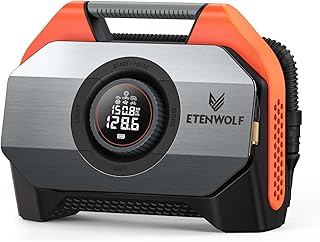
ETENWOLF VORTEX S6 Cordless Tire Inflator
The dual-cylinder pump and 19200mAh battery put this well past the usual keep-it-in-the-glovebox category, handling truck tires and pool floats at a 100% duty cycle without heat-soaking. The LED backlight and vivid orange housing make it the one you can actually find in a dark trunk, which is a design consideration people underrate.
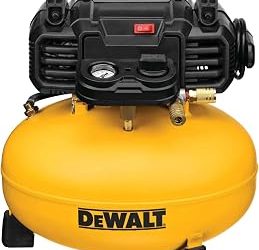
DEWALT Pancake Compressor, 6 Gallon (DWFP55126)
At 165 max PSI and 2.6 SCFM at 90 PSI, this is the sweet spot for finish work: baseboard, crown, cabinet backs, and upholstery staples, all from a maintenance-free oil-free pump. It is the pick for people whose projects are decorative rather than structural.
Metabo HPT Pancake Compressor, 6 Gallon (EC914S)
The 200 PSI ceiling and 4 CFM flow rate mean it can feed two framing or roofing nailers at once without stalling, a real advantage on built-ins and deck work. Metabo HPT has earned its job-site reputation on exactly this kind of unglamorous reliability.
Craftsman 26 Gallon Portable Compressor (CMXECXA3332643)
With 5.0 CFM at 90 PSI and a 26-gallon tank, this wheeled unit finally opens the door to sanders, ratchets, and light spray finishing without constant cycling. The oil-free induction motor and 1000-hour rating make it a sensible long-term anchor for a two-car garage shop.
Ingersoll Rand 2340N5-V Two-Stage Compressor
An 80-gallon tank, cast-iron two-stage pump, and 14.3 CFM at 90 PSI put this in a different category altogether: continuous air for spray booths, media blasting, and full restoration work. Plan the electrical and the floor space before you buy, then expect it to outlive several shop layouts.
Frequently Asked Questions
What size compressor do I need for furniture and trim work?
A 6-gallon pancake delivering around 2.5 CFM at 90 PSI covers brad nailers, finish nailers, and staplers comfortably. Only step up to 20 gallons or more if you plan to run sanders, spray guns, or air ratchets.
Can I use a cordless inflator instead of a compressor?
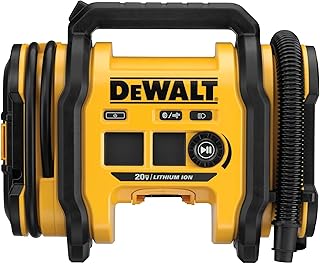
For tires, sports equipment, and inflatables, yes, and units like the ETENWOLF VORTEX S6 or the DEWALT 20V MAX inflator are far more convenient. They cannot drive nailers or run air tools, which need sustained volume rather than short high-pressure bursts.
How loud are these in a home setting?
Expect roughly 75 to 90 decibels from portable units, loud enough to carry through walls. Run a 50-foot hose and place the compressor in a garage or utility space if you are working in finished rooms.
Do I need to drain the tank?
Yes, on every unit with a tank. Open the bottom drain valve after each session to release condensate, since standing water is what eventually rusts a tank from the inside out.
Final Thoughts
For most people finishing rooms rather than framing houses, the DEWALT DWFP55126 pancake is the right first compressor: quiet enough to tolerate, light enough to move, and perfectly matched to trim and upholstery work. Step up to the Craftsman 26 Gallon if sanding and spray finishing are on the horizon, and keep the ETENWOLF VORTEX S6 in the vehicle for everything that simply needs air on the move.